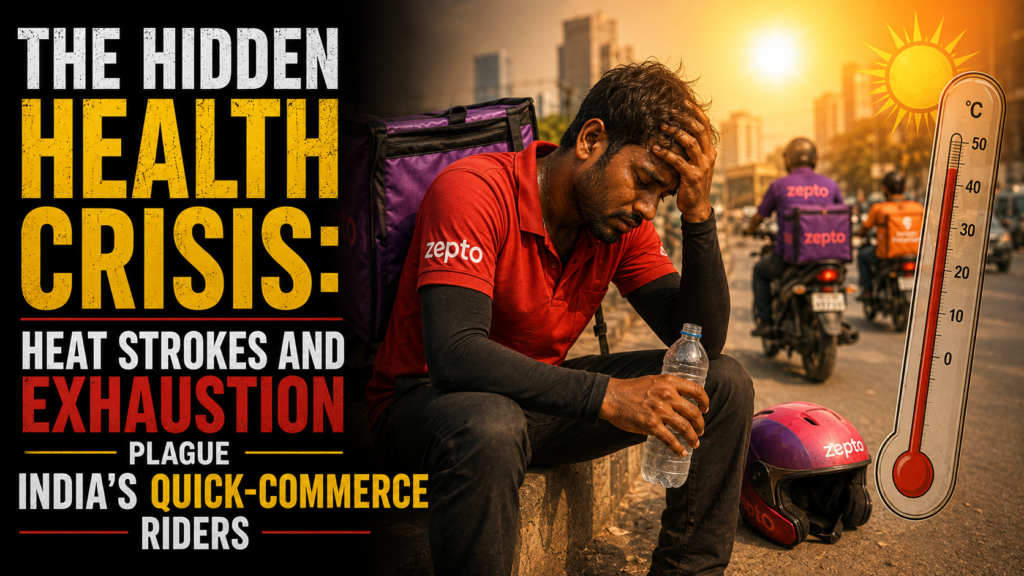
Behind the seamless convenience of ordering groceries from a smartphone lies a severe, largely ignored occupational health crisis. A massive segment of India’s 77-lakh-strong gig workforce is currently suffering from chronic physical exhaustion, exacerbated by brutal urban weather conditions and relentless algorithmic pressure. Delivery partners, many as young as 19, report fainting on the roads during peak summer months, suffering from severe heat stroke symptoms while navigating congested city traffic for 12 to 14 hours a day just to hit their basic daily earning targets.
The Danger of “Incentive-Driven” Recklessness
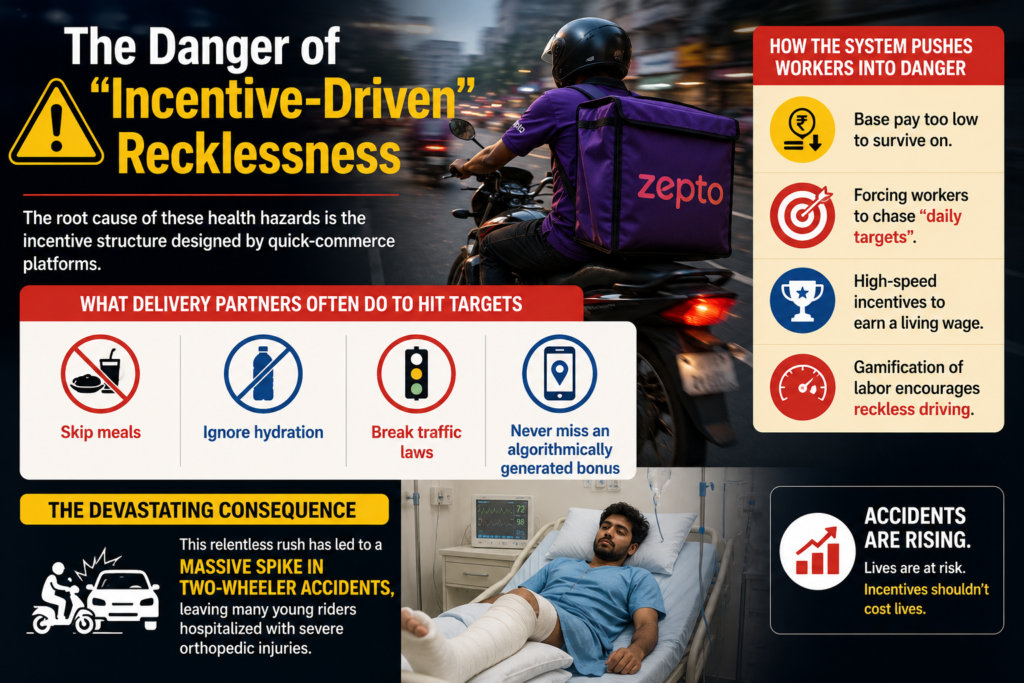
The root cause of these health hazards is the incentive structure designed by quick-commerce platforms. Workers note that their base pay is often too low to survive on, forcing them to chase “daily targets” and high-speed incentives to earn a living wage. This gamification of labor directly encourages reckless driving. Delivery partners frequently skip meals, ignore hydration, and break traffic laws to ensure they do not miss an algorithmically generated bonus. This relentless rush has led to a massive spike in two-wheeler accidents, leaving many young riders hospitalized with severe orthopedic injuries.
The Failure of Platform Support Systems
When accidents do occur, the safety nets provided by the platforms frequently fall short. While some companies technically offer accidental insurance policies for logged-in riders, the claims processes are notoriously slow and bureaucratic. Injured workers report that platform support systems act more like digital roadblocks than emergency lifelines, often requiring extensive police documentation that a hospitalized rider cannot physically procure. Consequently, many workers rely on over-burdened government hospitals and state emergency policies to cover their urgent medical care.
Final Words
The untold health struggles of gig workers reveal a deeply exploitative flaw in the modern delivery model: human bodies are being pushed to their breaking point to serve digital algorithms. It is completely unacceptable that a 19-year-old rider must risk heat stroke or a traffic collision just to deliver a packet of chips. If platforms want to sustain their operations, they must legally mandate “cooling breaks,” construct shaded hydration stations across cities, and fundamentally restructure their payouts so that a worker can earn a dignified wage without having to drive recklessly.