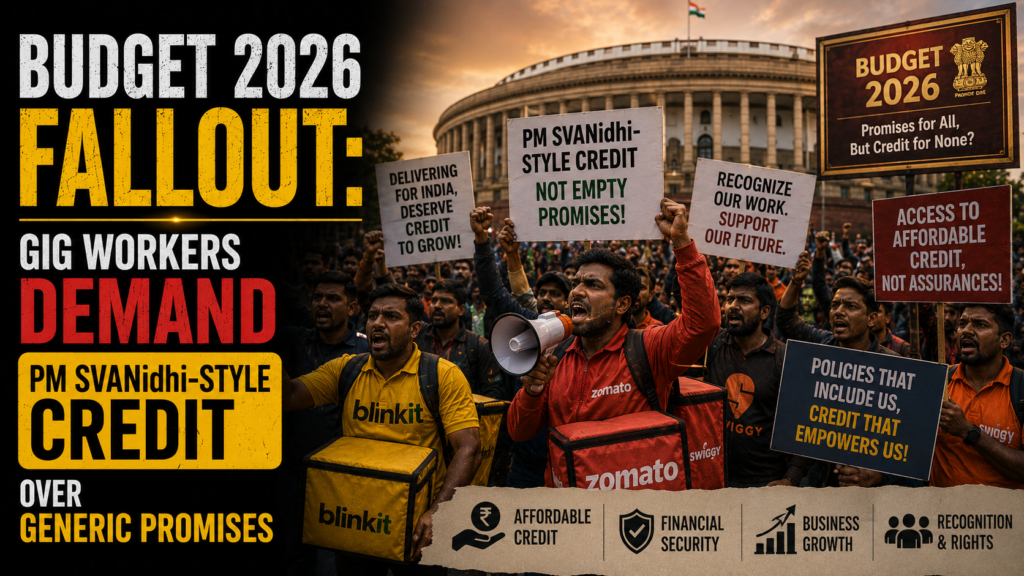
As the Union Budget 2026 approached, the 12-million-strong Indian gig workforce—comprising delivery partners, drivers, and freelancers—held massive expectations. Having powered the nation’s urban economy through heatwaves, floods, and the quick-commerce explosion, worker unions aggressively lobbied the Finance Ministry for targeted financial relief. While the government has continually pointed to the impending rollout of the Social Security Code, gig workers argue that long-term welfare funds do nothing to solve their immediate, day-to-day liquidity crises.
The Demand for a Dedicated Micro-Credit Scheme
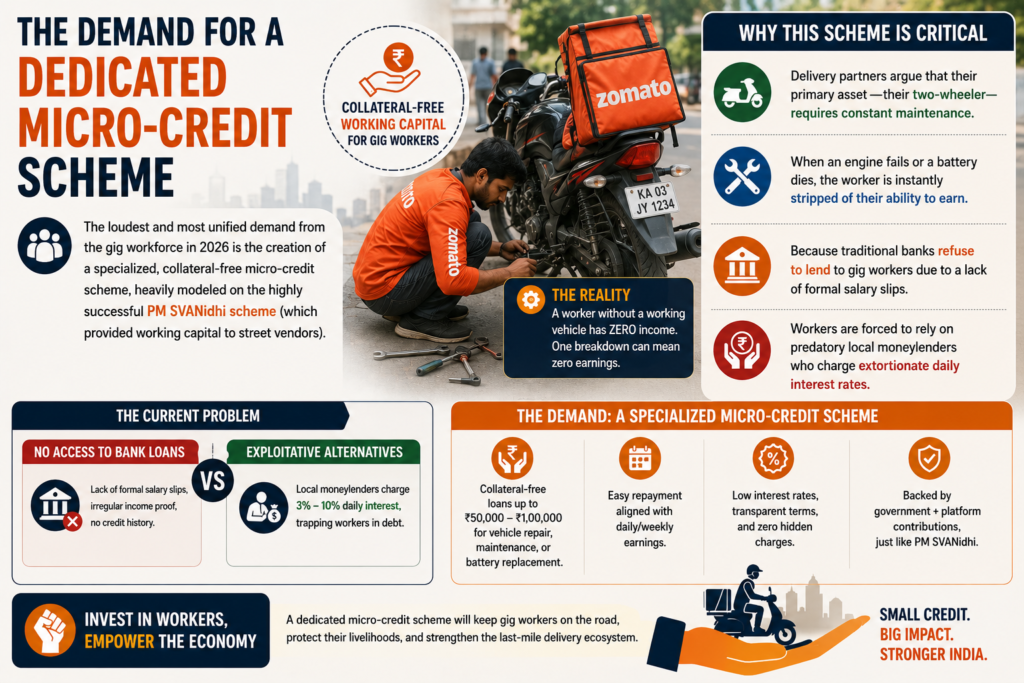
The loudest and most unified demand from the gig workforce in 2026 is the creation of a specialized, collateral-free micro-credit scheme, heavily modeled on the highly successful PM SVANidhi scheme (which provided working capital to street vendors). Delivery partners argue that their primary asset—their two-wheeler—requires constant maintenance. When an engine fails or a battery dies, the worker is instantly stripped of their ability to earn. Because traditional banks refuse to lend to gig workers due to a lack of formal salary slips, workers are forced to rely on predatory local moneylenders who charge extortionate daily interest rates.
Leveraging Digital Earnings for Instant Loans
Financial inclusion experts argue that a state-backed credit scheme is entirely feasible. Because platform workers have a highly transparent, fully digitized daily earnings footprint tracked by the aggregators, the government could easily mandate platforms to share this data with public sector banks (with the worker’s consent). This digital footprint serves as perfect alternative collateral, allowing banks to issue rapid, low-interest emergency repair loans or EV upgrade financing directly to the worker’s account.
Conclusion
The 2026 Budget cycle highlights a massive disconnect between government macro-policy and the immediate realities of the street. Long-term pension plans are wonderful, but a delivery rider cannot contribute to a pension if they cannot afford to fix their scooter’s broken axle today. If the government truly views gig workers as the future of India’s micro-entrepreneurship, it must launch a “PM Gig-Nidhi” scheme immediately. Providing secure, low-interest liquidity to keep delivery partners on the road is the fastest way to stabilize the entire urban platform economy.