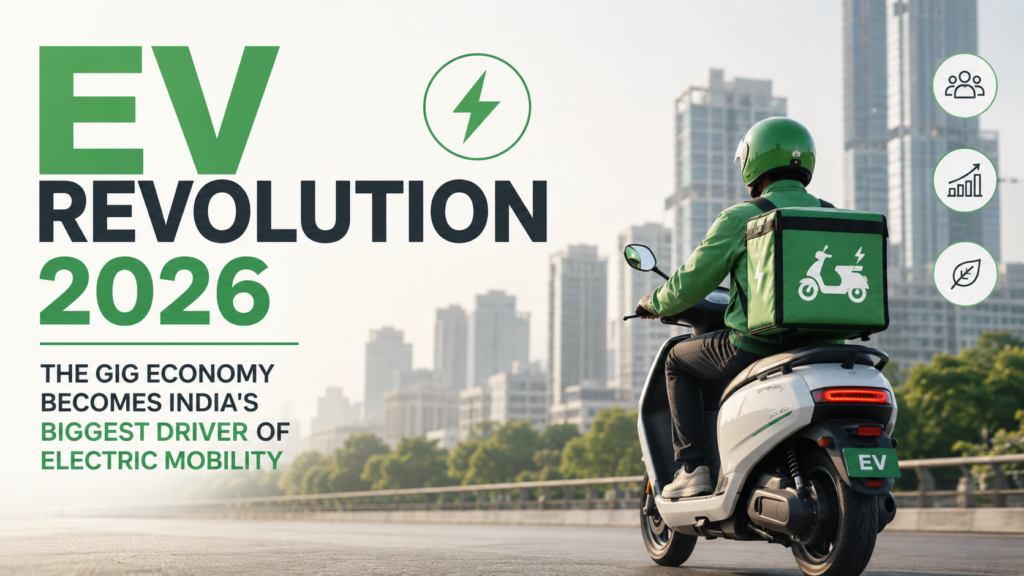
India’s electric vehicle (EV) revolution is no longer being driven primarily by personal car buyers; it is being aggressively spearheaded by the commercial gig economy. Delivery partners associated with platforms like Zomato, Swiggy, Zepto, and Blinkit are rapidly transitioning from traditional petrol-powered two-wheelers to electric mobility. Recognizing this massive shift, EV rental startups and fleet management companies are rapidly scaling their operations. Recently, Bijliride, a prominent EV rental startup operating over 4,000 vehicles, announced plans to deploy an additional 2,500 electric two-wheelers specifically targeting gig workers over a 90-day period.
The Economics of Switching to EVs
For a delivery partner, the decision to switch to an EV is strictly economic rather than just environmental. Gig workers typically travel between 120 and 150 kilometers daily to fulfill food and grocery orders. Under the crushing weight of volatile petrol prices, fuel costs eat up a massive chunk of their daily earnings. According to industry data, by switching to a rented or financed EV, a delivery rider can save anywhere between ₹8,000 and ₹15,000 per month. This massive reduction in operational overhead essentially acts as a direct, instant pay raise. Startups are facilitating this by establishing hub-and-spoke models and battery-swapping networks, completely eliminating “range anxiety” for workers on a 12-hour shift.
Creating Millions of New Green Jobs
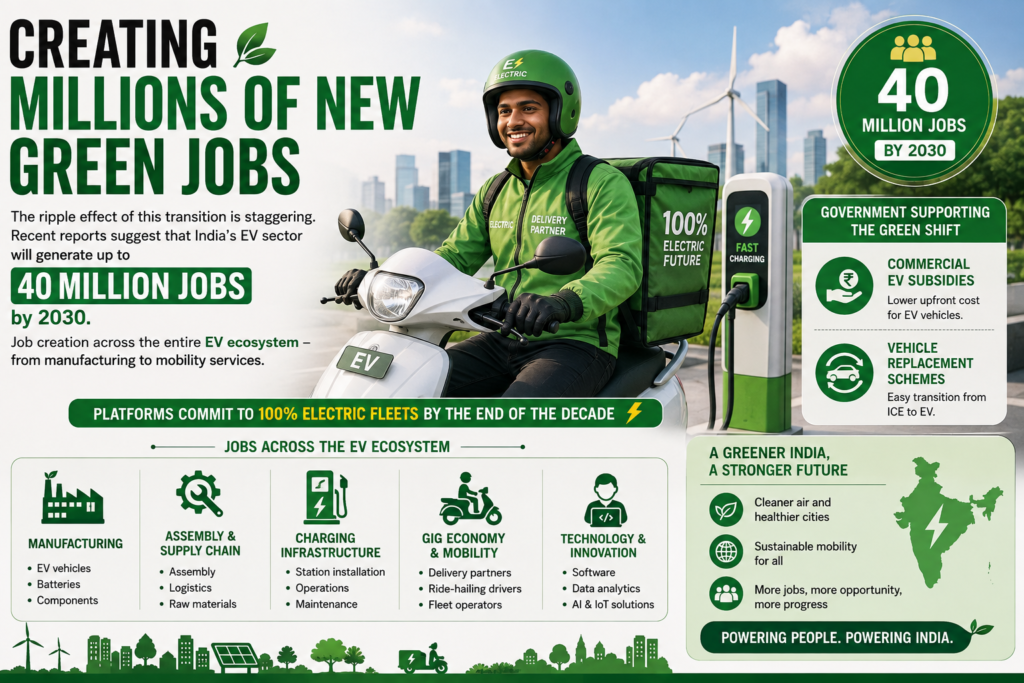
The ripple effect of this transition is staggering. Recent reports suggest that India’s EV sector will generate up to 40 million jobs by 2030, encompassing both direct manufacturing roles and indirect gig-economy mobility services. As platforms commit to 100% electric fleets by the end of the decade, state governments are supporting the transition with commercial EV subsidies and vehicle replacement schemes.
Conclusion
The integration of EVs into the gig economy is the ultimate win-win scenario for modern urban infrastructure. For platforms, it satisfies their ESG (Environmental, Social, and Governance) commitments; for cities, it dramatically reduces tailpipe emissions; and most importantly, for the gig workers, it fundamentally repairs their broken unit economics. If battery-swapping infrastructure continues to scale at this pace, petrol-powered delivery vehicles will be entirely obsolete in Indian metro cities by the end of the decade.