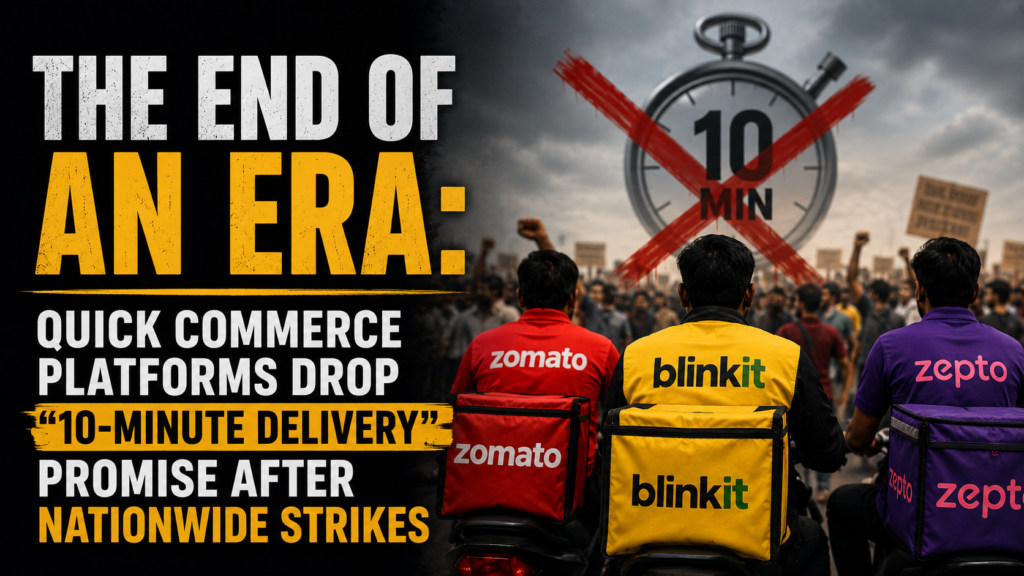
The defining feature of India’s quick-commerce boom—the audacious “10-minute delivery” promise—is officially coming to an end in 2026. Following coordinated New Year’s Eve flash strikes involving over 200,000 delivery riders nationwide, major platforms have been forced to rethink their marketing strategies. The riders, supported by the Indian Federation of App-Based Transport Workers (IFAT) and the Telangana Gig and Platform Workers Union (TGPWU), demanded an immediate halt to the 10-minute model, citing severe physical risks, rising accident rates, and extreme psychological stress caused by algorithmic countdowns.
Government Intervention Forces the Pivot
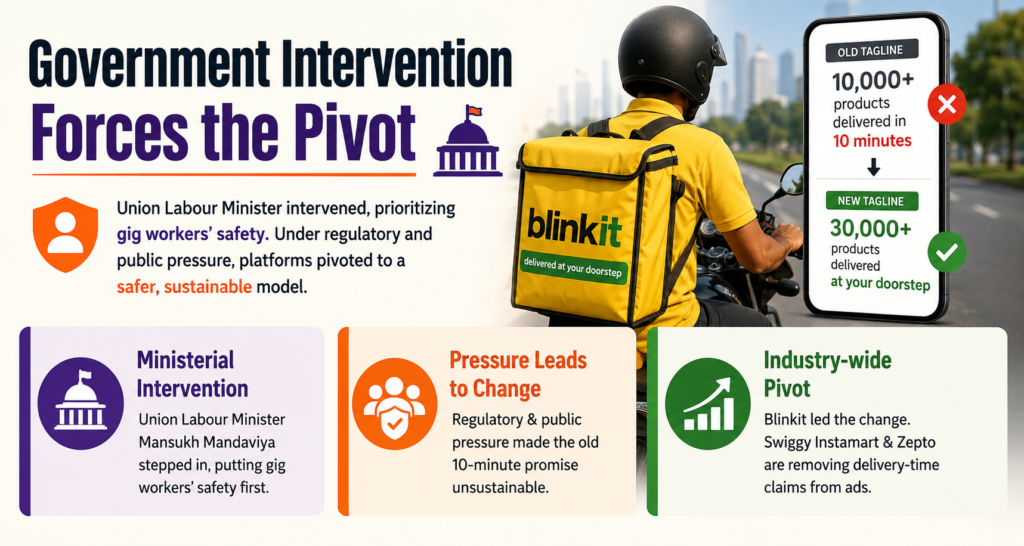
The tipping point arrived when Union Labour Minister Mansukh Mandaviya directly intervened, prioritizing the occupational safety of gig workers. Under immense regulatory and public pressure, platforms recognized that the model was no longer sustainable. Blinkit was the first to officially inform the Labour Ministry of its pivot, changing its principal tagline from “10,000+ products delivered in 10 minutes” to a much safer “30,000+ products delivered at your doorstep”. Industry insiders confirm that Swiggy Instamart and Zepto are actively scrubbing delivery-time commitments from their billboards and digital advertisements.
The Shift in Algorithmic Management
For years, delivery partners reported that while platforms claimed the 10-minute metric was achieved through hyper-local dark stores and not speeding, the on-ground reality was vastly different. Delays consistently resulted in bad ratings, monetary penalties, and arbitrary ID blocking. By removing the hard 10-minute deadline, platforms are now modifying their dispatch algorithms to account for traffic density, weather conditions, and road safety, effectively prioritizing safe arrival over instant gratification.
Conclusion
The death of the 10-minute delivery promise is a monumental victory for Indian labor rights. It proves that coordinated gig worker strikes can successfully dismantle deeply embedded corporate business models. Consumers will easily adapt to waiting 20 or 30 minutes for their groceries, but a delivery partner cannot recover from a fatal road accident caused by a countdown timer. Moving forward, the quick-commerce industry must compete on product variety, quality, and reliability, rather than gambling with the lives of the young workforce that powers their supply chains.