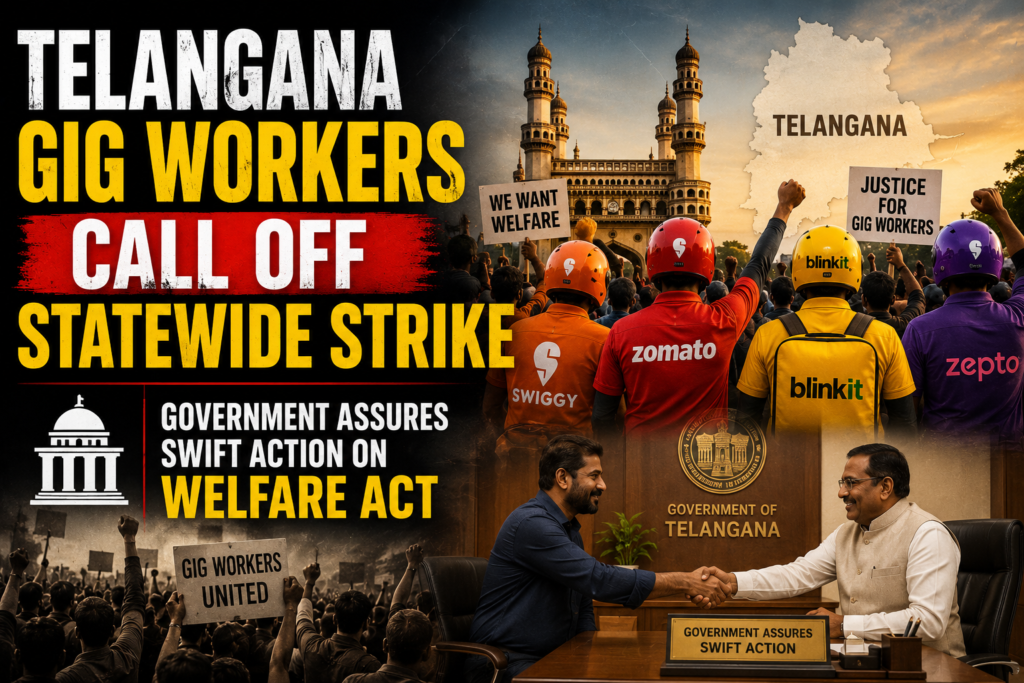
The looming threat of a statewide blackout across food delivery, ride-hailing, and quick-commerce platforms in Telangana has been officially averted. Late Friday evening, gig and platform workers’ unions formally called off their proposed August 8 strike following successful, high-stakes negotiations with the Telangana state government.
For the hundreds of thousands of delivery partners working with platforms like Swiggy, Zomato, Blinkit, Zepto, and Uber in cities like Hyderabad, the strike was seen as a last resort. The core of the frustration stemmed from the delayed implementation of the highly anticipated Telangana Gig Workers Welfare Act. While the legislation was introduced with much fanfare to provide a social safety net for platform workers, the operational guidelines and actual benefits had yet to materialize on the ground.
A Breakthrough in Negotiations
The breakthrough occurred during a critical meeting at the Secretariat between union representatives and Labour Minister G. Vivek Venkatswamy. Acknowledging the immense contribution of delivery partners and ride-hailing drivers to the state’s urban economy, the minister assured the delegation that the government is fully committed to ensuring robust social security for the gig workforce.
According to official statements, the Labour Ministry has promised that the implementation guidelines for the Welfare Act will be examined sympathetically and officially notified soon. The government appealed for patience from the unions while the structural framework—which involves setting up a dedicated welfare board and a funding mechanism—is properly finalized. Expressing confidence that the government will implement the law in its “true spirit,” the unions welcomed the assurances and immediately suspended the strike action.
What Does the Welfare Act Mean for Delivery Partners?
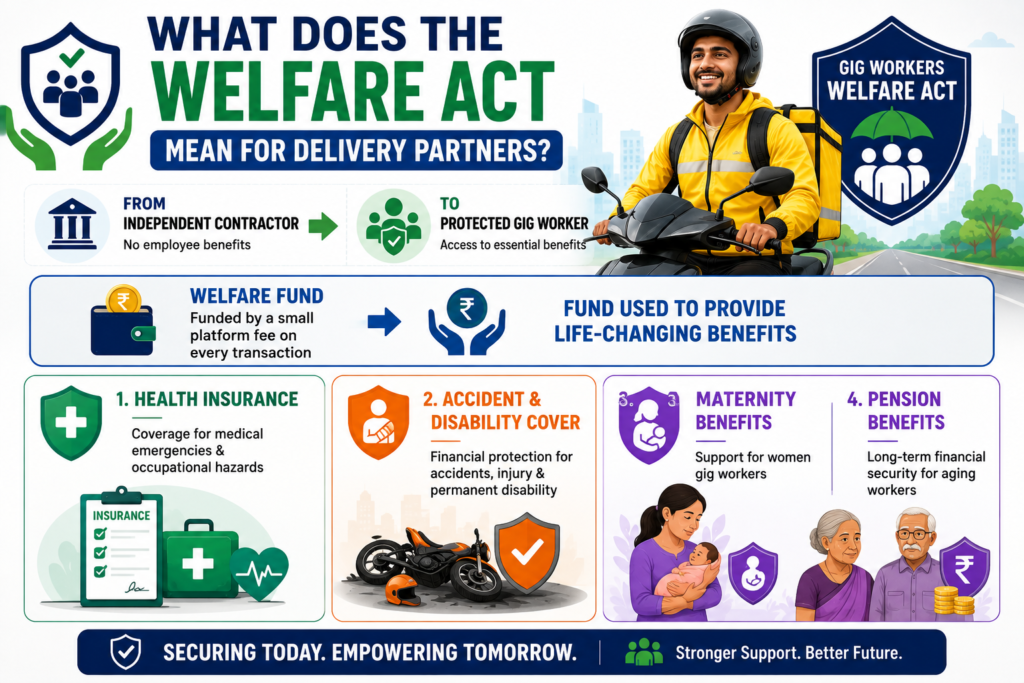
For years, delivery riders have operated as independent contractors, shouldering the physical and financial risks of the job without access to traditional employee benefits. The Telangana Gig Workers Welfare Act is designed to fundamentally change this dynamic.
Once fully implemented, the Act is expected to establish a dedicated welfare fund financed by a small platform fee levied on every transaction. This corpus will be utilized to provide delivery partners with crucial, life-changing benefits, including:
- Comprehensive Health Insurance: Coverage for medical emergencies and occupational hazards, an absolute necessity given the time riders spend on heavily trafficked roads.
- Accident and Disability Cover: Financial protection in the event of severe on-the-job accidents or permanent vehicle damage.
- Maternity and Pension Benefits: Long-term financial security initiatives to support aging workers and female gig workers navigating platform algorithms.
The Road Ahead for the Gig Economy
The resolution of this strike is a significant win for both delivery partners and everyday consumers in Telangana. For the riders, it marks a critical step toward formal recognition and financial security without losing the flexibility that draws many to gig work. For consumers, it ensures uninterrupted access to essential food and grocery delivery services this month.
As Telangana prepares to roll out its finalized guidelines, it joins a growing list of Indian states—including Rajasthan, Karnataka, and Maharashtra—that are actively moving to regulate the platform economy. Delivery partners across the country will be watching Hyderabad closely, as the successful execution of this Welfare Act could serve as a national blueprint for gig worker rights in 2026 and beyond.