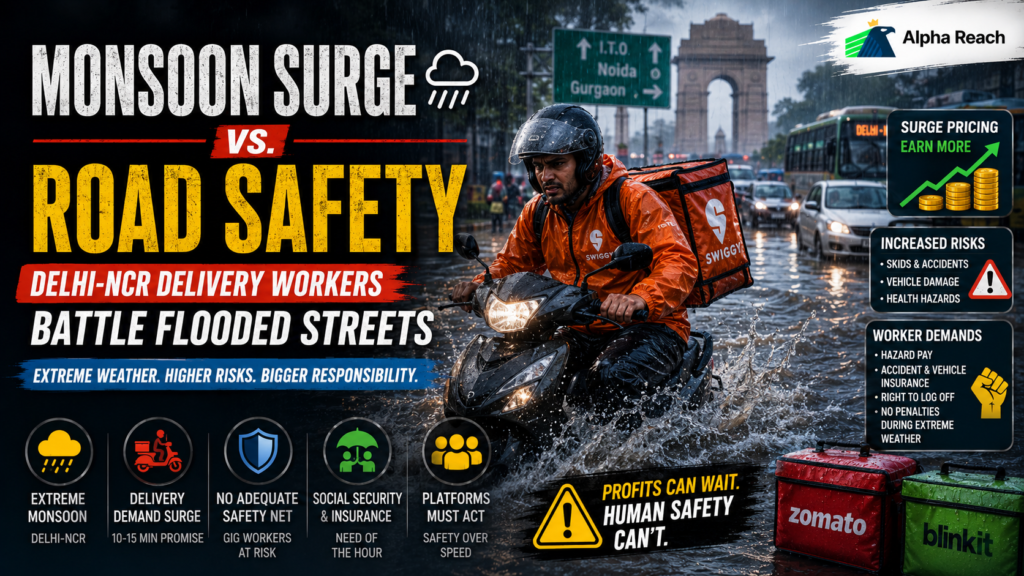
As severe monsoon downpours continue to batter the Delhi-National Capital Region (NCR), the city’s infrastructure has been pushed to its absolute limits. Waterlogged arterial roads, massive traffic gridlocks, and localized flooding have heavily disrupted daily life for millions of residents. However, for the city’s massive fleet of gig workers—the human backbone of quick commerce and food delivery platforms like Zomato, Swiggy, and Blinkit—the torrential rain brings a complex paradox: a simultaneous spike in earning potential combined with severe occupational hazards. With urban residents preferring to stay indoors and avoid the gridlock, demand for immediate grocery and food deliveries skyrockets, putting immense pressure on platform algorithms and delivery partners.
The Double-Edged Sword of Surge Pricing
To keep the supply chain moving during extreme weather, major aggregators implement dynamic “surge pricing” and weather-based incentives. Delivery partners are offered increased per-order payouts, often double their standard rates, to brave the treacherous conditions. For many gig workers facing the pinch of urban inflation, these rainy days present a crucial opportunity to maximize their weekly earnings. However, the financial lure masks a grim reality. Navigating waterlogged roads on two-wheelers dramatically increases the risk of skidding, engine water-logging, and severe traffic accidents. The temporary financial boost often fails to cover the long-term costs of vehicle maintenance or potential hospital bills, leaving workers to shoulder the financial burden of weather-induced damages.
Union Demands and Occupational Safety Protocols
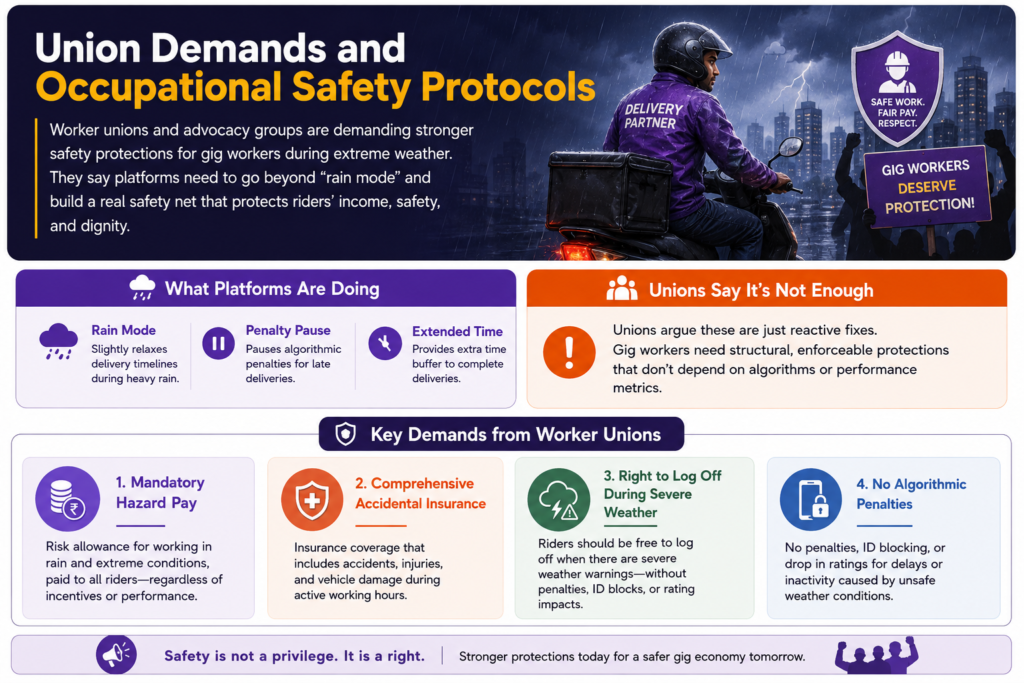
Worker unions and advocacy groups have become increasingly vocal regarding the lack of weather-specific safety protocols in the gig economy. While some platforms have introduced features like “rain mode”—which slightly relaxes delivery timelines and pauses algorithmic penalties for late deliveries—unions argue this is merely a reactive rather than a structural solution. Labor activists are demanding a more robust safety net, including mandatory hazard pay that isn’t tied to performance metrics, comprehensive accidental insurance that covers vehicle damage, and the fundamental right to log off during severe weather warnings without facing algorithmic penalties, ID blocking, or a drop in their platform ratings.
The Consumer and Platform Responsibility
The ongoing situation in Delhi-NCR has also sparked a wider debate about consumer behavior and platform accountability. Social media is currently flooded with dual narratives: customers complaining about delayed orders or unserviceable areas, contrasted directly with viral videos of delivery agents wading through knee-deep water holding grocery bags. Industry experts suggest that the current quick-commerce model—which structurally promises 10-to-15-minute deliveries—is fundamentally incompatible with India’s monsoon infrastructure. Going forward, there is a pressing need for a regulatory framework that mandates extreme-weather pauses.
Final Word / Thought / Conclusion
The monsoon crisis in Delhi-NCR exposes a glaring vulnerability in the quick-commerce business model: it relies heavily on human endurance to bridge infrastructural gaps. While surge pricing offers a temporary financial band-aid, it effectively commodifies the physical risk taken by delivery partners. The conclusion is clear—if platforms want to sustain 10-minute delivery promises year-round, they must proactively invest in weather-proof social safety nets, comprehensive vehicle insurance, and mandatory pause mechanisms during severe civic weather alerts. Profits and convenience cannot continue to take precedence over human safety.