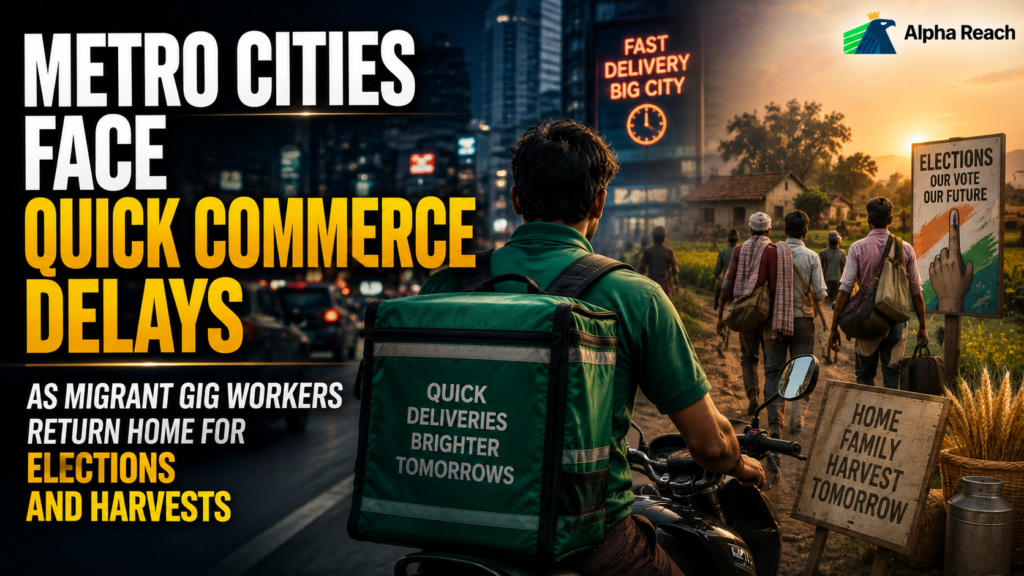
The promise of 10-minute grocery deliveries and instant home services in India’s massive metro areas is currently facing a severe reality check. Quick commerce, e-commerce, and instant home service platforms are grappling with an acute shortage of gig workers. As of April 2026, industry executives reported that the daily active gig workforce on major platforms is running 10% to 12% below standard operational levels. This sudden drain on the labor pool is primarily driven by delivery riders and service helpers returning en masse to their hometowns in states like West Bengal and Uttar Pradesh to participate in regional elections and the vital agricultural harvest season.
Demand Spikes Clash with Dwindling Fleets
The timing of this workforce exodus could not be worse for aggregators. This period coincides with the Indian Premier League (IPL) cricket season and the onset of peak summer heat, times when consumer demand for food delivery, cold beverages, and instant groceries naturally skyrockets. The collision of surging demand and a shrinking fleet is causing unprecedented logistical bottlenecks. Order fulfillment for quick grocery services in major hubs like Delhi-NCR, Bengaluru, and Mumbai is facing noticeable delays. Across multiple PIN codes, delivery slots on platforms like Zepto, Urban Company, and Pronto have completely gone dark or shifted from “instant” to “scheduled delivery,” forcing customers to wait days for services they previously received in minutes.
The Vulnerability of Migrant-Dependent Models
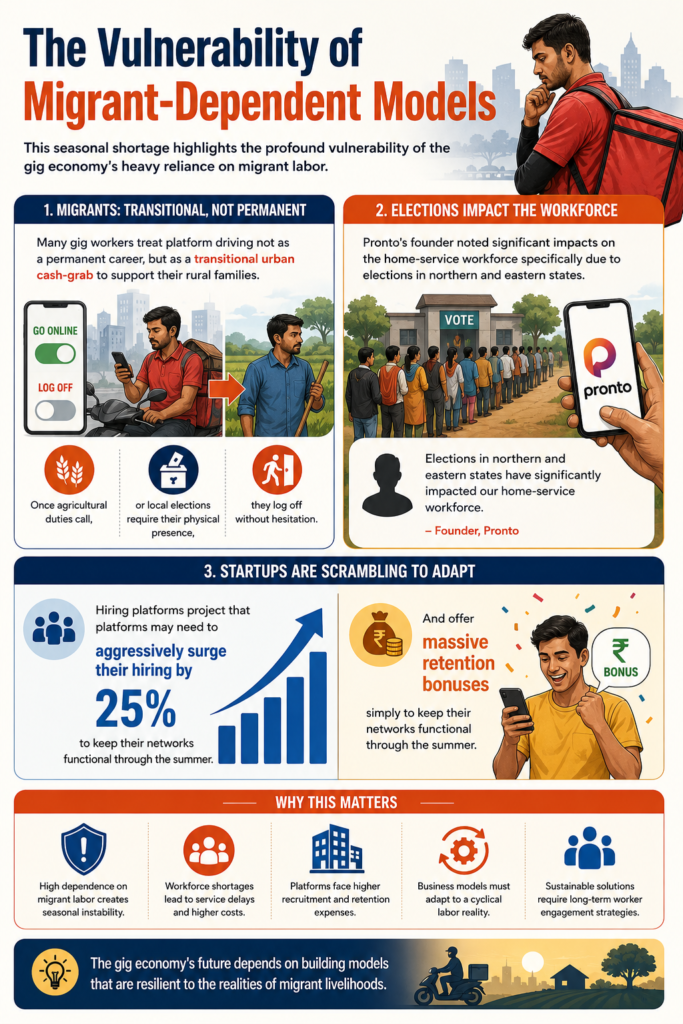
This seasonal shortage highlights the profound vulnerability of the gig economy’s heavy reliance on migrant labor. Many gig workers treat platform driving not as a permanent career, but as a transitional urban cash-grab to support their rural families. Once agricultural duties call, or local elections require their physical presence to secure rural subsidies, they log off without hesitation. Startups are scrambling to adjust; for instance, Pronto’s founder noted significant impacts on the home-service workforce specifically due to elections in northern and eastern states. Hiring platforms project that platforms may need to aggressively surge their hiring by 25% and offer massive retention bonuses simply to keep their networks functional through the summer.
Final Word / Thought / Conclusion
The 2026 gig worker shortage proves that the quick-commerce business model is highly fragile when exposed to India’s deep-rooted socio-cultural and agricultural calendars. Algorithms can predict consumer demand with stunning accuracy, but they cannot stop a migrant worker from going home to harvest their family’s crops. To build resilient networks, platforms must evolve beyond basic transactional relationships. Offering long-term incentives, paid seasonal leaves, or guaranteed return-bonuses might be the only way aggregators can prevent their delivery networks from collapsing every time the harvest season arrives.