
In a clear reflection of how deeply the gig economy has integrated into India’s formal economic structure, massive strides are being made in financial inclusion for platform workers. Recently, Sriram Iyer, Managing Director and CEO of HDFC Pension, highlighted highly encouraging early signs from their push into the gig economy. Through strategic partnerships with major platforms like Zomato and Urban Company, HDFC has fundamentally changed how it approaches pension adoption among independent contractors. According to Iyer, gig workers are increasingly embracing the National Pension System (NPS), with some workers contributing up to ₹5,000 weekly toward their retirement accounts.
Breaking the “Thin-File” Credit Barrier
For years, one of the most debilitating aspects of gig work has been the “thin-file” credit problem. Because gig workers lack traditional employment letters and fixed salary slips, banking institutions have largely denied them access to formal credit, personal loans, or long-term savings vehicles. The integration of the e-Shram framework has enabled the creation of over 1.5 lakh Permanent Retirement Account Numbers (PRANs) for gig workers almost instantaneously. By participating in formal pension systems, delivery partners and home service professionals are finally generating verifiable financial histories, effectively breaking down the walls of traditional banking exclusions.
Lifestyle Perks and Cross-Selling Ecosystems
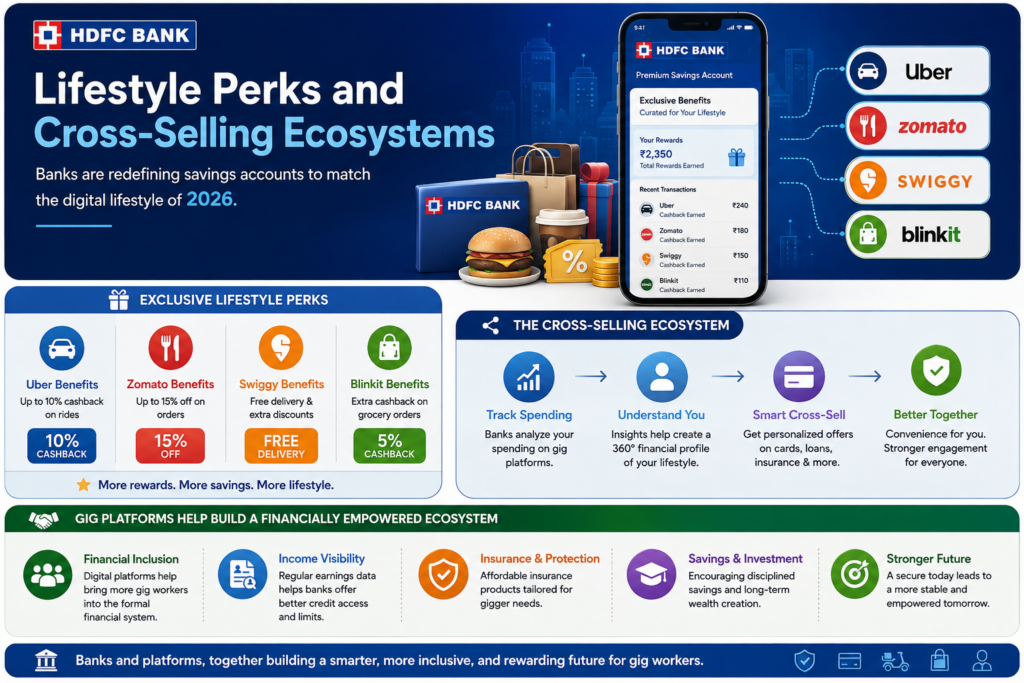
Beyond pensions, major banking institutions are also restructuring their core savings accounts to reflect the digital realities of 2026. HDFC Bank, for example, has begun bundling exclusive lifestyle vouchers and cashback benefits for top gig platforms like Uber, Zomato, Swiggy, and Blinkit directly into their premium accounts. This is a highly sophisticated ecosystem play. By tracking consumer spending habits on gig platforms, banks can seamlessly cross-sell customized financial products. Simultaneously, as platforms help workers build financial records, they ensure that the workforce is financially stable, which leads to lower attrition rates and a more reliable labor pool for the platforms themselves.
The Broader Trend of Economic Formalization
This financial mainstreaming represents a larger trend of macroeconomic formalization. The digital platform economy is no longer operating in the shadows of informal labor. By building structural bridges between massive gig workforces and legacy financial institutions like HDFC, the Indian economy is securing the future of a demographic that was previously vulnerable to predatory lending and financial instability.
Final Word
The integration of gig workers into the National Pension System via HDFC and platform partnerships is arguably one of the most positive developments in the sector to date. It proves that gig work does not have to be synonymous with financial precarity. When platforms take responsibility for facilitating financial tools, workers willingly invest in their own futures. Ultimately, financial inclusion is the first major step toward recognizing gig workers not just as algorithmic data points, but as legitimate, long-term contributors to the nation’s formal economy.