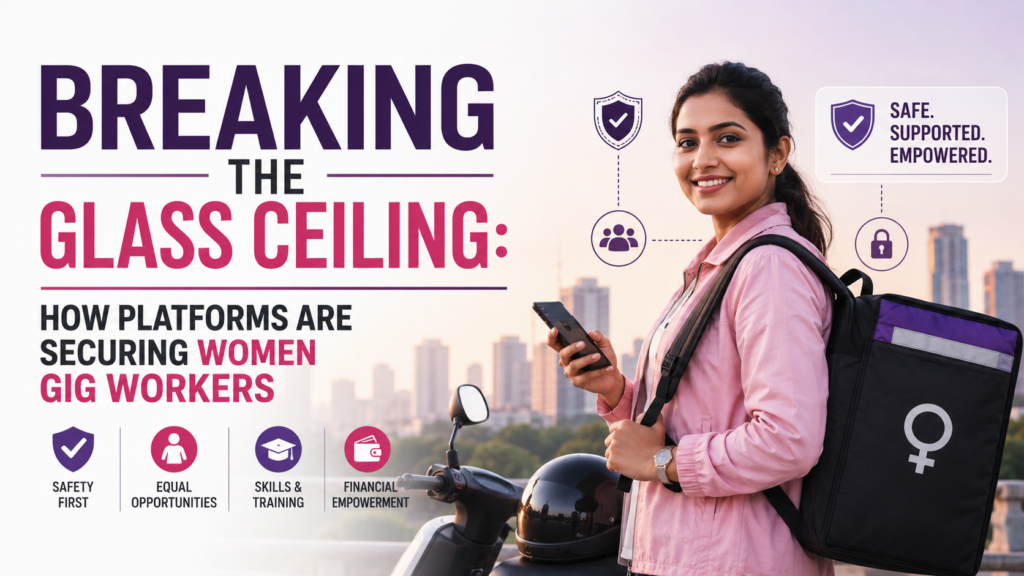
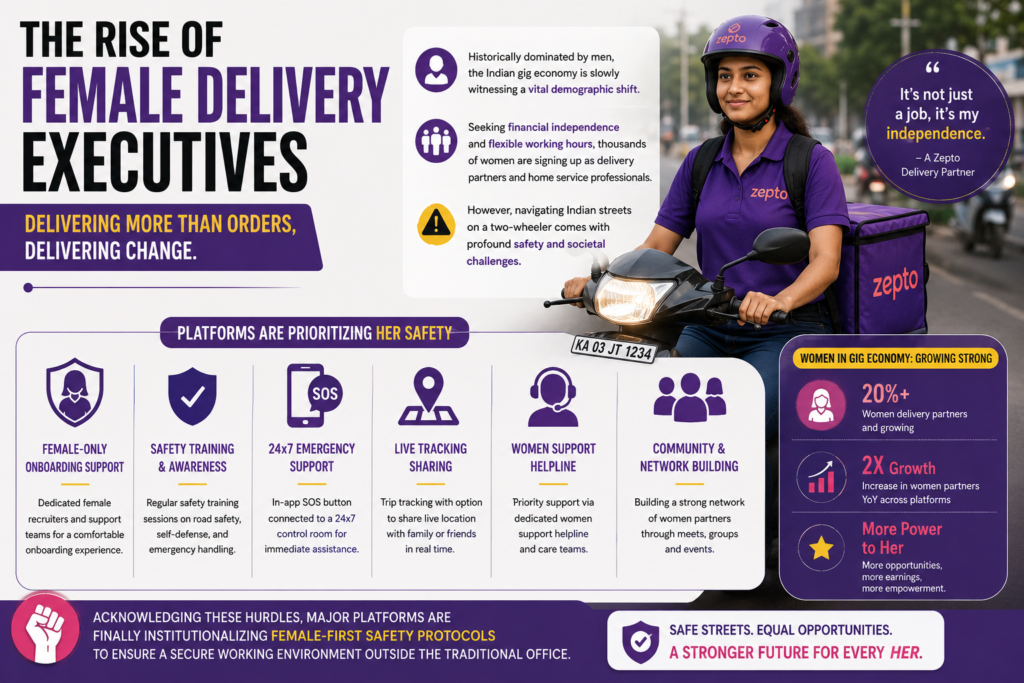
Historically dominated by men, the Indian gig economy is slowly witnessing a vital demographic shift. Seeking financial independence and flexible working hours, thousands of women are signing up as delivery partners and home service professionals. However, navigating Indian streets on a two-wheeler comes with profound safety and societal challenges. Acknowledging these hurdles, major platforms are finally institutionalizing female-first safety protocols to ensure a secure working environment outside the traditional office.
POSH Policies and SOS Protocols
Swiggy has been at the forefront of this shift, having onboarded its first female delivery executive back in 2016. Recently, the company introduced a comprehensive Sexual Harassment Redressal Policy specifically tailored for its women delivery force, aligning in spirit with India’s POSH (Prevention of Sexual Harassment) Act. Because gig workers are technically independent contractors, they historically fell outside standard corporate legal protections. This new policy allows female executives to report harassment by customers, restaurant staff, or male counterparts directly through an emergency SOS system. Furthermore, if harassment occurs at a customer’s location, algorithms ensure no other female partner is ever assigned to that address again.
Operational Flexibility and Restrooms
Safety extends beyond harassment prevention. Recognizing biological realities, Swiggy became the first platform to offer paid period time off to its female fleet. Additionally, women have the absolute right to decline deliveries if they deem a neighborhood unsafe, without facing any algorithmic penalties or disincentives. This data is continuously fed back into the system to map out “unsafe zones” where female partners are no longer routed after dark.
Conclusion
The proactive safety measures taken by platforms like Swiggy signal a maturing gig ecosystem. If the Indian gig economy is to reach its projected milestone of 23.5 million workers by 2030, it cannot ignore 50% of the population. True financial inclusion means that a female delivery partner must feel as safe dropping off an order at 10:00 PM as her male counterpart. These policies aren’t just corporate PR—they are the fundamental building blocks of an equitable digital workforce.