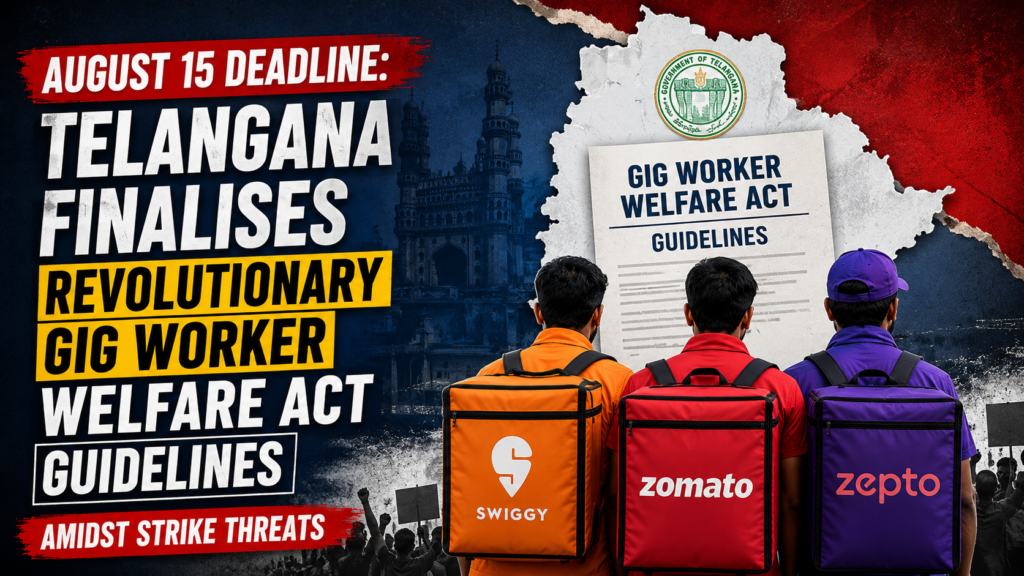
In a major victory for labor rights advocates in southern India, the Telangana state government has officially finalised the operational guidelines for implementing the Telangana Platform Based Gig Workers (Registration, Social Security and Welfare) Act, 2026. The legislation, which was originally passed by the state legislature in March 2026 and approved by Governor Shiv Pratap Shukla in May, represents a massive leap forward in formalizing the state’s sprawling digital workforce. Government sources indicate that the much-anticipated law is slated to come into full force on August 15, coinciding with Independence Day.
Mounting Pressure and Strike Ultimatums
The government’s acceleration of these guidelines has not happened in a vacuum. It comes directly on the heels of mounting pressure from highly organized gig workers’ unions. Frustrated by low payouts and arbitrary management practices from quick-commerce and food delivery platforms, major unions in Telangana announced an indefinite strike set to begin on August 8, demanding immediate wage reforms and the rapid rollout of the promised social security measures. Union leaders have made it clear that while they welcome the government’s August 15 timeline, the planned strikes will proceed unless platforms actively engage in tripartite negotiations regarding fair compensation.
What the Guidelines Promise
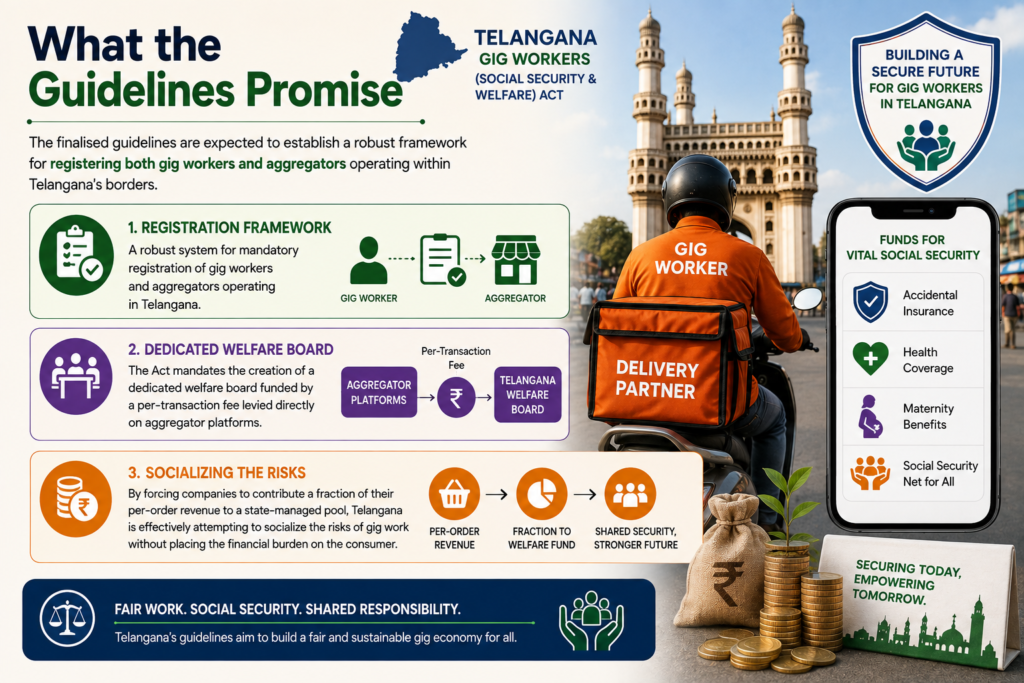
The finalised guidelines are expected to establish a robust framework for registering both gig workers and aggregators operating within Telangana’s borders. Crucially, the Act mandates the creation of a dedicated welfare board funded by a per-transaction fee levied directly on the aggregator platforms. These funds are earmarked for vital social security nets, including accidental insurance, health coverage, and maternity benefits for women in the platform economy. By forcing companies to contribute a fraction of their per-order revenue to a state-managed pool, Telangana is effectively attempting to socialize the risks of gig work without placing the financial burden on the consumer.
Conclusion
The rapid finalization of the Telangana Gig Workers Act guidelines proves that coordinated union pressure actually works. By threatening an indefinite strike just a week before the proposed rollout date, workers forced the state’s hand to ensure the legislation didn’t remain a hollow, unimplemented promise. If Telangana successfully operationalizes this welfare board by Independence Day without causing platforms to exit the state, it will serve as the ultimate blueprint for every other state in India. Platforms can no longer rely on endless delays; the era of state-mandated social security is officially here.