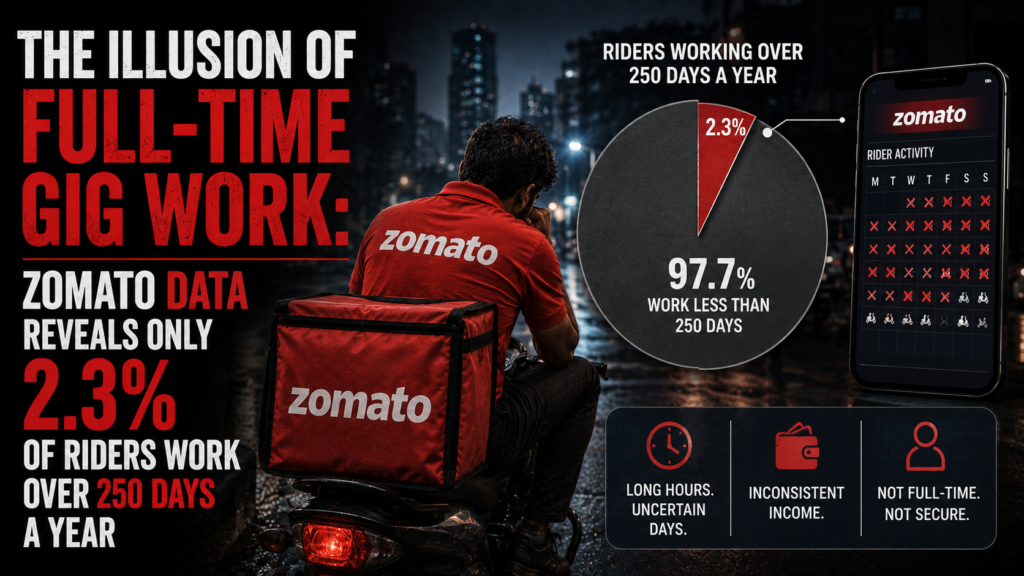
A persistent myth promoted by tech aggregators is that gig work represents a stable, full-time capitalist adventure that can easily lift individuals into the middle class. However, a closer look at platform data reveals a starkly different reality characterized by massive labor churn and extreme transience. Recent internal data points from Zomato expose the deep flaws in treating gig work as a permanent career path. Astonishingly, the average Zomato delivery worker only put in 38 days of work in an entire year, averaging seven hours per working day. Even more telling, a mere 2.3% of the fleet worked more than 250 days annually.
The Unreachable ₹21,000 Benchmark
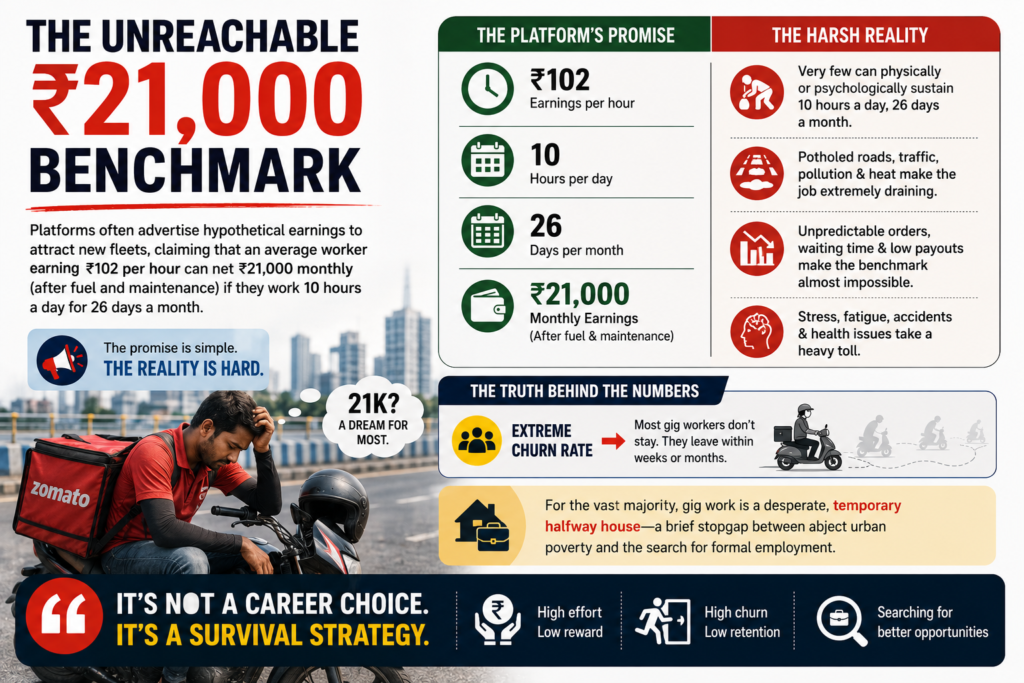
Platforms often advertise hypothetical earnings to attract new fleets, claiming that an average worker earning ₹102 per hour can net ₹21,000 monthly (after fuel and maintenance) if they work 10 hours a day for 26 days a month. The reality is that very few individuals can physically or psychologically sustain that grueling effort on potholed, polluted roads. The extreme churn rate indicates that the vast majority of gig workers use platforms as a desperate, temporary halfway house—a brief stopgap between abject urban poverty and the search for formal employment.
The Benefit of Surplus Labor for Platforms
For the platforms, however, this massive turnover is actually a feature, not a bug. India possesses a massive, seemingly inexhaustible reservoir of surplus youth labor. Millions of burned-out riders voluntarily log out and delete the apps each year, only to be immediately replaced by millions of new rural migrants desperate for immediate cash flow. This endless slack in the labor system ensures that consumer orders are always fulfilled, completely removing any incentive for platforms to significantly raise base pay or invest in long-term worker retention.
Conclusion
The revelation that only 2.3% of delivery riders stick around for a full year shatters the illusion of the “micro-entrepreneur”. The Indian gig economy is currently functioning as a meat grinder, chewing up young, energetic labor and spitting them out a few months later when their vehicles break down or their bodies give out. Until regulators force platforms to offer genuine loyalty bonuses, tiered wage increases, and comprehensive health insurance for long-term workers, gig work will remain a highly exploitative revolving door rather than a stepping stone to prosperity.