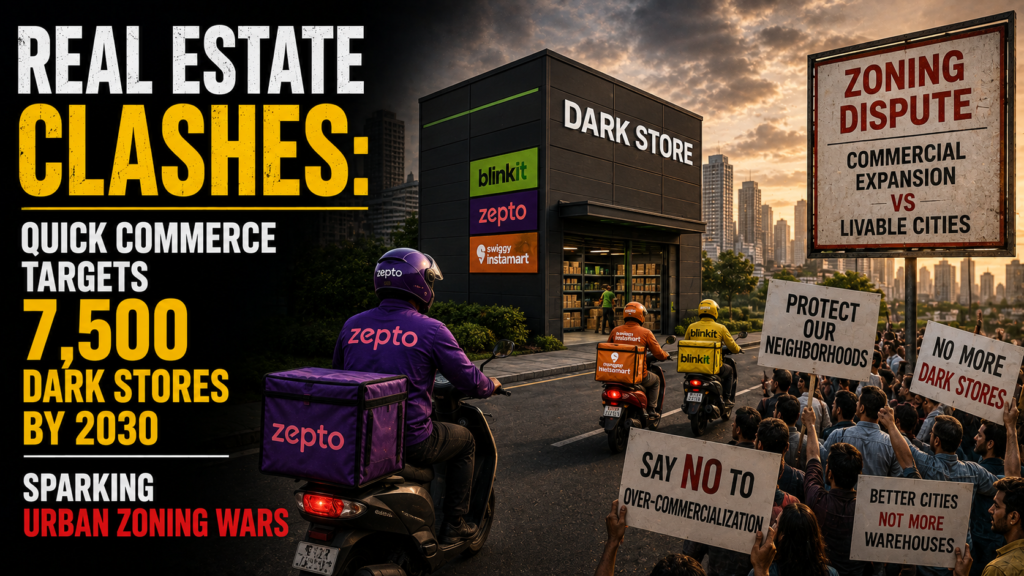
To fulfill the insatiable urban demand for 15-minute grocery deliveries, quick-commerce giants like Blinkit, Swiggy Instamart, and Zepto are pouring billions into hyper-local real estate. These “dark stores”—small, strictly-for-delivery warehouses strategically located in dense residential neighborhoods—are the physical backbone of the gig economy. According to real-estate broker Savills Plc, the number of dark stores in India is projected to witness a staggering threefold growth, expanding from roughly 2,500 facilities today to over 7,500 by 2030. This aggressive expansion is now spilling over from Tier-1 metros deep into smaller Indian cities.
Inflating Commercial Rents
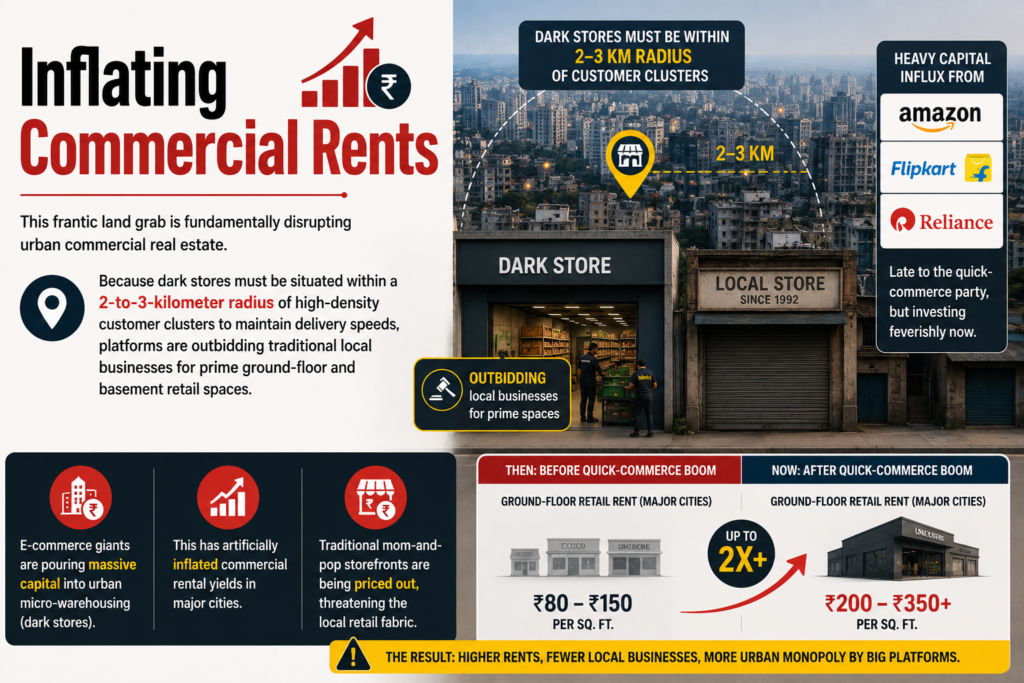
This frantic land grab is fundamentally disrupting urban commercial real estate. Because dark stores must be situated within a 2-to-3-kilometer radius of high-density customer clusters to maintain delivery speeds, platforms are outbidding traditional local businesses for prime ground-floor and basement retail spaces. The influx of heavy capital from e-commerce heavyweights like Amazon, Flipkart, and Reliance—who were late to the quick-commerce party but are now investing feverishly—has artificially inflated commercial rental yields in major cities, pricing out traditional mom-and-pop storefronts.
Resident Backlash and Zoning Conflicts
However, integrating industrial-scale logistics into quiet residential neighborhoods is sparking massive blowback. Resident Welfare Associations (RWAs) across Delhi, Mumbai, and Bengaluru are increasingly filing zoning complaints against dark store operators. The core issue is traffic congestion and noise pollution. A single dark store can attract hundreds of gig workers on two-wheelers throughout the day and late into the night, creating severe bottlenecks, exhaust pollution, and parking nightmares in narrow residential lanes.
Conclusion
The rapid proliferation of dark stores is a classic example of digital innovation outpacing physical civic planning. While consumers love the convenience of rapid delivery, nobody wants a noisy, congested micro-warehouse operating directly below their apartment window. As the industry scales toward 7,500 units, municipal corporations must urgently introduce specific “Quick Commerce Zoning Regulations.” These facilities need dedicated loading zones, mandated noise control, and strict operating hours, ensuring that the convenience of app users does not destroy the livability of urban neighborhoods.