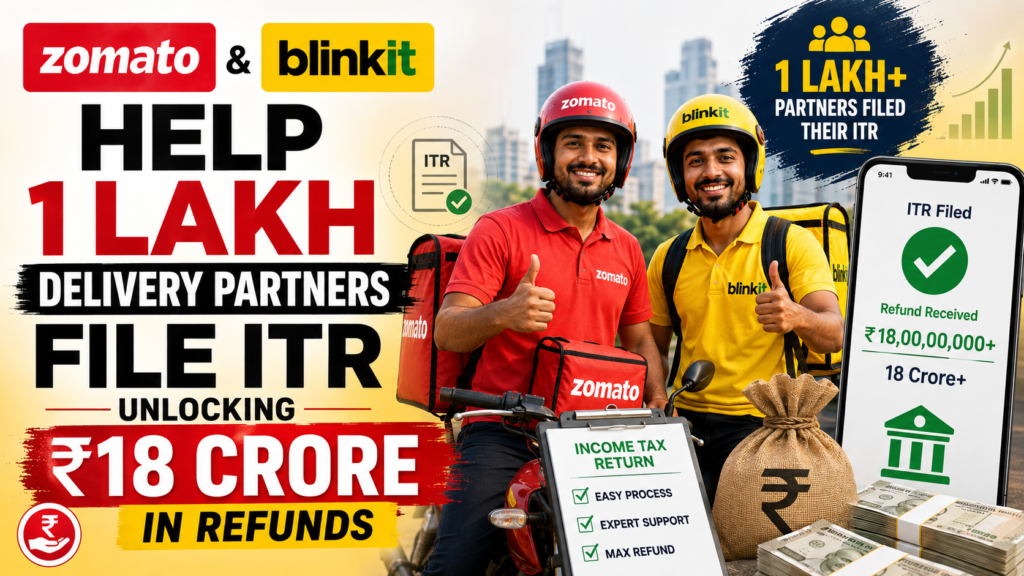
In a major push for financial inclusion within India’s booming gig economy, Eternal platforms Zomato and Blinkit have successfully facilitated Income Tax Return (ITR) filings for over 100,000 delivery partners so far this year. Spanning 905 cities across the country, this massive digital initiative has already unlocked a staggering ₹18 crore in tax refunds for gig workers, putting hard-earned money directly back into the pockets of the delivery fleet.
The Fast-Approaching August Deadline
With the extended deadline for gig workers to file their taxes quickly approaching on August 31, 2026, this announcement highlights a massive shift in how platform workers interact with the formal financial system. Traditionally, independent contractors and delivery personnel have operated largely in the informal financial sector. However, this year’s data reveals a promising trend: nearly 73% of the Zomato and Blinkit partners who filed their ITR this year were first-time filers with no previous record.
Why ITR Matters for Delivery Partners
For many gig workers, filing income tax might seem unnecessary, especially if their total income falls below the taxable bracket. However, under Indian tax laws, platforms are required to deduct a small percentage of earnings as Tax Deducted at Source (TDS). While it may seem like a minor deduction on a weekly payout, this amount accumulates heavily over the financial year. Filing an ITR is the only legal way to claim this deducted money back as a direct refund.
If we break down the ₹18 crore figure across the 100,000 partners who have successfully filed, it averages out to a refund of roughly ₹1,800 per rider. For a delivery partner navigating rising fuel costs and regular vehicle maintenance fees, an unexpected ₹1,800 cash injection is highly significant. It can cover basic bike servicing, a substantial amount of petrol, or crucial household expenses.
Beyond just getting a refund, an ITR is about building a documented financial history. Historically, banks and financial institutions have rejected loan applications from gig workers simply because their daily platform payouts were not considered “stable” income. An official tax return serves as a universally recognized proof of income. This documentation is absolutely essential when delivery partners need to apply for personal loans, two-wheeler vehicle financing, FD-backed credit cards, and standard rental agreements.
How the Platforms Made It Happen
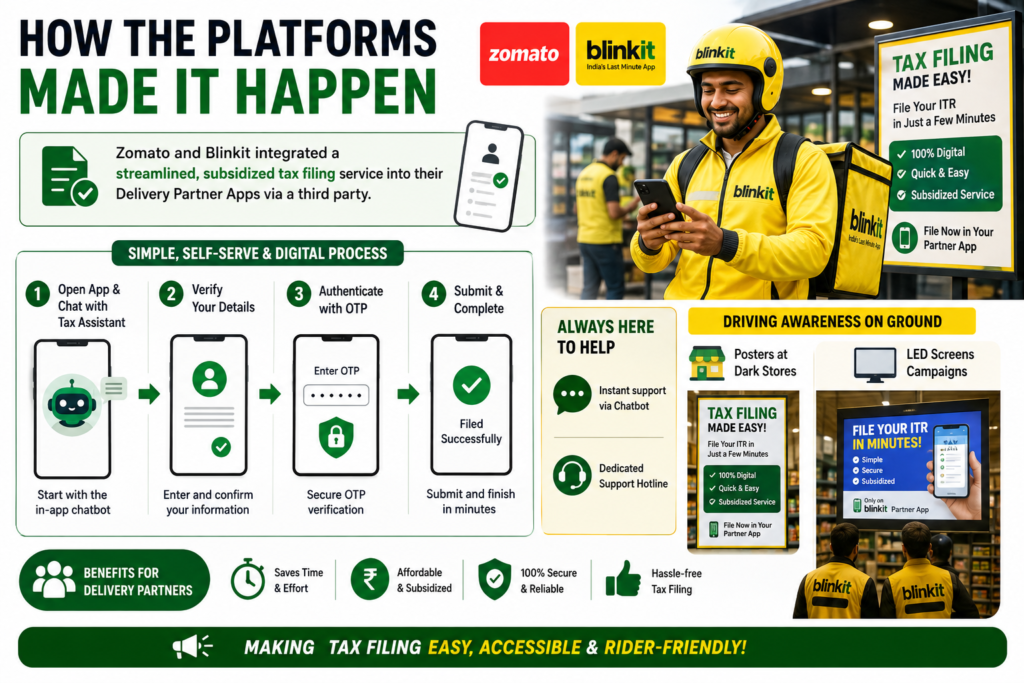
Recognizing that the standard tax filing process can be confusing and expensive, Zomato and Blinkit integrated a streamlined, subsidized filing service directly into their Delivery Partner Apps via a third party.
The process is designed to be entirely self-serve and digital. Delivery partners can initiate the filing through a dedicated in-app chatbot. From there, the system guides them to verify their details, authenticate the filing via OTP, and submit the necessary information within minutes. For those who encounter roadblocks, instant support is available via the chatbot and a dedicated support hotline.
To drive adoption, Blinkit has heavily promoted the initiative at the grassroots level, deploying posters and LED screen campaigns at their dark stores to serve as highly visible daily reminders for riders.
A Step Toward Broader Financial Security
Aditya Mangla, CEO of Zomato, emphasized that supporting delivery partners goes beyond providing daily earning opportunities. Equipping them with a formal financial record and unlocking millions in refunds is a vital part of giving gig workers the long-term standing and security they deserve.
This ITR initiative runs alongside other welfare programs offered by the platforms, including OPD medical cover, accidental and maternity insurance, paid period rest days for female riders, and gig-variant National Pension Scheme (NPS) accounts.
For delivery partners across India who have not yet filed their returns, the clock is ticking. With the August 31 deadline looming, now is the time to utilize these in-app tools, claim pending refunds, and establish a secure financial footprint for the future.