
Despite being one of the most affordable and popular modes of last-mile transport for millions of daily commuters, the “bike taxi” sector remains trapped in a brutal legal grey area in 2026. Platforms like Rapido, Uber Moto, and Ola rely on a fleet of private two-wheelers (white number plates) to ferry passengers. However, state transport authorities across Maharashtra, Delhi, and Karnataka continue to crack down aggressively on this model, arguing that using private vehicles for commercial passenger transport blatantly violates the Motor Vehicles Act.
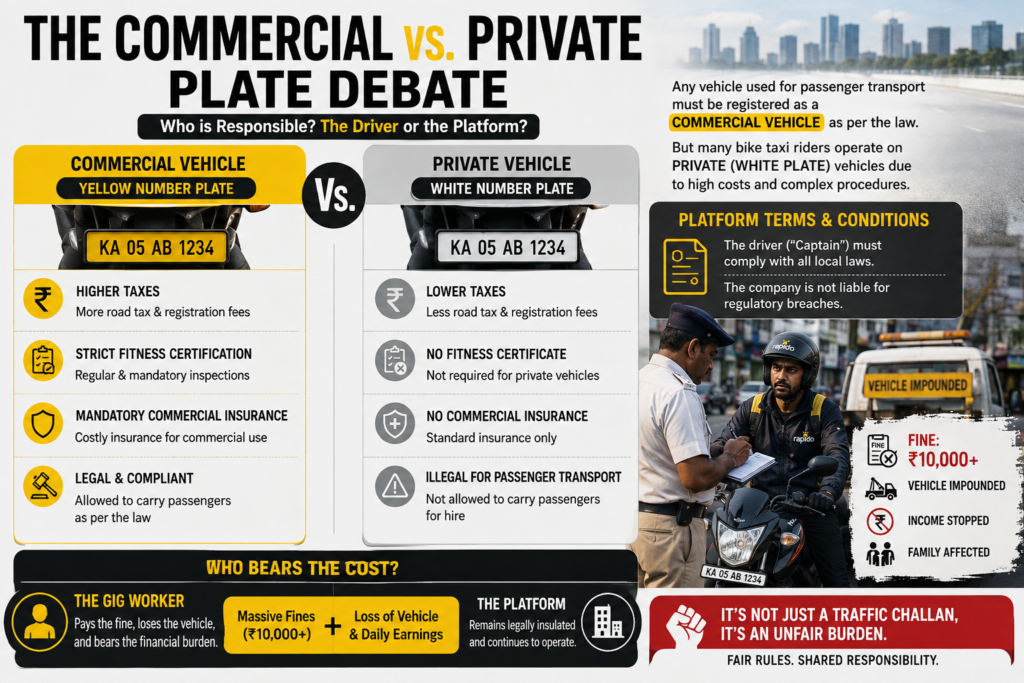
The core of the dispute lies in vehicle registration and taxation. State transport departments insist that any vehicle used for passenger transport must be registered as a commercial vehicle (yellow number plate), which incurs higher taxes, stricter fitness certifications, and mandatory commercial insurance. Platform terms and conditions strictly push the liability onto the driver (“Captain”), stating that they must comply with all local laws and that the company is not liable for regulatory breaches. Consequently, when traffic police impound a bike taxi for operating illegally, the low-income gig worker bears the brunt of the massive fines (often exceeding ₹10,000) and the loss of their primary vehicle, while the tech platform remains legally insulated.
The EV Exemption Strategy
To navigate these regulatory minefields, states like Delhi have introduced Aggregator Policies that completely ban petrol-powered bike taxis but allow commercial operations if the fleet transitions entirely to Electric Vehicles (EVs). While this aligns with green energy goals, it forces gig workers into a tough corner. Most drivers cannot afford to immediately discard their petrol bikes to purchase an EV just to continue earning on Rapido or Uber.
Conclusion
The bike taxi regulatory war exposes the friction between rapid tech innovation and archaic transport laws. While state governments are justified in demanding commercial insurance for passenger safety, entirely banning bike taxis strips millions of gig workers of their livelihood and worsens urban traffic congestion. The solution lies in a unified, central regulatory framework that introduces a new “part-time commercial” vehicle category, allowing private two-wheeler owners to legally ferry passengers by paying a dynamic, micro-tax via the aggregator app itself.