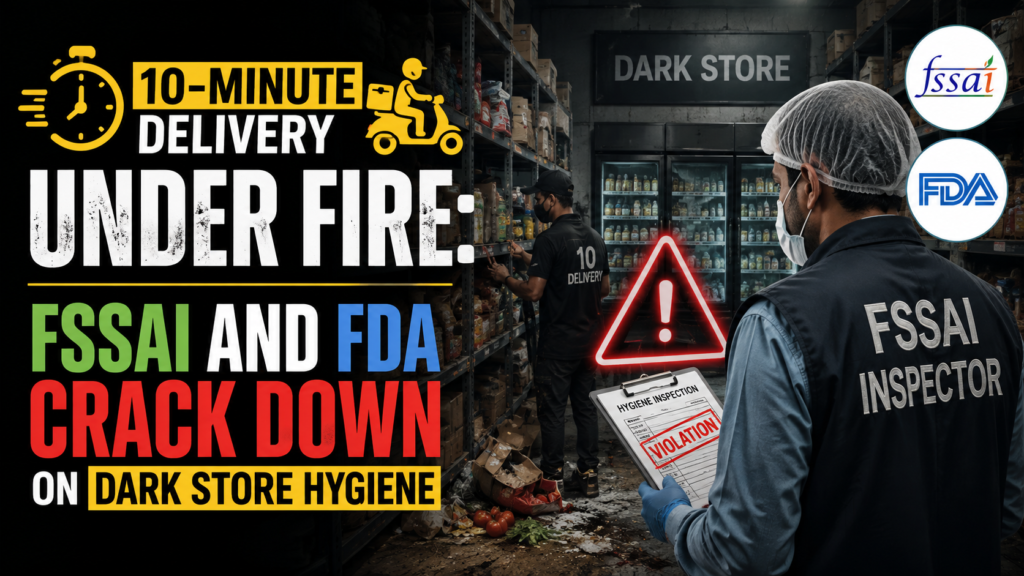
The explosive growth of quick-commerce platforms in India—promising grocery deliveries in 10 minutes—has transformed urban retail. However, this speed relies heavily on “dark stores”: hyper-local, tightly packed micro-warehouses situated in densely populated neighborhoods. Recently, these facilities have come under severe regulatory scrutiny. Following a surge in consumer complaints regarding expired products and contaminated food, the Food Safety and Standards Authority of India (FSSAI) has initiated a coordinated crackdown, weighing increased surveillance and surprise inspections at dark stores across the country.
License Suspensions in Maharashtra
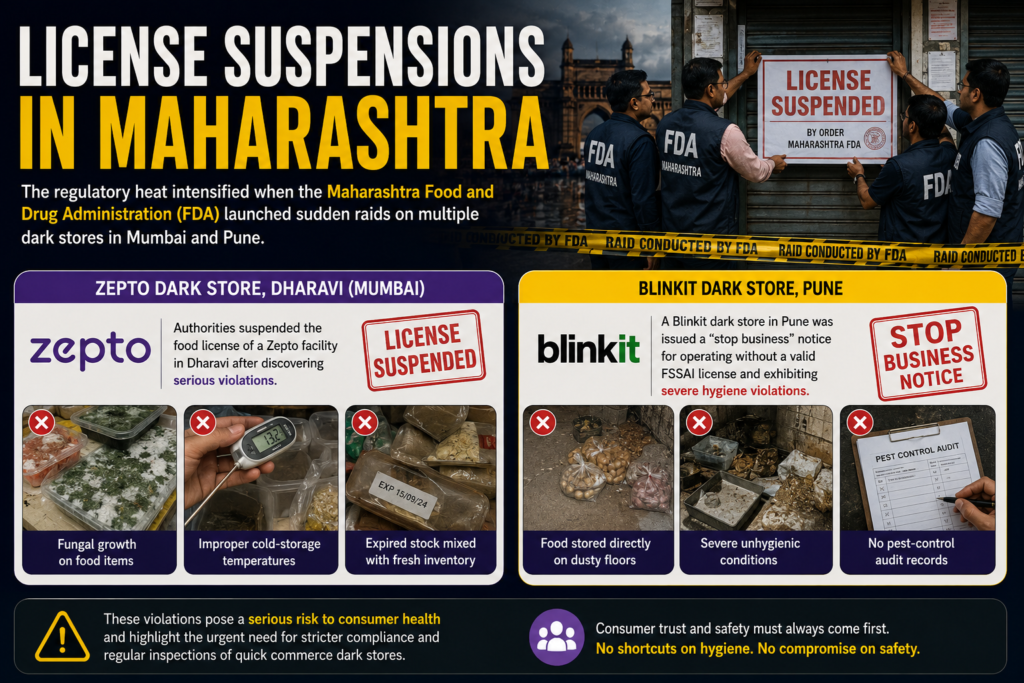
The regulatory heat intensified when the Maharashtra Food and Drug Administration (FDA) launched sudden raids on multiple dark stores in Mumbai and Pune. The findings were deeply concerning. Authorities suspended the food licenses of a Zepto facility in Dharavi after discovering fungal growth on food items, improper cold-storage temperatures, and expired stock mixed with fresh inventory. Similarly, a Blinkit dark store in Pune was issued a “stop business” notice for operating without a valid FSSAI license and exhibiting severe hygiene violations, including food stored directly on dusty floors and a lack of pest-control audits.
Tightening the Regulatory Noose
FSSAI officials have noted that platforms are legally required to ensure that delivered food items have at least 30% of their shelf life remaining or are delivered at least 45 days before expiration. The rapid scaling of quick commerce has evidently caused severe lapses in basic warehousing protocols. Delivery partners themselves frequently complain about the cramped, unhygienic conditions they are forced to wait in while picking up orders from these dark stores.
Conclusion
The ongoing crackdown on dark stores exposes the operational fragility of the 10-minute delivery model. While algorithms can optimize delivery routes to the second, they cannot replace human oversight in inventory management and hygiene. Quick-commerce platforms must realize that consumer trust is far more valuable than sheer speed. Without immediate investment in larger, cleaner, and strictly audited warehouse spaces, these platforms risk massive legal liabilities and the total loss of consumer confidence.