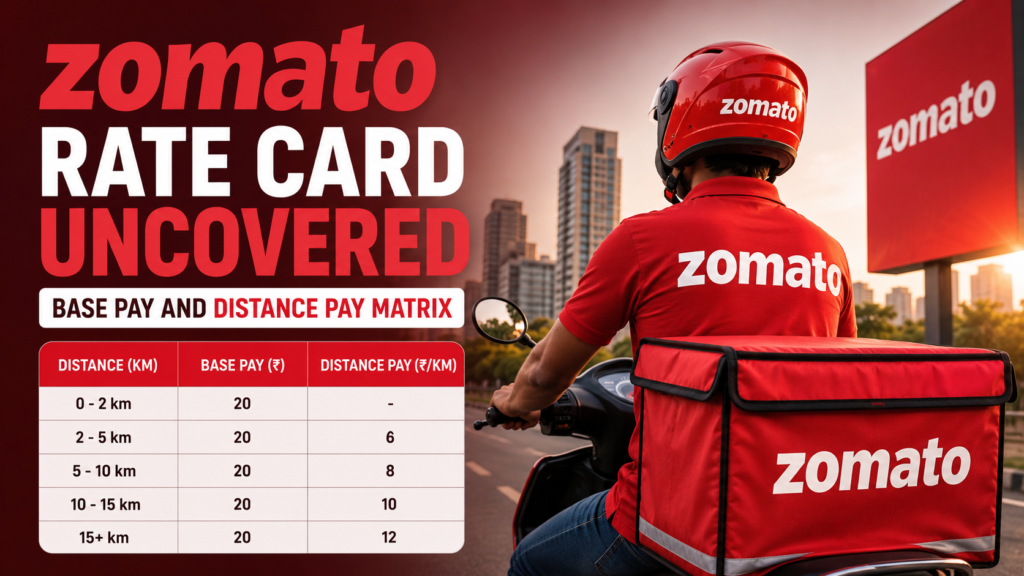
To truly maximize your earnings as a Zomato Delivery Partner, you need to deeply understand the mechanics of the Zomato rate card. Many riders simply accept orders without analyzing how their payout is calculated, leaving potential earnings on the table. The rate card is dynamic, varying by city tier, vehicle type, and time of day. In this blog, we will uncover the mysteries of the base pay and distance pay matrix so you can strategize your shifts like a pro.
The Foundation: Base Pay
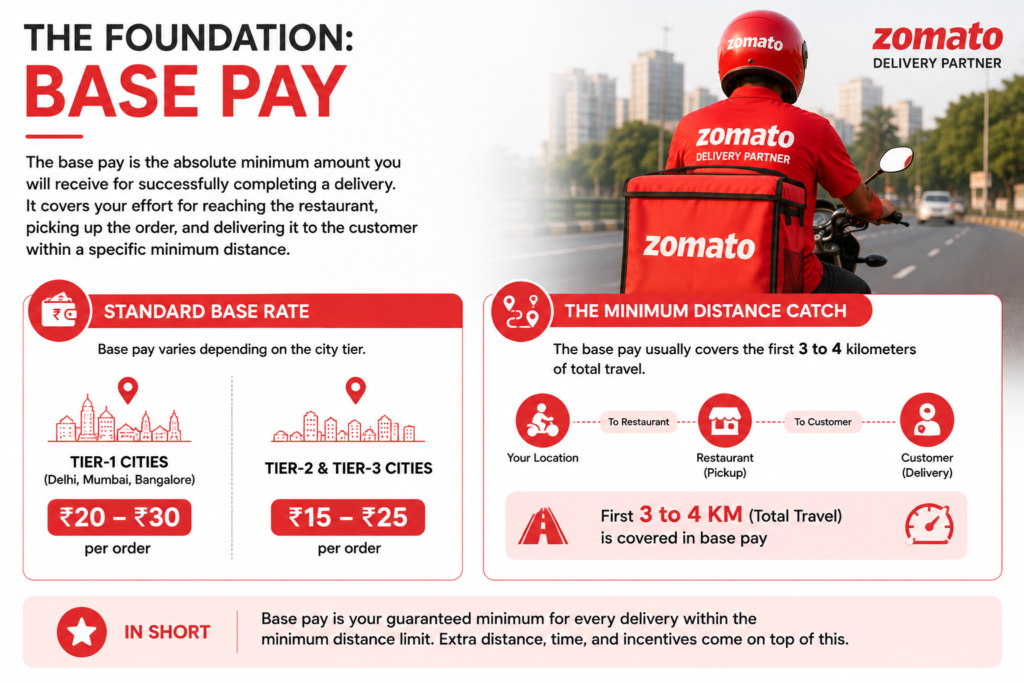
The base pay is the absolute minimum amount you will receive for successfully completing a delivery. It covers your effort for reaching the restaurant, picking up the order, and delivering it to the customer within a specific minimum distance.
- Standard Base Rate: In Tier-1 cities (like Delhi, Mumbai, Bangalore), the base pay typically ranges from ₹20 to ₹30 per order. In Tier-2 and Tier-3 cities, it might hover around ₹15 to ₹25.
- The Minimum Distance Catch: The base pay usually covers the first 3 to 4 kilometers of total travel (from your current location to the restaurant, and then to the customer).
The Distance Pay Matrix
What happens when a customer orders from a restaurant that is 8 kilometers away? This is where the distance pay matrix kicks in, ensuring you are compensated for long hauls.
- Per-Kilometer Rate: Beyond the base distance threshold, Zomato pays an additional amount for every extra kilometer traveled. This rate generally ranges from ₹5 to ₹8 per extra kilometer.
- Return Pay Concept: In 2026, Zomato improved its algorithm to account for “dead miles.” If a delivery takes you far outside your high-demand home zone, the system often adds a small “return bonus” to compensate you for the empty ride back to the busy restaurant hubs.
Surges and Multipliers
The Zomato rate card is not static. It multiplies based on real-world conditions:
- Peak Demand Surge: During lunch (1 PM – 3 PM) and dinner (7 PM – 10 PM), an extra ₹10 to ₹20 is often added to the base pay of every order.
- Rain/Weather Surge: Delivering in heavy rain is difficult and dangerous. Zomato activates a rain surge, which can increase your per-order payout by 30% to 50%.
- Late Night Bonus: Orders delivered past midnight usually carry a premium rate card to reward riders working the graveyard shift.
Final Words
Understanding the Zomato rate card is the secret weapon of top-earning delivery partners. It is not just about the base pay; the real profit lies in mastering the distance pay matrix and leveraging surge pricing. By analyzing your local rate card, you can identify which hours are the most profitable and whether taking long-distance orders is worth your fuel cost. Always aim to work during peak hours, never miss a rain surge, and keep an eye on those extra distance payouts to ensure your weekly Zomato salary hits maximum potential.