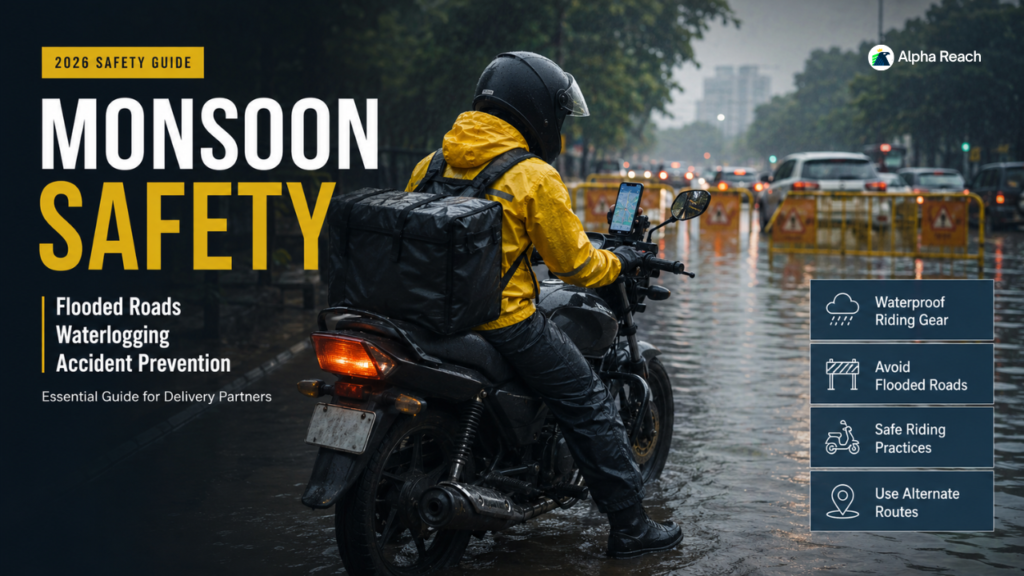
Every monsoon, delivery riders face the same trap: more orders, more surge pay — and far more danger on the road. Wet brakes, hidden potholes, flooded lanes, and poor visibility turn a normal shift into a risky one. Skidding on a painted road marking or riding into knee-deep water you thought was shallow can end a day’s earnings in seconds, or worse.
This guide is about one thing: getting home safe every night during the rains. Below you’ll find practical monsoon safety tips for delivery partners — how to handle flooded roads and waterlogging, cut your accident risk, and recognise the moment when the smart move is simply not to ride.
Why Monsoon Is the Most Dangerous Season for Riders
Rain changes the road in ways that catch even experienced riders off guard. Water mixes with oil and dust to make the surface slippery, especially in the first hour of a downpour. Braking distances get longer, tyres lose grip, and painted lines, metal covers, and tram or rail tracks turn slick.
On top of that, you’re often riding faster than you should — because rain means surge orders and time pressure. That combination of a slippery road and a rushing rider is exactly why monsoon sees more two-wheeler accidents. Accepting this is the first safety step: in the rain, you plan for less speed and more stopping distance, not more.
Riding Safely Through Waterlogging and Flooded Roads
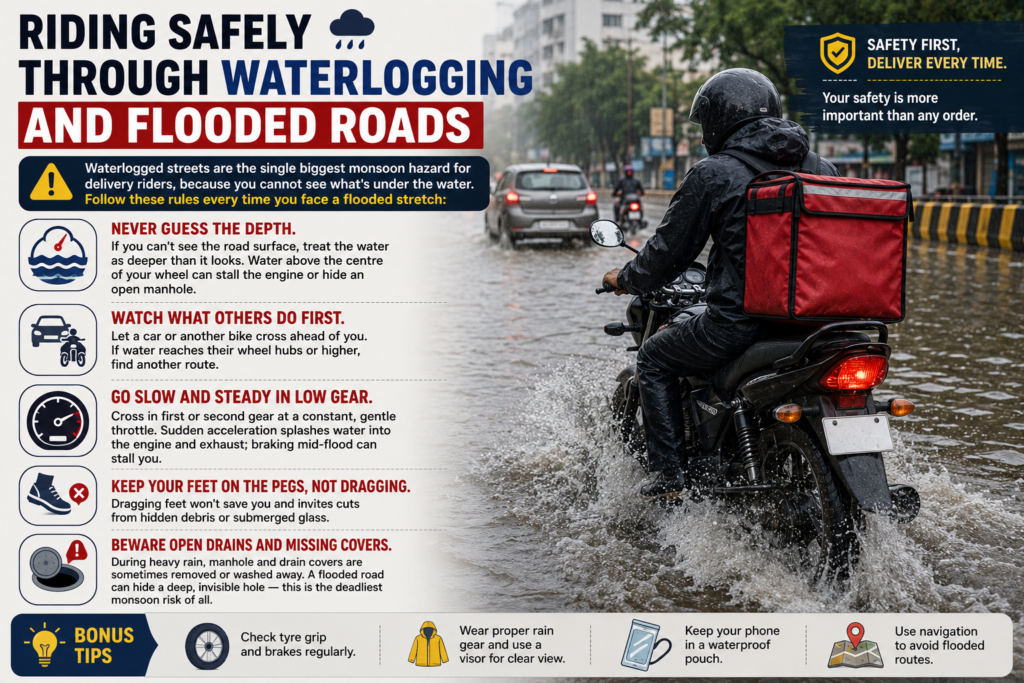
Waterlogged streets are the single biggest monsoon hazard for delivery riders, because you cannot see what’s under the water. Follow these rules every time you face a flooded stretch:
- Never guess the depth. If you can’t see the road surface, treat the water as deeper than it looks. Water above the centre of your wheel can stall the engine or hide an open manhole.
- Watch what others do first. Let a car or another bike cross ahead of you. If water reaches their wheel hubs or higher, find another route.
- Go slow and steady in low gear. Cross in first or second gear at a constant, gentle throttle. Sudden acceleration splashes water into the engine and exhaust; braking mid-flood can stall you.
- Keep your feet on the pegs, not dragging. Dragging feet won’t save you and invites cuts from hidden debris or submerged glass.
- Beware open drains and missing covers. During heavy rain, manhole and drain covers are sometimes removed or washed away. A flooded road can hide a deep, invisible hole — this is the deadliest monsoon risk of all.
If your engine stalls in water, do not restart it immediately. Push the bike to dry ground first. Restarting with water in the engine can cause serious, expensive damage.
Braking, Cornering, and Visibility in Heavy Rain
Most monsoon falls happen not in floods but in ordinary wet-road riding. Small habit changes prevent most of them.
Brake early and gently. Apply both brakes softly and progressively — never grab the front brake hard on a wet road, or the front wheel can lock and slide. Leave a bigger gap from the vehicle ahead than you would on a dry day.
Slow down before the corner, not during it. Do your braking in a straight line, then lean gently through the turn. Painted road markings, zebra crossings, and metal plates are extremely slippery when wet — cross them upright, not while leaning.
Make yourself visible. Rain and grey skies make riders hard to see. Keep your headlight on, wear or clip on something bright or reflective, and wipe your mirrors and visor at each stop. A fogged-up visor is as dangerous as the rain itself — crack it open slightly for airflow or use an anti-fog wipe.
Mind the “first rain” trap. The most slippery moment is the first 10–15 minutes of rain after a dry spell, when oil rises to the surface. Ride with extra caution right when the rain starts.
Protecting Yourself: Monsoon Safety Tips for Delivery Partners
Staying safe isn’t only about how you ride — it’s about being prepared before you leave.
- Wear a proper helmet, fully strapped. A good helmet is your most important protection in any fall. If you’re choosing one, see our guide to the best budget helmet for delivery boys.
- Use grippy footwear. Worn-out slippers give no grip on wet pavement or pedals. Closed shoes with a rubber sole are far safer.
- Keep hands and eyes free. A clear or anti-fog visor and gloves with grip help you brake and steer with control.
- Do quick bike checks. Before your shift, check tyre grip (bald tyres are lethal in the rain), brakes, and lights. Chain and brakes need extra care in the wet season.
- Look after your body. Riding wet and cold for hours lowers your reaction time and invites fever. Carry a dry set of clothes, stay hydrated, and take short breaks under shelter.
When You Should Simply Not Ride
The bravest decision a delivery partner can make is to stop. No single order is worth a serious injury. Consider pausing or logging off when:
- Water on the road is above your knee or rising fast.
- There’s lightning, a storm warning, or visibility so poor you can’t see a few metres ahead.
- Local authorities have issued a flood or red alert for your area. Riders should also check the latest weather warnings and heavy rainfall alerts from the India Meteorological Department (IMD) before starting their shift.
- You’re exhausted, feverish, or your bike’s brakes or tyres feel unsafe.
Most apps understand genuine weather situations. If bad weather makes you late or forces you to cancel, learn how to protect your score in our guide on maintaining your delivery rating in bad weather. And if you ever have an accident, knowing your worker benefits matters — check whether you’re registered on the e-Shram portal for gig workers, which can help with accident and insurance support.
Ride Smart, Earn Steady
Monsoon can be one of the most rewarding seasons for a delivery partner — order volume and incentives rise when the rain falls. But those extra earnings only count if you get home safe every night. Slow down, respect flooded roads, keep your bike and gear monsoon-ready, and never let a single order push you into danger. Play it safe through the season, and you’ll keep both your health and your income intact.
> Looking for delivery jobs with flexible hours this season? Browse the latest delivery partner openings near you on Alpha Reach and start earning on your own schedule.