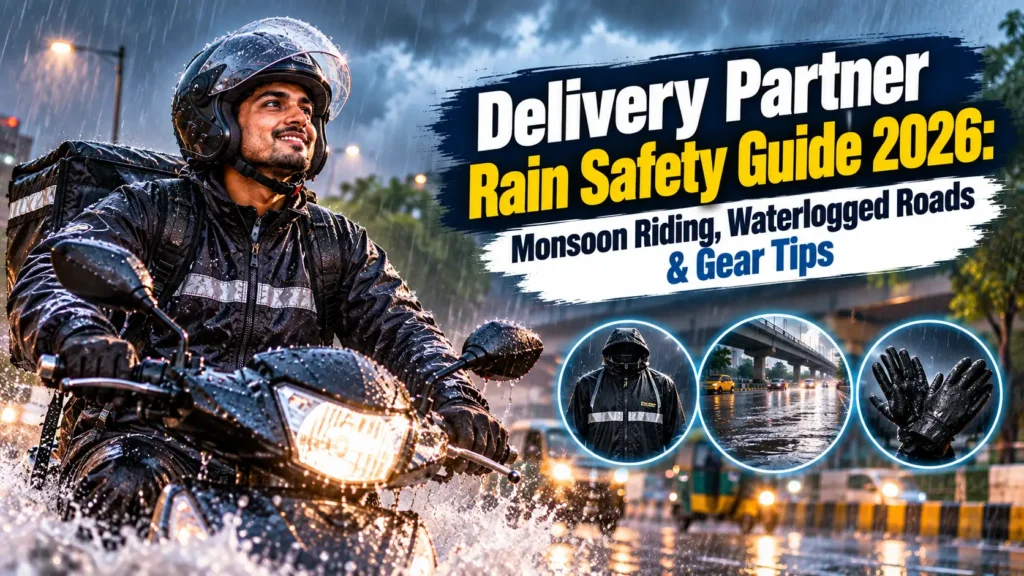
When the annual monsoon season sweeps across the Indian subcontinent, customer order volumes on food and quick commerce delivery apps skyrocket. Trapped indoors by torrential downpours, millions of households order hot snacks, groceries, and restaurant meals, triggering lucrative platform rain surge bonuses of ₹20 to ₹50 extra per delivery. For delivery partners, rainy days represent an extraordinary earning opportunity—yet they simultaneously transform familiar city streets into treacherous obstacle courses of submerged potholes, slippery tar surfaces, waterlogged underpasses, and reduced visibility.
Navigating monsoon deliveries requires specialized technical riding adjustments and dedicated weather-resistant equipment. Operating in the rain without proper preparation leads to soaked smartphones, contaminated food packages, severe skids, and costly engine water-locking. Couriers seeking weather-resilient earning opportunities can explore verified openings on delivery partner jobs. In this dedicated monsoon survival manual, we detail critical wet-surface braking techniques, reveal how to navigate flooded streets safely, showcase essential waterproof gear, and explain how to maximize rainy-day earnings without risking your life.
The Physics of Wet Tarmac: Mastering Braking and Cornering in the Rain
Riding a two-wheeler on wet asphalt is fundamentally different from dry-weather riding. The moment rain begins falling, water mixes with accumulated engine oil, grease, and exhaust particulates on the road surface, creating an invisible, soap-like emulsion that slashes tire grip by over 50%.
The Golden Rule of Wet Braking (70/30 Distribution): Never grab the front brake lever abruptly on wet roads! Doing so immediately locks the front wheel, causing catastrophic instant low-side falls. Practice progressive, gentle braking: apply 70% rear brake pressure combined with 30% smooth front brake application, pumping the brakes gently rather than clamping them.
Double Your Following Distance: On wet tarmac, two-wheeler stopping distances increase by 2x to 3x. Maintain at least 5 to 6 vehicle lengths between yourself and the car ahead.
Avoid Road Markings and Metal Manhole Covers: Painted white zebra crossings, yellow lane lines, and metal drainage grates become extraordinarily slippery when wet. Avoid braking or making sharp steering turns while your tires are rolling over painted road markings.
Gentle Cornering: Slow down well before entering a turn while your bike is completely upright. Never lean your motorcycle aggressively into wet turns—keep your vehicle body angle relatively straight and steer smoothly.
Navigating Waterlogged Streets and Avoiding Engine Hydro-Locking
Indian city monsoons frequently result in severe urban waterlogging, submerging roads, roundabouts, and railway underpasses under two feet of muddy water. Attempting to traverse flooded streets without caution can destroy your vehicle’s engine through ‘hydro-locking’—a catastrophic condition where water enters the combustion chamber, bending connecting rods and causing thousands in repair bills.
- Gauge Water Depth Before Crossing: Never plunge blindly into flooded water. Observe larger vehicles (buses or auto-rickshaws) crossing ahead. If water levels exceed the midpoint of a commuter bike’s wheels (reaching above the exhaust silencer pipe), STOP immediately. Seek an elevated alternate route.
- The Continuous Throttle Technique: If water depth is manageable (below the exhaust pipe), downshift into 1st gear, maintain moderate engine revs, and slip the clutch gently to maintain continuous, steady forward motion. NEVER release the accelerator or let the engine idle while submerged—water will immediately be sucked backward into the exhaust pipe.
- Beware of Submerged Potholes and Open Drains: Floodwaters conceal deep, tire-shredding potholes and dislodged storm drain covers. Follow closely along the tire tracks of buses or trucks ahead, as their heavy tires reveal the presence of underwater craters.
| Monsoon Hazard | Technical Risk | Correct Riding Action | Gear / Equipment Solution |
| Oily Surface Film | Instant front-wheel skid & loss of control | Gentle progressive rear braking (70/30) | Tires with deep tread water-grooves |
| Deep Waterlogging | Engine hydro-locking & electrical short-circuit | Maintain high RPMs in 1st gear; avoid deep water | Waterproof spark plug boot cap |
| Submerged Potholes | Wheel rim bending & sudden falls | Follow heavy vehicle tire tracks; slow speed | Soft tire pressure (-2 PSI for grip) |
| Zero Visor Visibility | Rain droplets blinding rider vision | Apply anti-rain spray; keep clear visor | Visor wiper glove squeegee / Rain repellent |
| Soaked Smartphone | Charging port moisture lock & touchscreen freeze | Touchscreen unresponsive in rain | Waterproof transparent handlebar pouch |
Prepared to maximize your earnings during high-demand monsoon surges? Discover top delivery hubs offering high rain incentives, dry rest facilities, and transparent payouts on AlphaReach Jobs.
Essential All-Weather Monsoon Gear for Delivery Executives
Operating comfortably and profitably through three months of monsoon downpours requires investing in professional, durable waterproof gear:
- Heavy-Duty Two-Piece Rain Suit: Avoid cheap plastic ponchos that flap dangerously in the wind and tangle in your bike wheels. Invest in a heavy-duty two-piece PVC or rubberized nylon rain jacket and trouser suit with taped seams and internal storm flaps.
- Waterproof Transparent Smartphone Handlebar Pouch: Touchscreens do not respond to wet fingertips. A heavy-duty waterproof handlebar phone case with a sensitive, touchscreen-compatible transparent TPU window keeps your phone bone-dry while allowing effortless order acceptance and GPS navigation.
- Heavy-Duty Delivery Bag Rain Cover: Customer complaints regarding soggy pizza boxes or wet grocery packages result in zero tips and severe platform penalties. Keep an industrial elastic-lined waterproof rain poncho specifically sized to envelope your insulated delivery backpack.
- Waterproof Footwear / Shoe Covers: Cold, soggy feet lead to fungal infections, numbness, and poor brake pedal control. Wear rubber rain gumboots or silicon slip-on waterproof shoe covers over your sneakers.
- Helmet Visor Water Repellent: Apply a hydrophobic water-repellent coating (or simple baby shampoo treatment) to your clear helmet visor. Rain droplets will bead up and slide off automatically at 30 km/h, preserving crystal-clear road vision.
Weather Tracking and Capitalizing on Platform Rain Surge Tariffs
Professional couriers treat bad weather as an active tactical earning event rather than a disaster. By monitoring real-time Doppler radar and meteorological alerts published by the India Meteorological Department (IMD), riders can track approaching thunderstorm squalls 45 minutes before they hit commercial zones.
When cloudbursts strike, delivery platforms automatically activate rain surge banners, boosting per-order payouts by ₹20 to ₹50 extra. In quick commerce dark stores, high delivery density allows prepared couriers with full rain gear to complete 3 to 4 short-radius drops per hour within a single neighborhood, generating ₹180 to ₹250 per hour while unprepared riders flee for cover under flyovers.
However, always respect extreme weather advisories. If civil authorities or IMD issue Red Alerts regarding cyclonic winds, lightning storms, or severe flash flooding, log off immediately and seek shelter in sturdy brick-and-mortar dark store hubs.
Post-Rain Vehicle Maintenance: Protecting Your Two-Wheeler from Rust and Grime
Operating through acidic rainwater, road grit, and slush accelerates mechanical wear. Preserve your vehicle with this post-shift maintenance routine:
Rinse Off Road Grime with Fresh Water: Never let wet mud dry on your engine casing, drive chain, and brake calipers. Rinse your bike with a bucket of clean fresh water every evening after wet shifts.
Dry and Lubricate the Drive Chain: Rainwater washes away chain grease, causing rapid rust and link binding. Spray high-viscosity chain lube every 300 km during monsoon season.
Inspect Brake Pads and Drum Linings: Wet mud acts as an abrasive paste, wearing down brake shoes rapidly. Check for scraping noises and replace worn brake pads promptly.
Turn rainy days into peak profits with complete safety! Register now via AlphaReach Monsoon Delivery Partner Portal to access high-surge zones, rain gear discounts, and 24×7 support.
Frequently Asked Questions (FAQs)
How can I protect customer food and grocery orders from getting wet in heavy rain?
Always use a high-grade, elastic-sealed waterproof rain cover specifically designed for your delivery backpack. Inside the bag, pack orders in plastic secondary grocery bags or insulated thermal liners, ensuring parcels remain 100% dry upon doorstep delivery.
What should I do if my bike engine stops while crossing a flooded street?
DO NOT attempt to restart the engine! If water has entered the exhaust or air intake, pressing the electric starter can cause severe mechanical hydro-locking. Shift into neutral, push the motorcycle out of the water onto dry ground, and wait for a mechanic or platform roadside assistance.
How does rain surge pay work for delivery partners?
When rain strikes a delivery cluster, platform algorithms automatically add a ‘Rain Surge’ fee ranging from ₹20 to ₹50 extra to every completed order. This is credited automatically on top of standard base pay and distance fares.
How do I operate my smartphone touch screen during heavy rain?
Invest in a waterproof phone mount with a sensitive transparent TPU plastic window. Alternatively, keep your phone in a sealed zip-lock bag inside your waterproof jacket pocket, pulling it out under building awnings to accept dispatches.
Why is hard front braking dangerous on wet roads?
Wet tarmac reduces tire friction by over 50%. Clamping the front brake abruptly causes the front wheel to lock up instantly, eliminating steering control and causing immediate falls. Always use progressive 70% rear and 30% front braking.
Conclusion
Monsoon delivery is the ultimate test of a courier’s professional discipline, equipment preparation, and mental resilience. While wet roads demand elevated vigilance, smooth braking, and respect for urban floodwaters, they reward prepared riders with the highest hourly payout yields in the entire calendar year.
By outfitting yourself with high-performance waterproof rain suits, protecting your smartphone with transparent cases, mastering progressive wet braking, and practicing post-ride bike care, you can conquer India’s monsoons with complete safety—turning stormy clouds into a golden season of peak personal earnings.