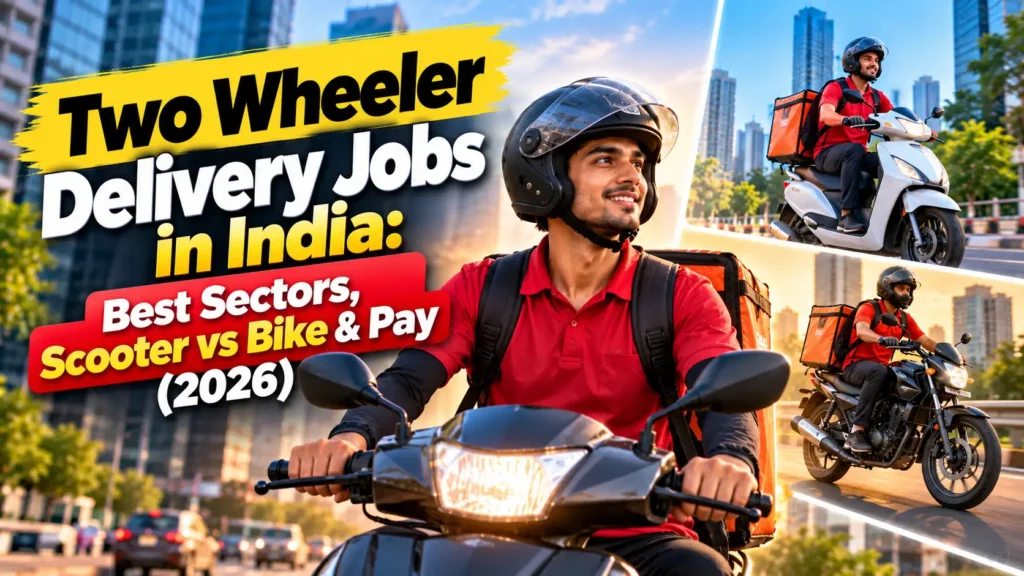
The rapid transformation of Indian retail into an instantaneous, on-demand doorstep economy has established two wheeler delivery jobs as the foundational backbone of urban supply chains. Whether riding a gearless scooter, a fuel-efficient commuter motorcycle, or a modern electric two-wheeler (EV), millions of energetic riders fulfill essential everyday deliveries—ranging from 10-minute grocery runs and hot restaurant meals to essential pharmaceutical prescriptions and e-commerce parcels. For individuals seeking immediate, dignified employment with complete autonomy over their work schedules, two-wheeler delivery represents a frictionless path to financial self-reliance. To explore verified, immediate-joining delivery positions with top logistics brands, you can explore top two wheeler delivery jobs on AlphaReach and start earning this week in your local city.
The versatility of two-wheelers makes them uniquely suited for intra-city logistics. Unlike cars and vans that battle severe traffic gridlock and parking bottlenecks in dense Indian markets, two-wheelers navigate tight residential streets, commercial alleys, and high-density apartment complexes with remarkable agility. Furthermore, the advent of gearless scooters with flat floorboards and spacious under-seat storage has diversified the delivery workforce, making two-wheeler logistics equally accessible to women riders and beginner motorists.
Moreover, the ongoing electric vehicle revolution is fundamentally upgrading driver economics. By transitioning from volatile petrol costs to affordable EV battery-swapping networks, riders are retaining a substantially larger portion of their gross earnings as pure profit. In this exhaustive 2026 guide, we explore the best two-wheeler delivery sectors, benchmark scooter versus motorcycle versus EV economics, review mandatory safety equipment, and provide an actionable roadmap to maximize your monthly net income.
The Two-Wheeler Advantage: Urban Speed, Accessibility, and Fleet Diversity
To understand why two wheeler delivery jobs dominate modern logistics hiring, one must examine the operational requirements of quick-commerce fulfillment. Indian consumers increasingly expect grocery, pharmaceutical, and electronic deliveries within 10 to 30 minutes of placing a mobile app order. Achieving this level of speed requires hyper-local dark stores placed within two to three kilometers of residential clusters, coupled with an agile fleet that can disembark, park, and hand over parcels in seconds.
Two-wheelers excel across every logistical metric in this environment. A rider can park instantly near pickup docks, load insulated cargo bags, and navigate congested market intersections without getting trapped in gridlock. This speed enables riders to achieve three to four delivery drops per hour, maximizing their hourly earning velocity.
Additionally, safety standards for commercial two-wheeler operation have been formalized through nationwide regulations. The Bureau of Indian Standards (BIS) enforces stringent manufacturing and impact-absorption specifications under standard IS 4151 for protective two-wheeler helmets, ensuring that professional riders are protected by certified safety equipment on public roads.
Vehicle Showdown: Motorcycle vs. Gearless Scooter vs. Electric Two-Wheeler (EV)
Choosing the optimal vehicle for two-wheeler delivery directly impacts your daily physical comfort, cargo handling capability, and monthly fuel expenses. Each vehicle class offers distinct operational trade-offs that riders should evaluate carefully.
The analytical table below compares commuter motorcycles, gearless scooters, and electric two-wheelers across key delivery parameters in the Indian logistics market:
| Vehicle Category | Fuel / Energy Cost / Km | Cargo / Storage Versatility | Physical Ergonomics | Monthly Operating Expense |
| 100cc–110cc Commuter Bike | Rs. 1.60 – Rs. 1.90 / km | Moderate (Rear seat rack required) | Upright seating, low wrist fatigue | Rs. 4,500 – Rs. 6,000 (Petrol + Oil) |
| 110cc–125cc Gearless Scooter | Rs. 2.10 – Rs. 2.50 / km | Excellent (Flat floorboard + Boot) | Easy mount/dismount, stop-and-go ease | Rs. 6,000 – Rs. 7,500 (Petrol + Oil) |
| Electric Two-Wheeler (EV Rental) | Rs. 0.40 – Rs. 0.60 / km (or fixed) | High (Front apron hook + Rear rack) | Silent, vibration-free, smooth throttle | Rs. 4,000 – Rs. 5,500 (Rental includes energy) |
| Personal Electric Two-Wheeler | Rs. 0.25 – Rs. 0.35 / km | High (Front apron + Under-seat) | Extremely quiet, minimal rider fatigue | Rs. 800 – Rs. 1,400 (Home charging) |
Own a bike, scooter, or EV and ready to start earning high weekly payouts with top on-demand delivery fleets? Explore verified vacancies in quick commerce, food, and parcel logistics: explore top two wheeler delivery jobs on AlphaReach and apply today.
Evaluating Delivery Segments: Food, Grocery, and Parcel Logistics
A two-wheeler delivery partner can choose between several distinct delivery verticals, each offering unique workflow dynamics and peak earning windows. Matching your personal schedule and physical preferences to the right vertical is key to sustained satisfaction.
Quick Commerce Grocery Delivery (dark store fulfillment) offers maximum order density within localized 2 to 4-kilometer micro-radii. Riders pick up pre-packed, sealed bags directly from dark store staging areas and deliver them to nearby apartments. Because trip distances are short, fuel consumption is minimal, and riders spend less time on high-speed arterial roads.
Food Delivery Aggregation focuses on restaurant pickups during lunch (12:00 PM to 3:30 PM) and dinner (7:00 PM to 11:30 PM) rushes. While order distances can be slightly longer and restaurant wait times vary, food delivery offers lucrative surge pricing, rainy-weather bonuses, and generous customer tips. Many riders successfully combine both verticals—delivering quick-commerce groceries during morning hours and switching to food delivery during evening dinner peaks.
Essential Gear and Setup for Professional Two-Wheeler Delivery
Professional two-wheeler delivery is a demanding physical vocation that requires the right equipment to ensure safety, efficiency, and long-term stamina. Investing in proper rider accessories pays immediate dividends in reduced fatigue and accident prevention.
First, your smartphone setup must be flawless. Secure an all-metal, anti-vibration mobile phone mount with an integrated rain hood or waterproof case, installed securely onto your handlebar or rearview mirror stem. Pair this with a high-capacity (10,000 mAh to 20,000 mAh) fast-charging power bank to ensure your delivery app, GPS navigation, and screen brightness never fail mid-shift.
Second, personal protective equipment (PPE) is non-negotiable. Wear a certified full-face ISI-marked helmet with a clear, scratch-free visor for night riding. Utilize breathable, UV-protective arm sleeves to prevent sun blistering during midday summer shifts, and keep a compact, high-grade two-piece raincoat stowed in your vehicle at all times. During monsoon deliveries, high-quality rain gear keeps you dry and healthy, allowing you to capitalize on lucrative rain surge incentives.
Maximizing Net Profit: Smart Routing, Multi-Apping, and Maintenance
Transforming two-wheeler delivery into a high-earning career requires adopting an entrepreneurial mindset that optimizes revenue while rigorously controlling operating expenses.
A proven strategy among top-earning riders is multi-apping: registering as a delivery partner across two complementary platforms (such as a grocery dark store and a food delivery aggregator). When order volume slows on one platform during non-peak afternoon hours, you switch your status to active on the other, eliminating idle waiting time and maintaining a continuous stream of paid deliveries.
Equally important is proactive vehicle maintenance. For petrol two-wheelers, replacing engine oil every 2,500 to 3,000 kilometers preserves engine compression, prevents overheating, and maintains peak fuel efficiency. For electric two-wheelers, maintaining battery charge between 20% and 85% and swapping batteries at established network hubs before full depletion ensures uninterrupted operations throughout your shift.
Earn Rs. 22,000 to Rs. 38,000+ monthly with your two-wheeler! Free onboarding, flexible shifts, weekly bank deposits, and accidental insurance coverage included. start your two wheeler delivery career on AlphaReach now.
Frequently Asked Questions (FAQs)
Which is better for delivery jobs: a motorcycle or a gearless scooter?
Both have distinct advantages. Commuter motorcycles (100cc-110cc) offer superior fuel economy (55-65 km/l) and lower maintenance costs. Gearless scooters offer a flat floorboard for carrying large grocery crates and easier stop-and-go handling in heavy traffic.
How much can a two-wheeler delivery partner earn per month in India?
A full-time two-wheeler delivery partner typically earns between Rs. 22,000 and Rs. 38,000 per month, depending on completed orders, peak hours worked, distance allowances, and weekly incentive bonuses.
Can I do two-wheeler delivery using an electric scooter (EV)?
Yes. Electric two-wheelers are rapidly becoming the preferred choice for delivery. EV rental services provide delivery-ready e-scooters with battery swapping networks for a fixed daily fee, eliminating petrol costs and saving riders Rs. 3,000 to Rs. 6,000 per month.
What documents are required to start a two-wheeler delivery job?
You need an Aadhaar card, PAN card, a valid permanent Driving License, the vehicle’s Registration Certificate (RC), valid third-party insurance, and an active savings bank account with a cancelled cheque or passbook copy.
Can women work in two-wheeler delivery jobs in India?
Absolutely. Thousands of women work as two-wheeler delivery partners across Indian metros, especially in quick-commerce grocery delivery with localized 2 to 3 km radii, day shifts, and dark-store fulfillment.
Conclusion
Two wheeler delivery jobs offer one of the most accessible, dignified, and financially rewarding career avenues in modern India. With the explosive expansion of on-demand quick commerce, restaurant delivery, and express parcel logistics, any individual with a reliable two-wheeler and dedication can achieve immediate financial independence.
By choosing the right vehicle class for your operational needs, investing in essential safety equipment, and strategically leveraging peak-hour surge incentives, you can build a resilient, high-earning livelihood in India’s booming supply chain ecosystem.