In 2026, bike taxis represent the primary transit lifeline across India’s congested metropolitan corridors. For two-wheeler captains driving on Uber Moto, the difference between an average day and an exceptionally lucrative one comes down to ride continuity. Idling on the roadside for 20 minutes between trips burns time, reduces hourly earnings, and causes frustration. To build a consistent, high-income driving routine, mastering the mechanics of uber moto trip request priority is essential.
Uber’s global dispatch algorithms process billions of spatial data points in real time. Rather than relying on simple linear proximity, the system calculates an intricate match score based on your real-time ETA, vehicle speed, acceptance and cancellation history, customer satisfaction rating, and forward-dispatch trip forecasting. When captains understand these dispatch triggers, they unlock seamless back-to-back bookings with minimal downtime.
In this 2026 strategic masterclass, we break down how Uber Moto assigns ride requests to nearby captains. We reveal how forward dispatching operates, common pitfalls that throttle your booking queue, and proven positioning tactics to capture high-surge rides throughout your shift.
The Core Mechanics of Uber Moto’s Dispatch Algorithm
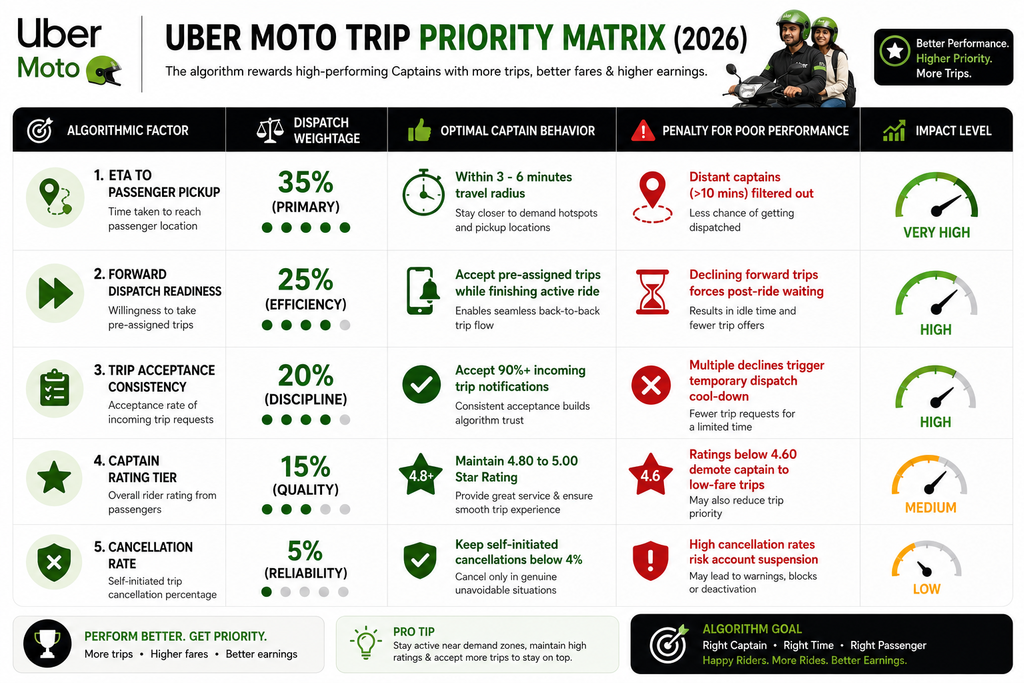
When a passenger requests an Uber Moto ride, the system evaluates five crucial parameters:
- Precise Estimated Time of Arrival (ETA): The algorithm maps your real-time speed and heading direction, prioritizing the captain who can reach the pickup pin fastest.
- Forward Dispatching (Back-to-Back Trips): While you are completing your current ride with 2–3 minutes remaining, the algorithm pre-assigns your next pickup nearby, eliminating waiting time.
- Acceptance Rate & Driver Reliability: Captains who consistently accept incoming trip pings without letting timers expire receive priority over drivers with frequent declines.
- Customer Rating & Cancellation Score: Maintaining a 4.8+ rating and a low cancellation rate secures priority access to high-fare corporate and airport trips.
- High-Accuracy GPS Synchronization: Clear, uninterrupted GPS signals ensure the server recognizes your exact movement along passenger demand corridors.
Uber Moto Trip Priority Matrix (2026)
> Discover high-earning bike taxi captain vacancies with instant wallet cashouts and high surge multipliers. Explore verified mobility openings in your city today.
The Magic of Forward Dispatching: How to Keep It Active
Forward dispatching is Uber’s most powerful tool for maximizing captain earnings:
- How It Works: When you are within 800 meters of dropping off your current passenger, the app sounds an alert with your next trip.
- Why You Must Accept It: Accepting the forward trip ensures that as soon as your passenger steps off, you navigate immediately to your next pickup without stopping your bike.
- Never Turn Off New Requests: Avoid toggling ‘Stop New Requests’ unless you genuinely intend to take a rest break.
Airport, Railway & Tech Park Queuing Tactics for Bike Captains
Major transit junctions operate on specialized virtual queuing algorithms within the Uber platform:
- Virtual FIFO Queues at Transport Hubs: When entering high-volume transit nodes like airport terminals or railway stations, the driver app automatically enters a virtual queue. Avoid driving away while in queue, as leaving the geofence forfeits your position.
- Peak Commute Departure Gates: Position near secondary pedestrian exit gates rather than crowded private car lanes. Passengers booking bike taxis prefer quick pickups away from stagnant taxi congestion.
- Coordinated Pillion Helmet Visibility: Keep the spare passenger helmet visibly strapped to your rear rack or fuel tank so arriving passengers spot your vehicle instantly amidst chaotic terminal exits.
Strategic Hotspot Positioning Across Indian Metros
Under urban transit guidelines monitored by the Ministry of Road Transport and Highways (MoRTH):
- Morning Office Commutes (8:00 AM – 11:00 AM): Position near metro stations, suburban residential high-rises, and bus terminals heading toward corporate tech parks.
- Evening Return Peak (5:30 PM – 9:00 PM): Station outside IT park exit gates and commercial complexes to capture high-fare return trips.
- Late-Night Transit Hubs (10:00 PM – 2:00 AM): Anchor near railway junctions and inter-state bus stations to secure lucrative late-night surge fares.
Frequently Asked Questions (FAQs)
Why do other Uber captains near me get ride requests while I wait?
Dispatch prioritization favors captains with lower ETAs, higher acceptance rates, and active forward-dispatch queues. If you declined an earlier ride, the algorithm may place your ID in a brief cooling-off period.
Does declining a low-fare ride hurt my trip priority?
Declining an occasional trip is acceptable; however, letting the timer expire or declining multiple consecutive rides reduces your acceptance score and temporarily throttles dispatch frequency.
Does carrying a clean passenger helmet help get more rides?
Directly, passenger hygiene boosts customer ratings; indirectly, high ratings give you algorithmic priority for premium, long-distance corporate rides.
Should I keep cruising or park at one spot while waiting for rides?
Avoid burning fuel cruising aimlessly. Park near high-traffic transit nodes (metro gates or mall exits) for 8 to 10 minutes before moving to an adjacent hotspot.
Can I use Uber Moto alongside Rapido to increase bookings?
Yes! Many captains keep both apps active, accepting whichever platform broadcasts the closest passenger with the highest surge fare.
> Turn your two-wheeler into a steady daily earning machine with top-rated bike taxi fleets. Sign up as a verified partner and unlock continuous ride bookings today.
Conclusion
Mastering Uber Moto trip request priority transforms your driving shift into a continuous, highly profitable operation. By maintaining a pristine acceptance record, embracing forward dispatching, and positioning at strategic transit nodes, you eliminate idle waiting time and maximize your daily take-home earnings.

