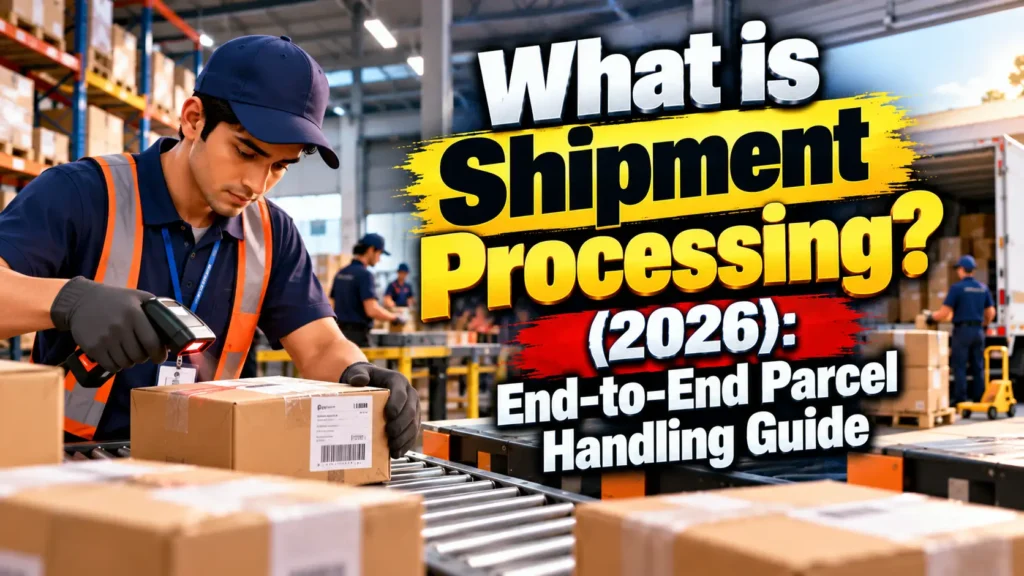
Behind every seamless package delivery—whether an urgent medical parcel transported overnight or an e-commerce purchase arriving at a doorstep—lies an intensive, high-speed operational sequence known as shipment processing. For warehouse associates, hub sorting leads, and job seekers exploring rewarding careers in shipment processing and hub operations, understanding what shipment processing is reveals the vital heartbeat of domestic and international courier networks.
Shipment processing is the comprehensive operational workflow through which physical cargo and parcel consignments are received, inspected, documented, verified, weighed, dimensioned, sorted, and dispatched across transportation hubs. It represents the physical transformation of static warehouse goods into verified, carrier-compliant freight ready for long-haul highway transit, air cargo carriage, or last-mile doorstep delivery. Precision during shipment processing is non-negotiable; an unrecorded scan or inaccurate weight measurement cascades into delivery delays, billing disputes, and lost freight.
Under national postal and logistics operational standards upheld by India Post and modern private express logistics networks, shipment processing facilities operate 24 hours a day on strict transit timetables. Deconstructing the technical stages, automated hardware systems, documentation checks, and professional career roles that define shipment processing provides a comprehensive masterclass in modern freight operations.
1. Defining Shipment Processing: Core Purpose and Operational Scope
Shipment processing is the multi-stage operational and digital procedure of handling cargo shipments from the moment they arrive at a logistics facility until they are safely loaded onto outbound transport vehicles. It bridges the physical handling of boxes, crates, and polybags with the digital data transactions required to maintain absolute supply chain transparency.
The primary objective of shipment processing is converting heterogeneous, mixed-origin freight into structured, verified, and routed transport consignments. When hundreds of supplier delivery vans unload thousands of loose parcels at a sorting terminal, shipment processing rapidly categorizes, audits, and bundles those packages according to their ultimate geographic destinations.
Beyond physical movement, shipment processing serves as the statutory and commercial verification checkpoint. During processing, shipments undergo automated dimensional weighing to ensure accurate carrier billing, security screening to detect hazardous materials or contraband, and regulatory document auditing to verify GST E-Way bills and customs clearances.
2. Step-by-Step Shipment Processing Pipeline and Key Milestones
The shipment processing lifecycle follows a disciplined, sequential pipeline engineered to process thousands of consignments per hour without operational friction. Each pipeline stage requires synchronized cooperation between physical material handlers and digital tracking networks.
Minimizing processing dwell time at each stage is critical for ensuring express freight meets tight carrier linehaul cutoffs and scheduled air cargo departures.
The structured comparison table below outlines the six essential phases of the shipment processing pipeline, identifying physical handling actions, digital system interactions, deployed equipment, and common failure modes.
| Processing Phase | Core Physical Action | Digital System Interaction | Handling Hardware / Equipment | Standard Processing Cycle | Primary Operational Failure Mode |
| Inbound De-Stuffing | Unload trucks, inspect vehicle seal, stage cartons | WMS / TMS inbound gate scan | Telescopic boom conveyors, dock levelers | 15 – 30 mins / truck | Unrecorded damaged carton or broken seal |
| Primary Induction Scan | Scan exterior AWB barcode to log facility arrival | Carrier tracking API, WCS induction | High-speed camera tunnel, omni-directional laser | Under 1 second / parcel | Unreadable barcode requiring manual audit |
| DWS (Dimension & Weight) | Measure parcel L-W-H dimensions & gross weight | Automated checkweigher, cubing software | In-line dynamic DWS sensor scale | Under 2 seconds / parcel | Weight discrepancy leading to client billing dispute |
| Sortation & Routing | Divert parcel to destination destination chute or cage | Sortation logic controller, barcode routing | Cross-belt sorters, shoe sorters, roller diverters | 5 – 15 seconds / package | Mis-sortation into wrong regional destination bin |
| Consolidation & Bagging | Pack 40-60 destination parcels into master bag | Parent-child bagging barcode scan module | Heavy-duty canvas transport bags, bag racks | 3 – 5 mins / master bag | Unscanned parcel dropped into transport bag |
| Linehaul Dispatch | Load sealed master bags onto outbound container truck | Outbound manifest release, E-Way bill check | Gravity roller conveyors, pallet hand jacks | 20 – 40 mins / vehicle | Missed carrier linehaul departure cutoff time |
★ Verified Logistics & Supply Chain Vacancies: Looking for verified delivery operations, dispatch, or logistics career opportunities? Explore open logistics and supply chain roles on AlphaReach to connect directly with leading courier networks, e-commerce fulfillment hubs, and transport enterprises in your region.
3. Technological Automation: DWS Tunnels, Cross-Belt Sorters, and Automated Scanners
Modern shipment processing centers have evolved from labor-intensive manual sorting sheds into highly automated technological hubs capable of processing over 30,000 parcels per hour. The cornerstone of modern processing automation is the integrated Dimensioning, Weighing, and Scanning (DWS) tunnel.
As parcels travel across high-speed induction belts at speeds exceeding 2.5 meters per second, overhead 3D optical laser cameras measure parcel length, width, and height with millimeter precision. Simultaneously, high-precision in-line dynamic load cells weigh the parcel while multi-directional optical cameras read 1D and 2D barcodes from any orientation. This sub-second data capture instantly calculates the parcel’s dimensional volumetric weight (used for commercial freight billing) and determines its internal routing chute.
Once scanned, parcels enter automated sortation loops—such as high-speed Cross-Belt Sorters or Sliding Shoe Sorters. Embedded sortation controllers trigger mechanical diverters that gently discharge each parcel into dedicated sorting chutes corresponding to specific regional delivery hubs, airport terminals, or delivery pin-code clusters, completely eliminating manual sorting fatigue and human routing errors.
4. Quality Audits, High-Value Caging, and Exception Handling Protocols
A critical aspect of shipment processing involves rigorous quality auditing and exception handling. When parcels fail automatic scanning—due to torn labels, smudged ink, damaged packaging, or weight discrepancies exceeding allowable tolerances—automated diverters shunt the parcel to dedicated ‘Exception and Problem Solve’ workstations.
Trained exception specialists inspect anomalous packages. For damaged parcels, associates repackage contents under CCTV surveillance, photograph damage for insurance claim documentation, and reprint machine-readable replacement barcode labels. If an invoice discrepancy or address syntax error is identified, specialists cross-reference customer order databases to correct routing metadata.
High-value consignments—such as premium smartphones, designer jewelry, expensive pharmaceuticals, and confidential legal instruments—follow secure chain-of-custody protocols. These shipments are segregated from general freight and processed inside secure, wire-mesh High-Value Cages equipped with 360-degree biometric surveillance, requiring dual-operator barcode verification before transfer into sealed, tamper-evident security transport containers.
5. Organizational Structure, Job Roles, and Career Advancement Pathways
Shipment processing facilities offer extensive, structured employment opportunities spanning operational, technical, and supervisory domains. Entry-level personnel typically begin as Shipment Processing Associates, Sorters, or Inbound Decanters, gaining practical experience in automated conveyor operation, barcode scanning, and freight consolidation.
With operational proficiency and safety leadership, associates advance to Processing Team Leads, DWS Technicians, and Dispatch Supervisors. Supervisors manage daily shift allocations, monitor linehaul departure cutoffs, coordinate with incoming carrier drivers, and maintain processing throughput rates to satisfy strict corporate service-level agreements (SLAs).
At the management tier, Hub Operations Managers and Sort Center Directors oversee facility maintenance, multi-million-dollar automation infrastructure, workforce safety compliance, and operational budgets. As e-commerce and express freight volumes continue their parabolic expansion across India and global markets, professionals with expertise in high-speed shipment processing enjoy exceptional career security and lucrative advancement opportunities.
★ Accelerate Your Logistics Career Today: Ready to step into high-demand delivery operations, fleet coordination, or station management? Apply through AlphaReach to access fast-track hiring, verified logistics employers, and competitive compensation packages today!
Frequently Asked Questions (FAQs)
What is the primary objective of shipment processing?
The primary objective of shipment processing is to receive incoming freight, inspect exterior packaging, scan barcodes to log facility arrival, capture accurate parcel dimensions and weights, sort items by destination pin code, consolidate packages into secured transport bags, and dispatch them onto outbound linehaul vehicles on schedule.
What is a DWS system in logistics shipment processing?
A DWS (Dimensioning, Weighing, and Scanning) system is an automated in-line conveyor tunnel that captures the length, width, height, gross weight, and barcode tracking data of a moving parcel in less than two seconds, ensuring accurate freight billing and automated sorting.
What happens if a parcel’s barcode cannot be read during processing?
If a barcode is torn, smudged, or missing, automated sorting conveyors shunt the parcel to an Exception Handling workstation. A problem-solving associate inspects the package, looks up customer records via order numbers or recipient phone numbers, and reprints a clean replacement barcode label.
What is ‘parent-child’ bagging in shipment processing?
‘Parent-child’ bagging is a digital consolidation process where multiple individual parcels (children) are scanned into a single heavy-duty master transport bag (parent). The master bag is sealed with a unique barcode tag; scanning that single tag in downstream transit automatically accounts for all parcels inside.
What skills are needed to work in shipment processing?
Key skills include physical stamina, basic digital literacy to operate handheld RF barcode terminals, attention to detail for inspecting shipping labels, familiarity with warehouse safety rules, and the ability to work collaboratively in fast-paced shift environments.
Conclusion
Shipment processing is the indispensable operational engine that converts chaotic, incoming freight into orderly, verified, and high-velocity parcel streams. Through the harmonious synchronization of high-speed conveyor automation, optical scanning technologies, and disciplined operational personnel, shipment processing centers power the speed and reliability of modern global logistics.
As e-commerce adoption deepens and consumer demand for next-day and same-day delivery expands across metropolitan centers and rural heartlands, the strategic importance of automated shipment processing will continue to soar. For candidates seeking dynamic, technology-integrated careers in modern supply chain operations, mastering shipment processing provides an exceptional foundation for long-term professional success.