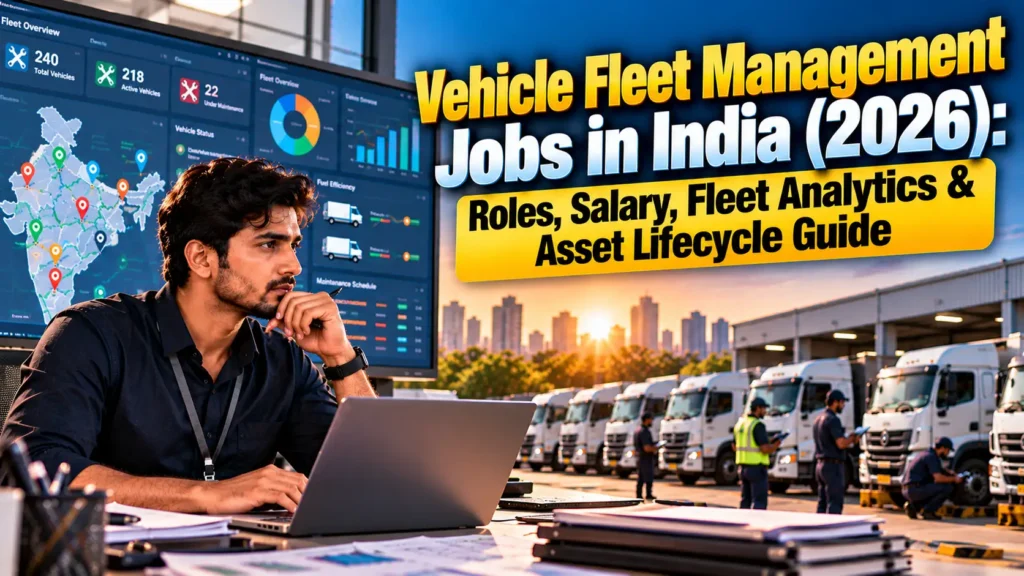
In modern India’s rapidly growing logistics, passenger transit, corporate leasing, and e-commerce distribution ecosystem, vehicle fleet management jobs represent a strategic operational and asset governance career track overseeing commercial vehicles throughout their operational lifecycle. Stationed across regional transport control towers, vehicle depot hubs, and corporate logistics headquarters operated by industry giants like Tata Motors Fleet Edge, Delhivery, Mahindra Logistics, Blue Dart, Uber, and Zoomcar, vehicle fleet management professionals oversee the acquisition, deployment, daily utilization, preventive maintenance, fuel efficiency, and salvage retirement of vehicle fleets ranging from hundreds to thousands of units. In 2026, the sweeping transition toward commercial electric vehicles (EVs), cloud-connected telematics platforms, and computerized route algorithms has elevated vehicle fleet management into a highly analytical, corporate management discipline. These roles offer attractive gross compensation packages ranging from ₹28,000 for entry-level fleet executives up to ₹68,000+ per month for seasoned fleet operations managers, complemented by statutory Provident Fund (PF), corporate medical coverage, performance bonuses, and long-term executive career trajectories. If you are seeking verified vehicle fleet management vacancies across certified logistics employers, you can explore verified delivery partner and warehouse jobs on AlphaReach to locate hiring centers in your city today.
The daily execution of vehicle fleet management bridges on-ground depot discipline with high-level financial and operational analytics. Fleet management professionals evaluate vehicle telemetry data to monitor driver behavior (speeding, harsh braking, excessive idling), calculate Cost-Per-Kilometer (CPK) across vehicle makes, oversee garage maintenance quality, manage tyre retreading and recycling cycles, and ensure 100% compliance with RTO fitness, national permits, and insurance regulations. Furthermore, vehicle fleet managers manage corporate vendor contracts: negotiating tire procurement, fuel bulk purchasing agreements, fast-charging station tariffs, and vehicle leasing arrangements.
Governed by national transport modernization directives and commercial vehicle compliance standards overseen by the Department for Promotion of Industry and Internal Trade (DPIIT), vehicle fleet management is recognized as an essential operational discipline that enhances freight productivity, reduces logistics costs, and drives corporate sustainability. In this comprehensive 2026 industry career handbook, we review the primary responsibilities across the vehicle fleet management hierarchy, benchmark compensation packages across transport sectors, detail essential qualifications, and outline actionable strategies for long-term career growth.
The 5 Core Responsibilities in Vehicle Fleet Management
A vehicle fleet management professional oversees commercial transport assets across five strategic functional areas:
- Total Cost of Ownership (TCO) & Lifecycle Governance: Analyzing complete asset economics from vehicle purchase/lease through maintenance costs, fuel/charging expenses, and eventual salvage disposal to maximize fleet ROI.
- Fleet Telematics Analytics & Driver Scorecards: Monitoring cloud-based telematics dashboards to track vehicle locations, engine diagnostic trouble codes (DTCs), fuel consumption trends, and driver safety behavior scores.
- Preventative Servicing & Workshop Network Oversight: Designing scheduled maintenance intervals based on kilometers traveled, managing internal depot repair bays, and supervising third-party authorized service vendor contracts.
- Regulatory Compliance & Commercial Permitting: Ensuring 100% regulatory compliance across the fleet, including commercial fitness certificate renewals, national permits, comprehensive insurance, and electronic FASTag accounts.
- Commercial Electric Vehicle (EV) Transition Management: Managing EV fleet infrastructure—monitoring battery state-of-health (SOH), optimizing depot charging schedules, and coordinating battery swapping logistics.
Vehicle Fleet Management Salary Benchmark Matrix (2026)
Compensation in vehicle fleet management reflects operational scope, fleet size, and technical expertise. The benchmark matrix below outlines typical salary ranges, prerequisites, and responsibilities across Indian logistics fleets:
| Job Title & Level | Fleet Scope | Gross Monthly Salary (₹) | Statutory Deductions (PF/Tax) (₹) | Performance Incentives (₹) | Net Monthly Take-Home (₹) |
| Fleet Asset Executive (1 – 3 Years) | 25 – 60 Vehicles | ₹26,000 – ₹36,000 | ₹2,600 – ₹3,600 | ₹2,500 – ₹5,000 | ₹25,900 – ₹37,400 |
| Vehicle Fleet Coordinator (2 – 4 Years) | 60 – 150 Vehicles | ₹30,000 – ₹42,000 | ₹3,000 – ₹4,200 | ₹3,000 – ₹6,000 | ₹30,000 – ₹43,800 |
| Fleet Workshop Supervisor (3 – 6 Years) | 150 – 300 Vehicles | ₹36,000 – ₹50,000 | ₹3,600 – ₹5,000 | ₹4,000 – ₹8,500 | ₹36,400 – ₹53,500 |
| Vehicle Fleet Operations Manager (5 – 9 Years) | 300 – 600+ Vehicles | ₹55,000 – ₹80,000+ | ₹5,500 – ₹8,000 | ₹8,000 – ₹18,000 | ₹57,500 – ₹90,000+ |
| Commercial EV Fleet Specialist (2 – 5 Years) | 50 – 200 Electric Vehicles | ₹34,000 – ₹48,000 | ₹3,400 – ₹4,800 | ₹3,500 – ₹7,500 | ₹34,100 – ₹50,700 |
★ Verified Commercial Transport & Fleet Opportunities: Looking for verified logistics, commercial fleet, or transport operations vacancies? Explore open transport and fleet management careers on AlphaReach to connect directly with certified commercial carriers in your region today.
Eligibility Criteria, Essential Skills & Documentation Checklist
Qualifying for vehicle fleet management positions requires a balance of analytical ability, technical understanding, and operational leadership:
- Educational Credentials: A completed Bachelor’s degree (BA, B.Com, B.Sc, BBA) or a polytechnic diploma in Automobile or Mechanical Engineering. Senior managers frequently possess MBA degrees in Supply Chain or Operations.
- Telematics & Software Proficiency: Working knowledge of fleet management platforms (LocoNav, WheelsEye, Fleetx, Trimble) and advanced Microsoft Excel skills (pivot tables, data analysis, cost modeling).
- Commercial Asset Knowledge: Sound understanding of vehicle mechanics, diesel engine diagnostic codes, preventive maintenance schedules, tyre lifecycle management, and commercial EV battery systems.
- Commercial Transport Regulations: Clear understanding of the Motor Vehicles Act, Central Motor Vehicle Rules (CMVR), axle load limits, and statutory vehicle documentation requirements.
- Required KYC Documents: Original Aadhaar Card, PAN Card, educational graduation certificates, valid driving license, and previous employment relieving letters.
Operational Depot Workflows & Electric Vehicle Transition
Vehicle fleet management professionals manage structured depot workflows designed to maximize vehicle uptime while controlling operating costs:
- Morning Fleet Availability Audit (6:00 AM – 10:00 AM): Confirming that scheduled vehicles are inspected, fueled, cleaned, and dispatched without delays, ensuring 98%+ fleet availability.
- Mid-Day Telematics Tracking & Idling Control (10:00 AM – 3:00 PM): Monitoring live control tower screens to detect excessive vehicle idling, speeding, or unauthorized route deviations, coaching drivers to conserve fuel.
- Workshop Repair Tracking & Turnaround Audits (3:00 PM – 7:00 PM): Reviewing maintenance bay turnaround times, auditing repair quality, and approving replacement spare parts.
- Commercial EV Depot Infrastructure Management: Managing fast-charging bay turnover, monitoring battery degradation trends, and coordinating battery swapping operations during peak delivery windows.
Top 5 Strategies for Rapid Promotion to Regional Fleet Director
To transition rapidly from a mid-level fleet manager into a high-paying regional fleet director, adopt these proven practices:
- Deliver Measurable Cost-Per-Kilometer (CPK) Reductions: Analyze telemetry and maintenance data to identify fuel-wasting habits and unnecessary repairs, delivering tangible bottom-line savings to senior management.
- Maintain 98%+ Fleet Availability (Uptime): Implement rigorous preventative maintenance routines to prevent unexpected roadside breakdowns and keep vehicle off-road (VOR) rates under 2%.
- Pioneer Commercial EV Fleet Integration: Build expertise in commercial electric vehicle fleets—battery health modeling, charging depot scheduling, and EV total cost of ownership (TCO) optimization.
- Negotiate High-Value Vendor Contracts: Negotiate bulk procurement agreements for tyres, lubricants, spare parts, and fuel cards to achieve significant cost savings for the organization.
- Earn Professional Supply Chain Certifications: Acquire credentials in supply chain operations (CSCP), Six Sigma Black Belt, or transport economics through recognized institutes to strengthen your executive profile.
★ Fast-Track Your Fleet Management Career Today: Ready to start earning with top-paying commercial fleets, freight transport carriers, or EV logistics networks? Register through AlphaReach to access fast-track onboarding, transparent payouts, and verified fleet operations roles today!
Frequently Asked Questions (FAQs)
What is the primary role of a vehicle fleet manager?
A vehicle fleet manager oversees the operational lifecycle, mechanical maintenance, regulatory compliance, and cost efficiency of commercial vehicles in a transport or logistics organization. Key duties include managing preventative maintenance, tracking fuel efficiency via telematics, overseeing garage repairs, ensuring RTO compliance, and managing driver safety programs.
What is the typical salary in vehicle fleet management jobs in India?
In 2026, salaries in vehicle fleet management range from ₹26,000 to ₹36,000 gross per month for fleet executives, ₹36,000 to ₹50,000 for workshop supervisors, and ₹55,000 to ₹80,000+ for fleet operations managers, alongside quarterly performance bonuses and statutory benefits.
Do I need an engineering degree for vehicle fleet management?
An engineering degree is not mandatory for all fleet management roles; many managers hold degrees in commerce, science, arts, or business administration. However, a diploma or degree in mechanical or automobile engineering is highly advantageous for technical workshop management roles.
How does commercial EV adoption impact vehicle fleet management?
Commercial EV adoption requires fleet managers to master battery health diagnostics, charging depot scheduling, battery swapping logistics, and zero-emission carbon reporting. EV fleet specialists currently enjoy high demand and a 15% to 25% salary premium over traditional fleet managers.
What software platforms are used in vehicle fleet management?
Vehicle fleet managers utilize GPS telematics platforms (such as LocoNav, WheelsEye, Fleetx, and Trimble), Transport Management Systems (TMS), ERP platforms like SAP Transportation, and advanced Microsoft Excel for cost modeling and fuel tracking.
Conclusion
Vehicle fleet management jobs in 2026 offer an intellectually stimulating, economically rewarding, and high-impact career path within India’s booming multimodal supply chain and commercial transport infrastructure. Blending mechanical insight, cloud telematics analytics, regulatory stewardship, and people leadership, fleet management professionals play a vital role in keeping modern commerce running smoothly and cost-effectively.
By mastering telematics platforms, optimizing vehicle operating costs, championing commercial EV integration, and maintaining high vehicle uptime, ambitious professionals can advance rapidly through the corporate logistics hierarchy. Explore verified vehicle fleet management vacancies today to build a prosperous, future-proof career in modern transportation operations.