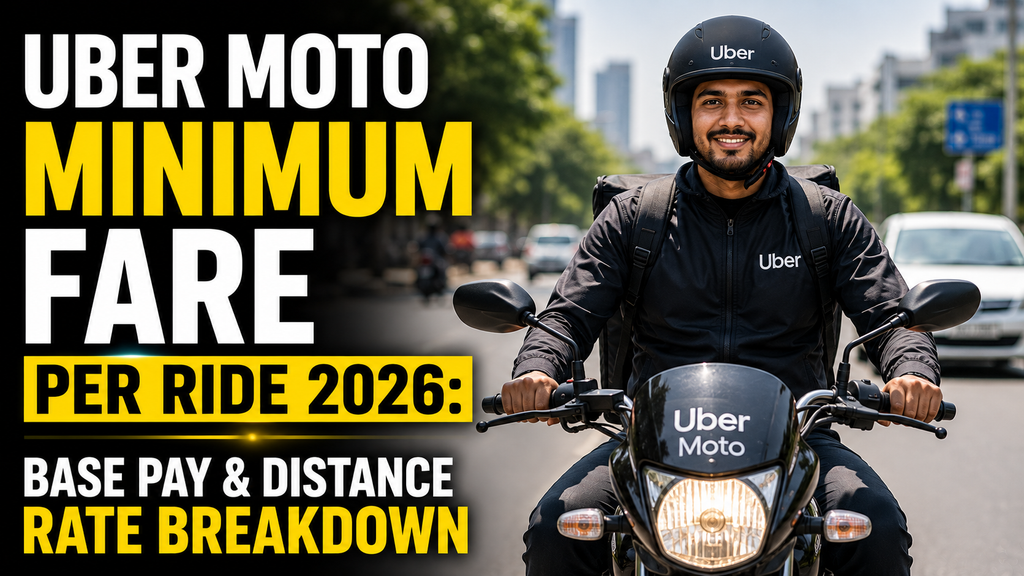
Uber Moto Minimum Fare Per Ride – The micro-mobility revolution has fundamentally transformed urban transportation in 2026. As traffic congestion in major Indian cities continues to grow, commuters are increasingly abandoning standard cabs in favor of bike taxis to weave through gridlock and reach their destinations on time. For gig economy workers, this shift has made Uber Moto one of the most consistent and high-demand earning platforms available today.
However, before you hit the road, understanding the exact financial mechanics of a bike taxi ride is essential. A common question among new driver-partners is how much they will actually take home for those short, quick trips. Will a one-kilometer ride even cover the cost of petrol? To ensure driver profitability, Uber employs a dynamic pricing algorithm that guarantees a baseline payout for every single trip, no matter how short the distance.
Whether you are a student utilizing your free hours or a dedicated full-time partner aiming to maximize your daily income, mastering the Uber Moto minimum fare and base pay structure is your roadmap to financial success. This comprehensive guide breaks down the 2026 rate card, explains the exact distance rates, and provides actionable strategies to boost your hourly earnings.
How the Uber Moto Pricing Algorithm Works
Unlike standard hourly wages, Uber Moto’s payout structure is purely transactional and calculated using a specific formula for every ride. Your total earnings per trip are determined by adding four core components:
- Base Fare: A flat rate applied the moment the ride begins.
- Distance Rate (Per KM): A set amount paid for every kilometer driven from pickup to drop-off.
- Time Rate (Per Minute): A small per-minute payout to compensate for time spent navigating heavy traffic or waiting at signals.
- Surge / Boost Multiplier: Extra money added during peak hours, bad weather, or high-demand zones.
If the calculated total of these components falls below Uber’s predefined minimum threshold for your city, the Minimum Fare rule kicks in to ensure your time and fuel are fairly compensated.
> Comparing Uber Moto earnings with other rider opportunities? Explore the latest delivery jobs and find roles that match your city, schedule, and earning expectations.
Uber Moto Base Fare Breakdown & Rate Card (2026)
While exact rates can vary slightly depending on whether you are operating in a Tier-1 metropolis or a growing Tier-2 city, the 2026 payout structure for Uber Moto generally follows this highly competitive framework:
| Earning Component | Pay Rate (Approximate 2026) | Description |
| Minimum Fare Per Ride | ₹25 – ₹35 | The absolute lowest amount the rider pays. Even if the trip is just 500 meters, this threshold applies. |
| Base Pay (Starts At) | ₹15 – ₹20 | The flat starting fee added to your calculation the moment the passenger sits on the bike. |
| Distance Rate | ₹4 – ₹6 per kilometer | The core of your earnings. Payout calculated based on the GPS route distance. |
| Time Rate | ₹0.50 – ₹1.00 per minute | Compensates for traffic jams and slow-moving routes. |
| Surge Pricing | 1.2x to 2.0x Multiplier | Applied automatically during rush hours or rain to boost the total trip fare. |
Note on Commission: Uber typically deducts a platform service fee (commission) of approximately 15% to 20% from the gross fare. The Minimum Fare mentioned above is the gross rider payment; your net payout will have the platform fee deducted.
Maximizing Profits: The Right Vehicle & Safety Gear
When operating a bike taxi, your vehicle and safety gear directly impact your net earnings and customer ratings. You do not need a brand new showroom motorcycle to start generating a solid income. Investing in a reliable, high-mileage secondhand bike that runs well—such as a Bajaj Vikrant or Bajaj Discover—is one of the smartest ways to keep your daily fuel costs down and profit margins high.
Equally critical is the safety of both you and your passenger. Knowing exactly what makes a good helmet—or ek safe delivery rider helmet kaisa hona chahiye—is essential for this gig. Always equip yourself and your pillion rider with sturdy, ISI-certified helmets featuring clear visors. This protects you from traffic challans, ensures maximum visibility during night shifts, and instantly builds trust with your passengers, leading to better ratings and frequent tips.
Best Working Shifts & Peak Hours
To get the most out of the distance rate and trigger surge pricing, you need to be on the road when demand dramatically outweighs the supply of drivers.
- Morning Commute (7:30 AM – 11:00 AM): Huge demand from office-goers, college students, and daily commuters rushing to metro stations or workplaces.
- Evening Rush (5:00 PM – 9:00 PM): The most lucrative time of the day. As people leave work, the map lights up with red surge zones.
- Late Night Weekends: Friday and Saturday nights often see high demand around commercial hubs, malls, and entertainment districts, frequently triggering premium surge rates.
Eligibility & Required Documents
Onboarding with Uber Moto is a swift, paperless process designed to get you on the road quickly. Ensure you meet these basic requirements:
Eligibility Criteria
- You must be at least 18 years old.
- You must have a valid two-wheeler Driving License (Learner’s licenses are not accepted).
- You must own a smartphone with a stable internet connection.
Required Documents
- Driving License (DL): Valid and original.
- Vehicle RC: Registration Certificate of the bike or scooter.
- Vehicle Insurance: Active third-party or comprehensive insurance.
- Aadhar Card & PAN Card: For background verification and tax processing.
- Bank Details: A canceled cheque or passbook for weekly direct deposits.
Step-by-Step: How to Register for Uber Moto
- Download the Uber Driver App: Head to the Google Play Store or Apple App Store and install the app.
- Create an Account: Register using your active mobile number and select “Motorcycle” or “Moto” as your vehicle type.
- Upload Documents: Use your smartphone camera to upload clear photos of your DL, RC, Insurance, PAN, and Aadhar.
- Complete Background Check: Uber will process your documents and initiate a standard safety background check, which usually takes 24 to 48 hours.
- Take a Selfie: The app will prompt you for a real-time selfie to verify your identity.
- Go Online: Once approved, mount your phone on a sturdy bike holder, put on your helmet, and tap “GO” to start receiving ride requests.
Step-by-Step: Handling Cash Trips and the Uber Wallet
In India, a vast majority of Uber Moto passengers prefer to pay in cash. Managing this collected cash correctly is vital to keeping your driver ID active.
- Check Payment Method: Before ending the trip, the app will clearly state if it is a “Cash” trip or an “Online/Prepaid” trip.
- Collect Exact Amount: If it is a cash trip, collect the exact amount displayed on your screen. Do not overcharge the rider.
- Monitor Uber Wallet Balance: The platform commission for cash trips is deducted from your virtual Uber Wallet. As you take more cash rides, your wallet balance will drop into the negative.
- Clear Your Dues: When your negative balance reaches Uber’s specified limit (usually around -₹500), you will stop receiving new trip requests.
- Pay via UPI: Open the ‘Wallet’ or ‘Earnings’ section, tap ‘Pay Amount’, and use PhonePe, GPay, or Paytm to clear the negative balance. Your ID will be instantly reactivated for new rides.
> Looking to turn your two-wheeler into a steady earning option? Apply as a delivery partner and explore flexible opportunities that fit your daily routine
FAQs: Frequently Asked Questions
1. What happens if a passenger cancels the ride after I have traveled to their location?
If you have driven a significant distance toward the pickup location and the rider cancels, or if you wait at the pickup spot for more than 5 minutes and the rider doesn’t show up, Uber compensates you with a standard Cancellation Fee (usually around ₹15 – ₹25).
2. Is the minimum fare the same across all cities in India?
No. The base pay, per-kilometer distance rate, and minimum fare differ based on city tiers and local transport regulations. Fares in tier-1 cities like Bangalore or Delhi are generally higher than in tier-3 cities.
3. Does Uber pay for the fuel I use to reach the pickup location?
No, you are not paid a specific distance rate while driving to the passenger. Your paid kilometers begin only after you swipe “Start Trip” when the passenger is seated. This is why you should avoid accepting requests that are more than 3-4 kilometers away.
4. How often does Uber process driver payouts?
Uber runs on a weekly payout cycle. Any earnings accumulated via online payments, promotions, and surges from Monday to Sunday are transferred to your registered bank account by Tuesday or Wednesday of the following week.
5. Can I do Uber Moto deliveries (Uber Connect/Eats) with the same app?
Yes! The Uber Driver app allows you to toggle different services on and off. You can accept passenger rides (Uber Moto) and parcel deliveries (Uber Connect) simultaneously, minimizing your idle time and maximizing your hourly earnings.
Conclusion
Understanding the Uber Moto minimum fare per ride is the secret to thriving in the 2026 gig economy. While the base pay and distance rates might seem small on paper, the rapid pace of back-to-back bike taxi trips quickly adds up to a substantial daily income. By choosing a fuel-efficient motorcycle, ensuring top-tier safety for your passengers, and strategically driving during rush hour surges, you can turn short rides into highly profitable shifts. Keep your app updated, track your cash wallet diligently, and hit the road to take control of your gig earnings today!