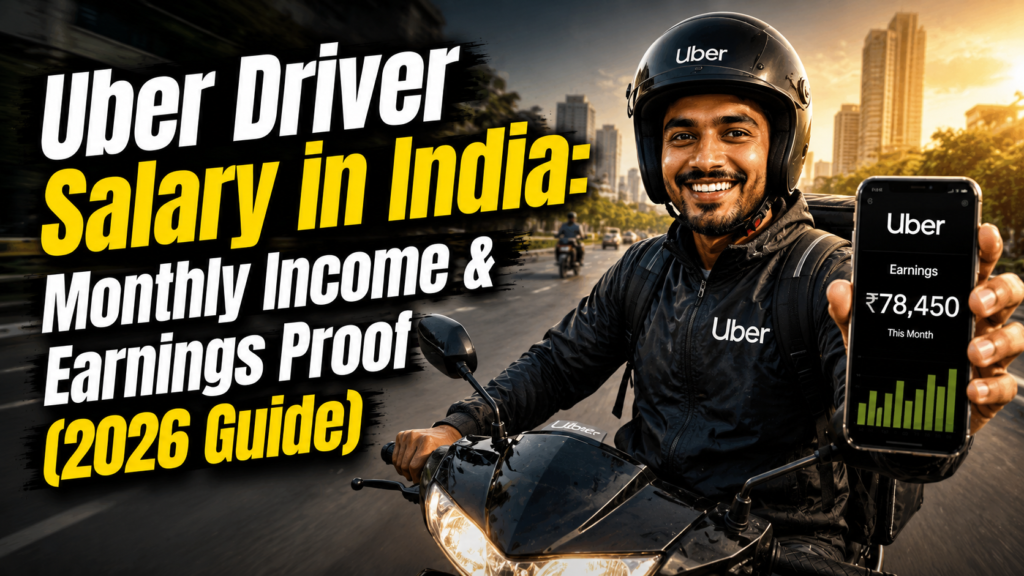
In 2026, urban mobility in India is powered by hundreds of thousands of independent driver captains operating across Uber’s multi-modal ecosystem—including Uber Moto (two-wheeler bike taxis), Uber Auto (three-wheelers), and Uber Go/Premier (commercial four-wheeler cabs). For vehicle owners seeking steady daily cash flow, driving with Uber provides complete scheduling independence, instant wallet cashouts, and non-stop passenger demand. However, evaluating the real uber driver salary in india requires analyzing gross passenger fares against platform commissions, fuel overhead, vehicle EMI, and daily trip milestone bonuses.
Uber does not pay a traditional fixed monthly salary. Instead, drivers operate as independent contractors earning variable trip fares based on base rates, per-kilometer travel, time elapsed in traffic, and dynamic surge multipliers during peak hours. Earnings vary significantly between an Uber Moto bike taxi captain riding 8 hours daily and a commercial cab driver completing airport transit routes.
In this comprehensive 2026 financial guide, we break down real Uber earnings across two-wheelers, autos, and four-wheelers. We examine gross vs net income, operating expenses, daily surge tactics, instant payout workflows, and proven strategies to take home top-tier monthly profits.
How Uber Calculates Driver Payouts in India (2026 Model)
Uber’s algorithmic fare engine calculates captain earnings across four core components:
- Base Fare & Distance Pricing: Standard baseline fee plus per-kilometer charges (₹6.50–₹9.00/km for Moto; ₹10.00–₹14.00/km for Auto; ₹14.00–₹22.00/km for Cabs).
- Dynamic Surge Multipliers: High-demand pricing multipliers (1.3x to 2.5x) applied automatically during office rush hours, monsoon rains, and late-night transits.
- Platform Service Commission: Uber deducts a standard platform service fee (typically 18% to 22%), often offset by daily and weekly trip target bonuses.
- Daily Quest & Milestone Bonuses: Completing 12 to 20 trips daily unlocks tiered cash bonuses ranging from ₹150 to ₹600.
Uber Driver Earnings Matrix Across Vehicle Categories (2026)
| Vehicle Category | Daily Active Hours | Daily Completed Trips | Gross Monthly Revenue | Fuel & Maintenance (Monthly) | Net Monthly Take-Home |
| Uber Moto (Bike Taxi) | 8.0 – 9.0 Hours | 14 – 20 Trips | ₹30,000 – ₹38,000 | ₹6,000 – ₹7,500 (Petrol) | ₹24,000 – ₹30,500 |
| Uber Moto (Electric Bike) | 8.0 – 9.0 Hours | 14 – 20 Trips | ₹30,000 – ₹38,000 | ₹1,500 – ₹2,200 (Charging) | ₹28,500 – ₹35,800 |
| Uber Auto (3-Wheeler CNG) | 9.0 – 10.0 Hours | 15 – 22 Trips | ₹42,000 – ₹55,000 | ₹10,000 – ₹13,000 (CNG) | ₹32,000 – ₹42,000 |
| Uber Go / Premier (4-Wheeler) | 10.0 – 11.5 Hours | 10 – 16 Trips | ₹65,000 – ₹88,000 | ₹22,000 – ₹30,000 (CNG/Fuel) | ₹43,000 – ₹58,000 |
Discover high-paying commercial driving and bike taxi captain vacancies with instant daily cashouts and flexible hours. Explore open vacancies today.
Operating Overhead & Vehicle Maintenance Reality
Under transport operating cost guidelines monitored by the Ministry of Road Transport and Highways (MoRTH):
- Two-Wheeler Fuel & Care: Bike captains consume roughly 2.0 liters of petrol daily (₹200/day), with ₹600 monthly allocated for engine oil and brake maintenance.
- Four-Wheeler CNG & EMI: Cab drivers operating CNG vehicles spend ₹650 to ₹950 daily on fuel, plus vehicle loan EMIs (₹10,000 to ₹14,000 monthly) if financing a commercial car.
- High EV Profitability: Electric two-wheeler and four-wheeler drivers save up to 70% on daily operating costs, significantly boosting net take-home pay.
Instant Flexi-Cashouts & Weekly Bank Settlements
Uber provides superior liquidity and payout flexibility for drivers:
- Instant Flexi-Pay: Transfer earned trip fares directly to your bank account or UPI ID up to 5 times daily with zero waiting time.
- Standard Weekly Settlement: Automatic direct bank transfer processed every single Monday for un-withdrawn balances and promotional quest bonuses.
- Zero Commission on Tips: 100% of digital passenger tips are credited directly to the driver with zero platform deductions.
5 Proven Tactics to Maximize Monthly Earnings on Uber
- Master the Office Rush Hours: Target 7:30 AM–11:00 AM and 5:30 PM–9:30 PM near metro stations and IT business parks to capture lucrative 1.8x surge fares.
- Enable Forward Dispatching: Keep incoming trip pings active so your next passenger is queued before your active ride finishes, eliminating idle waiting time.
- Maintain a 4.85+ Star Rating: High customer ratings unlock algorithmic priority for premium, long-distance corporate and airport trips.
Frequently Asked Questions (FAQs)
What is the average monthly income for an Uber Moto bike taxi driver?
A full-time Uber Moto captain completing 14 to 20 trips daily typically takes home between ₹24,000 and ₹30,500 net monthly income after petrol costs.
How much can an Uber cab driver earn per month in India?
An Uber cab driver working 10–11 hours daily in a major metro earns ₹65,000 to ₹88,000 gross, netting ₹43,000 to ₹58,000 after CNG and maintenance expenses.
Can I withdraw my Uber earnings on the same day?
Yes! Uber’s Instant Cashout feature allows drivers to transfer earned trip fares directly to their bank account or UPI ID instantly throughout the day.
Does Uber require commercial yellow plates for bike taxis?
State regulations vary. Some states allow private white plates under EV/aggregator guidelines, while others require commercial registration. Check local Uber hub guidelines.
Do customer tips get deducted from Uber payouts?
No. 100% of customer tips provided in-app or in cash go entirely to the driver with zero commission deductions.
Turn your two-wheeler or car into a high-earning commercial vehicle on Uber. Complete your quick registration and start earning top trip fares today.
Conclusion
Driving with Uber in 2026 offers exceptional income potential, unmatched payout liquidity, and true career independence. By leveraging peak surge hours, maintaining top customer ratings, and controlling fuel expenses, you can build a highly profitable commercial driving business.

