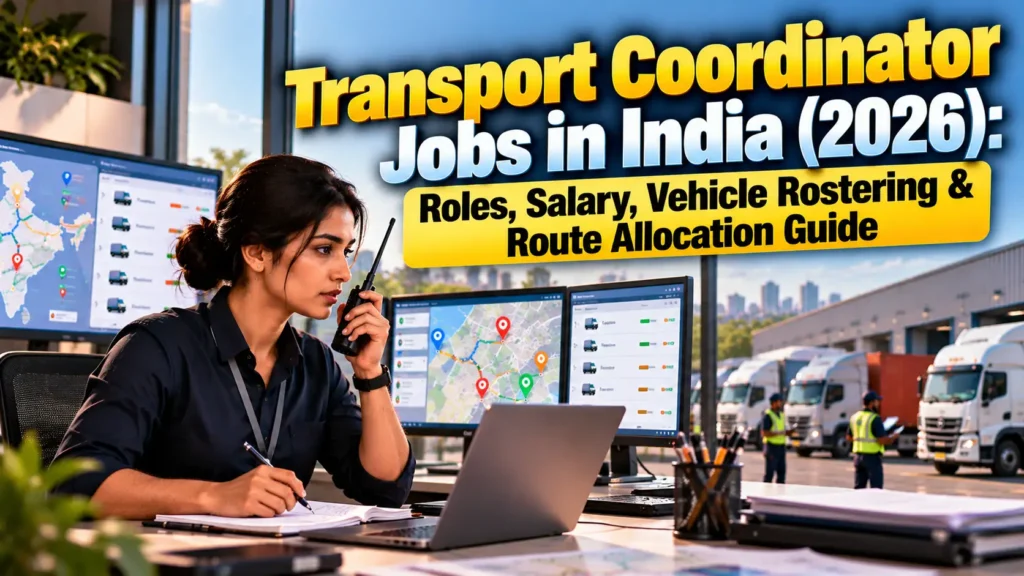
In modern India’s fast-paced commercial freight, corporate employee transit, retail distribution, and third-party logistics (3PL) ecosystem, transport coordinator jobs represent a crucial scheduling and communication role responsible for synchronizing vehicle allocations, driver duty rosters, and delivery routes. Located within central transport control rooms, industrial plant dispatch offices, and corporate transportation desks managed by companies like Mahindra Logistics, DHL Supply Chain, Tata Motors Fleet Edge, Flipkart Logistics, and Uber Corporate, transport coordinators serve as the operational bridge connecting transport planners, warehouse loading docks, drivers, and corporate clients. In 2026, the nationwide growth of organized supply chains and app-driven transport management platforms has created broad demand for detail-oriented, tech-literate transport coordinators. These positions provide attractive gross compensation packages ranging from ₹23,000 to ₹36,000 per month, supported by statutory Provident Fund (PF), Employee State Insurance (ESI) medical coverage, shift bonuses, and clear opportunities for career advancement into transport operations management. If you are seeking verified transport coordinator openings across certified logistics employers, you can explore verified delivery partner and warehouse jobs on AlphaReach to locate certified openings in your city today.
The daily execution of a transport coordinator revolves around scheduling accuracy, operational flexibility, and proactive communication. Every morning, the transport coordinator reviews daily freight movement requirements or employee transit schedules, maps out vehicle route assignments, confirms driver attendance and vehicle road readiness, and assigns daily trip run sheets. During transit, the coordinator monitors GPS tracking systems to verify that vehicles adhere to prescribed routes and designated stops, resolves roadside delays such as tyre punctures or highway congestion, and communicates real-time ETAs to receiving facilities. When shipments are delivered, the coordinator collects and audits trip completion logs, records fuel expenditures, and reconciles odometer readings.
Supported by standardized logistics skill frameworks and national employment networks established under the National Career Service (NCS), transport coordinators represent a respected vocational discipline driving high operational efficiency across India’s freight corridors. In this comprehensive 2026 career handbook, we review the primary duties of a transport coordinator, benchmark compensation packages across transport domains, explain essential qualification criteria, and outline proven career progression strategies.
The 5 Core Responsibilities of a Transport Coordinator
A transport coordinator manages commercial vehicle scheduling and transit operations across five primary operational areas:
- Daily Route Mapping & Vehicle Rostering: Designing optimized route schedules for commercial delivery vehicles or corporate transit cabs, ensuring vehicles are utilized effectively without driver fatigue.
- Driver Shift Assignment & Attendance Tracking: Confirming driver reporting times, resolving shift absences by deploying relief drivers, and handing out signed vehicle trip sheets and fuel coupons.
- Real-Time GPS Tracking & Milestone Monitoring: Monitoring live vehicle movement on transport management software (TMS) dashboards, verifying delivery milestones, and proactively escalating transit delays to operations supervisors.
- Transit Incident Response & Relief Dispatch: Serving as the frontline emergency contact during roadside breakdowns, traffic accidents, or vehicle detentions, dispatching replacement vehicles to ensure uninterrupted delivery schedules.
- Trip Sheet Reconciliation & Data Entry: Auditing completed driver run sheets, cross-verifying odometer entries against GPS mileage reports, logging toll payments, and compiling daily transport utilization reports for management.
Transport Coordinator Salary Benchmark Matrix (2026)
Compensation packages for transport coordinators reflect the operational complexity of the transport domain, fleet size, and candidate experience. The benchmark matrix below highlights compensation scales across key logistics sectors:
| Transport Domain | Experience Level | Gross Monthly Salary (₹) | Statutory Deductions (PF/ESI) (₹) | Performance Incentives (₹) | Net Monthly Take-Home (₹) |
| Corporate Employee Transportation (BPO/IT Cabs) | 1 – 3 Years | ₹24,000 – ₹34,000 | ₹2,400 – ₹3,400 | ₹2,500 – ₹4,500 | ₹24,100 – ₹35,100 |
| E-Commerce Last-Mile Logistics (Delhivery/Shadowfax) | 1 – 2 Years | ₹23,000 – ₹32,000 | ₹2,300 – ₹3,200 | ₹2,000 – ₹4,000 | ₹22,700 – ₹32,800 |
| Industrial Manufacturing Freight (Auto/Steel) | 2 – 4 Years | ₹26,000 – ₹36,000 | ₹2,600 – ₹3,600 | ₹2,500 – ₹4,500 | ₹25,900 – ₹36,900 |
| FMCG & Retail Distribution Depots | 1 – 3 Years | ₹23,500 – ₹33,000 | ₹2,350 – ₹3,300 | ₹2,000 – ₹4,000 | ₹23,150 – ₹33,700 |
| Cold Chain & Perishable Transit | 2 – 4 Years | ₹25,000 – ₹35,000 | ₹2,500 – ₹3,500 | ₹2,500 – ₹5,000 | ₹25,000 – ₹36,500 |
★ Verified Commercial Transport & Fleet Opportunities: Looking for verified logistics, commercial fleet, or transport operations vacancies? Explore open transport and fleet management careers on AlphaReach to connect directly with certified commercial carriers in your region today.
Eligibility Criteria, Essential Skills & Documentation Checklist
Securing a transport coordinator role requires meeting straightforward academic and technical standards:
- Educational Credentials: A completed Bachelor’s degree (BA, B.Com, B.Sc, BBA) or a diploma in logistics, transportation, or automobile engineering. Prior experience in transport routing or dispatch is highly valued.
- Computer & Software Literacy: Working knowledge of Microsoft Excel (basic formulas, data filtering, attendance sheets) and ease navigating GPS vehicle tracking dashboards and Transport Management Systems (TMS).
- Multitasking & Problem-Solving Aptitude: Ability to coordinate multiple vehicle routes simultaneously, resolve sudden route disruptions calmly, and maintain operational composure.
- Communication & Coordination Skills: Clear verbal communication in local regional languages and Hindi to coordinate smoothly with commercial drivers, warehouse staff, and client transport desks.
- Required KYC Documents: Original Aadhaar Card, PAN Card, educational graduation certificates, active bank passbook copy, and previous employment relieving letters.
Shift Schedules, Operational Rhythms & Work Environment
Transport coordinators maintain structured shift schedules aligned with transportation patterns:
- Early Morning Dispatch Shift (5:00 AM – 1:30 PM): Critical for dispatching morning freight distribution runs or early employee transit shifts, confirming driver attendance, and clearing vehicles for dispatch.
- Afternoon Freight Monitoring Shift (1:00 PM – 9:30 PM): Focuses on monitoring line-haul highway transit, handling mid-day delivery collections, and scheduling vehicles for evening manufacturing dispatches.
- Night Inbound & Line-Haul Shift (9:00 PM – 5:30 AM): Monitors long-distance commercial line-haul trucks traveling on interstate highways, addressing highway breakdown alerts, and updating ETA milestones.
- Facility Amenities & Technology Tools: Modern transport offices provide dual-monitor computer workstations, fast broadband connectivity, purified drinking water, clean rest areas, and first-aid kits.
Top 5 Strategies for Rapid Promotion in Transport Operations
To transition rapidly from a transport coordinator into a transport supervisor or operations manager, adopt these proven practices:
- Design Optimal Route Rosters That Cut Fuel Waste: Learn algorithmic routing principles to eliminate overlapping vehicle paths and reduce empty vehicle kilometers, delivering direct cost savings to management.
- Maintain Flawless Attendance & On-Time Dispatch Records: Ensure that 100% of scheduled vehicles depart within their allocated dispatch window, building a reputation for reliability and composure.
- Learn Commercial EV Fleet Dynamics: Familiarize yourself with electric vehicle battery charging schedules, state-of-charge (SOC) monitoring, and EV range constraints to excel in green logistics operations.
- Master Trip Run Sheet Auditing: Conduct thorough audits of driver run sheets against GPS mileage data to eliminate fuel card discrepancies and unauthorized vehicle detours.
- Earn Professional Logistics Certifications: Acquire credentials in supply chain operations, fleet management, or transport economics through recognized vocational institutes to accelerate managerial promotions.
★ Fast-Track Your Fleet Management Career Today: Ready to start earning with top-paying commercial fleets, freight transport carriers, or EV logistics networks? Register through AlphaReach to access fast-track onboarding, transparent payouts, and verified fleet operations roles today!
Frequently Asked Questions (FAQs)
What is the primary role of a transport coordinator?
A transport coordinator plans, schedules, and tracks commercial vehicle trips and driver duty rosters. Their daily duties include assigning vehicles to delivery routes, tracking live GPS movements, responding to roadside breakdowns, and reconciling completed trip sheets and fuel expenses.
What is the typical salary for a transport coordinator in India?
In 2026, transport coordinators in India earn between ₹23,000 and ₹36,000 gross per month. With performance incentives and statutory benefits (PF, ESI), net monthly take-home earnings typically range from ₹22,500 to ₹35,000.
What is the difference between a transport coordinator and a transport supervisor?
A transport coordinator focuses primarily on desk-based scheduling, route allocation, and software-based GPS monitoring, whereas a transport supervisor is a ground-level leader who manages driver discipline, conducts vehicle safety checks, and handles depot yard operations.
Can freshers apply for transport coordinator jobs?
Yes. Graduates in commerce, business administration, or logistics diploma holders can qualify for entry-level transport coordinator roles. Employers provide paid training during onboarding to teach Transport Management Systems (TMS) and fleet tracking portals.
What software tools do transport coordinators use on a daily basis?
Transport coordinators regularly use Microsoft Excel (for trip logs and attendance tracking), GPS telematics platforms (such as LocoNav, WheelsEye, and Fleetx), and enterprise Transport Management Systems (TMS) such as SAP or Oracle Transportation.
Conclusion
Transport coordinator jobs in 2026 provide an accessible, intellectually engaging, and reliable career entry point into India’s expanding multimodal logistics and commercial transportation network. By combining computer-assisted scheduling, live telematics tracking, and proactive operational coordination, transport coordinators play a vital role in ensuring that goods and people travel safely and on schedule.
By taking pride in routing accuracy, eliminating dispatch delays, mastering logistics software platforms, and building positive relationships with drivers, ambitious coordinators can advance rapidly into well-paid supervisory and operations management careers. Explore active transport coordinator vacancies today to begin a fulfilling career in modern logistics.