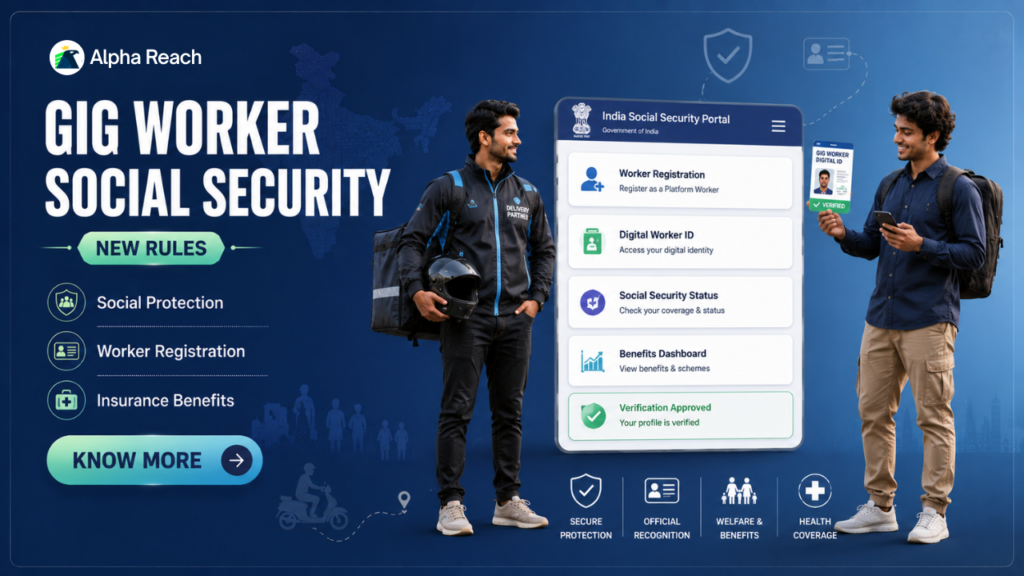
The rapid expansion of the digital economy has transformed how millions of Indians earn a living. From delivering groceries in ten minutes to providing on-demand rides, gig and platform workers have become the backbone of urban logistics. However, this workforce has historically operated without the safety nets enjoyed by traditional employees, such as health insurance, pensions, or job security.
To bridge this gap, the Ministry of Labor and Employment has introduced a landmark framework designed to regulate the gig economy and establish a formal social security structure for millions of platform workers. Based on the implementation of four comprehensive labor codes, this policy introduces structural rules governing worker registration, platform compliance, and eligibility metrics.
The Eligibility Criteria: What Counts as a “Work Day”?
One of the most significant aspects of the new framework is how it defines and measures a gig worker’s engagement to determine their eligibility for social security benefits. The policy outlines specific time thresholds that workers must meet within a financial year:
| Worker Category | Minimum Engagement Threshold (Per Financial Year) |
| Single-Platform Workers | At least 90 days of engagement with a single aggregator. |
| Multi-Platform Workers | At least 120 days of cumulative engagement across multiple platforms. |
Defining the “Work Day”
To prevent aggregators from manipulating hours to deny benefits, the government has established a highly inclusive definition of an active work day. Any calendar day in which a worker earns even a single rupee through a platform-assigned task counts toward their eligibility, regardless of the total hours logged or the amount earned.
Furthermore, the tracking system accounts for the overlapping nature of gig work through the following rules:
- Cumulative Days: Engagement days across different platforms are entirely cumulative toward the 120-day multi-platform threshold.
- Simultaneous Multi-Aggregator Payouts: If a rider or driver completes tasks for multiple aggregators (e.g., delivering for both Zomato and Swiggy) on the exact same calendar day, it is counted as multiple days of engagement toward their seasonal totals.
Core Features of the Regulatory Framework
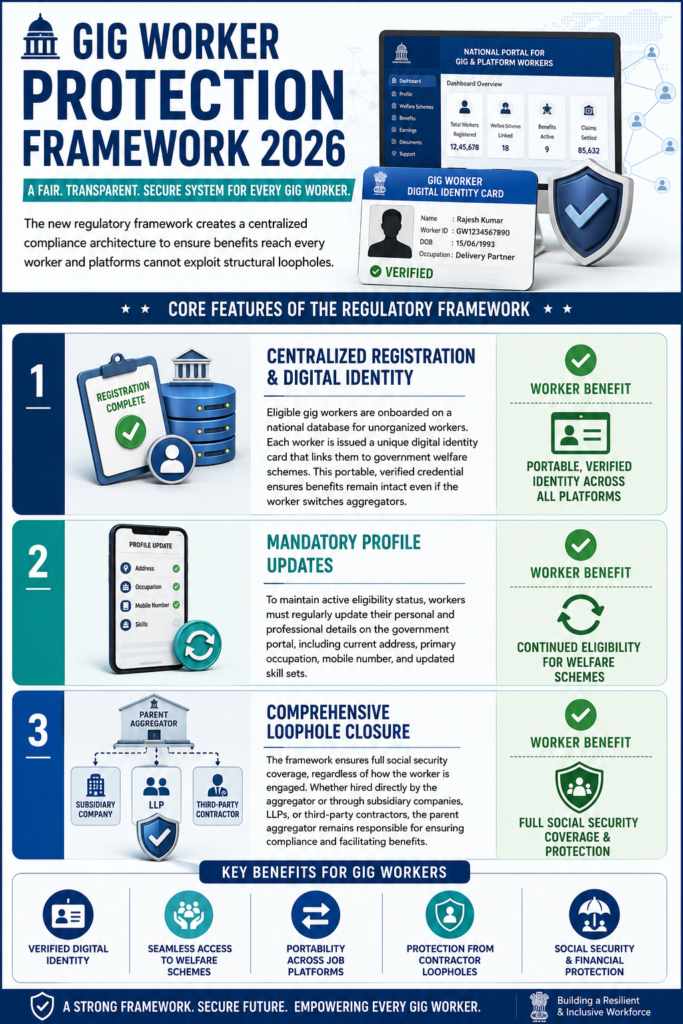
The policy introduces a centralized compliance architecture to ensure that benefits are delivered transparently and that platforms cannot exploit structural loopholes.
1. Centralized Registration & Digital Identity
Eligible gig workers will be systematically onboarded onto a national database for unorganized workers. Upon successful registration, each platform worker will be issued a dedicated digital identity card. This card serves as a portable, verified credential that links the worker to government welfare schemes, ensuring that their benefits remain intact even if they switch aggregators.
2. Mandatory Profile Updates
To maintain active eligibility status, workers are required to regularly update their personal and professional details on the government portal. This includes keeping their current residential address, primary occupation, verified mobile numbers, and updated skill sets accurate within the system.
3. Comprehensive Loophole Closure
A major challenge in regulating the gig economy has been the use of complex supply chains to deflect employment liabilities. The draft rules address this directly by ensuring full social security coverage regardless of how the worker is engaged. Whether a delivery partner is hired directly by the main aggregator or sourced through subsidiary companies, Limited Liability Partnerships (LLPs), or third-party staffing contractors, the parent aggregator remains responsible for facilitating compliance.
Join leading platforms as a delivery partner and unlock flexible earning opportunities.
Public Consultation and Next Steps
The government has opened a 30 to 45-day consultation window, inviting detailed suggestions, feedback, and formal objections from all industry stakeholders—including aggregators, labor unions, and gig workers—before finalizing and locking the official rules.
While policy proponents hail this framework as a long-overdue milestone toward establishing worker dignity and institutional protection, critics and labor advocates have raised early concerns. The primary point of contention centers on the 90-day and 120-day thresholds, which some argue may still inadvertently exclude highly vulnerable, seasonal, or ultra-part-time gig workers who rely on these platforms for emergency income.
As the consultation period progresses, the balance between platform operational sustainability and robust worker welfare will remain the central focus of India’s evolving labor landscape.
Source Report: Mint Video: India’s New Gig Economy Framework