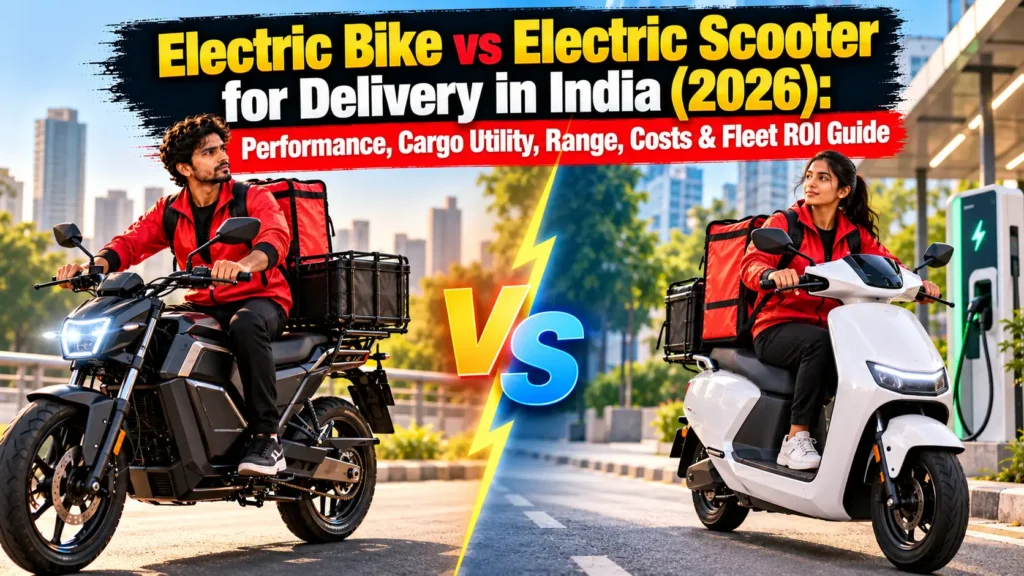
In modern India’s rapidly electrifying hyper-local logistics and on-demand delivery ecosystem, evaluating an electric bike vs electric scooter for delivery has become the defining vehicle selection dilemma for forward-thinking gig executives. With the commercial two-wheeler landscape shifting decisively away from volatile ₹100/liter petrol, both electric motorcycles (e-bikes) and automatic electric scooters (e-scooters) deliver astonishingly low operating costs of just ₹0.25 to ₹0.40 per kilometer—slashing monthly fuel expenditure from over ₹4,000 to under ₹800. However, despite sharing green zero-emission powertrains, electric motorcycles and electric scooters represent radically different engineering architectures with distinct commercial trade-offs in cargo carrying utility, chassis durability over deep potholes, riding posture, and battery swapping accessibility. In 2026, leading delivery aggregators like Zomato, Swiggy, Blinkit, Zepto, and Delhivery actively engage both EV formats across their urban and suburban fleets. If you are preparing to transition to electric delivery mobility and seeking high-paying delivery partner vacancies, you can explore verified delivery partner jobs on AlphaReach to locate certified hiring hubs near you today.
Understanding whether an electric motorcycle or an electric scooter best fits your delivery career requires analyzing your daily route geography and cargo requirements. Electric motorcycles—such as the Revolt RV400, Tork Kratos, or commercial cargo e-bikes from Oben Rorr—feature large 17-inch wheels, robust motorcycle suspension geometry, motorcycle tank-gripping stability, and commanding ground clearance that glide effortlessly over flooded monsoon streets and rough suburban potholes. Conversely, electric scooters—such as the Ola S1X, TVS iQube, Ather Rizta, or commercial Zypp Electric scooters—feature wide flat floorboards capable of hauling heavy 20 kg grocery totes, lockable under-seat storage, effortless step-through ergonomics, and seamless compatibility with dense urban battery-swapping networks.
Under clean energy transition roadmaps, commercial vehicle safety standards, and green fleet mandates governed by the Bureau of Energy Efficiency (BEE), commercial electric two-wheelers in India enjoy 100% road tax exemptions, 5% concessional GST, and direct subsidies under the PM E-DRIVE scheme. In this authoritative 2026 head-to-head comparison guide, we analyze the structural differences between electric bikes and electric scooters, compare cargo capacity, contrast real-world delivery range, model 3-year total cost of ownership, and help you select the ideal electric machine for your delivery beats.
The 5 Core Dimensions: Electric Bike vs. Electric Scooter for Delivery
Delivery executives must evaluate electric motorcycles and electric scooters across five primary commercial parameters:
- Wheel Diameter & Rough-Road Pothole Resilience: Electric bikes roll on large 17-inch motorcycle wheels that absorb deep potholes, speed breakers, and unpaved suburban roads with superior stability. Electric scooters roll on smaller 10-inch or 12-inch wheels that feel jarring over rough terrain and transmit higher impact shocks to fragile cargo.
- Cargo Carrying Architecture: Electric scooters feature flat open floorboards and lockable under-seat boot storage (up to 34 liters on models like Ather Rizta), allowing riders to haul heavy grocery totes between their feet. Electric bikes have zero floorboard space and zero under-seat storage, forcing riders to carry 100% of cargo on their backs or mount rigid rear metal luggage crates.
- Ground Clearance & Monsoon Waterlogging Survival: Electric bikes boast generous ground clearance (180 to 200 mm) with elevated mid-drive electric motors that safely clear standing water on flooded streets. Electric scooters feature lower ground clearance (150 to 165 mm) with hub motors that sit closer to standing water levels.
- Battery Swapping Network Compatibility: The commercial battery-swapping ecosystem (Battery Smart, Sun Mobility, Zypp) is heavily standardized around electric scooter chassis formats, allowing e-scooters to complete 60-second battery swaps at thousands of metro hubs. Electric bikes predominantly rely on fixed-battery home charging or heavier proprietary battery packs.
- Riding Ergonomics & Long-Shift Spinal Fatigue: Electric bikes offer motorcycle posture with tank knee-gripping support that distributes rider weight between handlebars, footpegs, and seat, reducing lower-back compression over long 100 km shifts. Electric scooters place all rider weight directly on the lower spine over upright seats.
Head-to-Head Comparison Matrix: Electric Bike vs. Electric Scooter (2026)
To understand the technical and commercial tradeoffs across both electric platforms over a full month of delivery work (2,400 km), examine the comprehensive benchmark matrix below:
| Operational Dimension | Electric Motorcycle (e.g., Revolt / Oben) | Electric Cargo Scooter (e.g., Zypp / Yulu) | High-Range Consumer EV Scooter (e.g., Ola / TVS) |
| Wheel Size & Pothole Absorption | 17-Inch Wheels (Exceptional) | 12-Inch Wheels (Moderate) | 12-Inch Wheels (Moderate) |
| Floorboard Cargo Space | Zero (Central frame/tank spine) | Wide Flat Floorboard (20 kg tote capacity) | Spacious Flat Floorboard + 30L Boot |
| Real-World Delivery Range | 100 – 140 km per charge | 65 – 75 km per battery swap | 90 – 125 km per charge |
| Turnaround / Refueling Time | 4 to 5 Hours (Home AC Charger) | 60 Seconds (Automated Swap Kiosk) | 4.5 to 6.5 Hours (Home AC Charger) |
| Ground Clearance (Waterlogging) | 180 – 200 mm (High Clearance) | 150 – 160 mm (Standard) | 155 – 165 mm (Standard) |
| Monthly Energy Cost (2,400 km) | ₹650 – ₹850 (Domestic Power) | ₹1,600 – ₹2,100 (Swap Fees) | ₹650 – ₹850 (Domestic Power) |
| Ideal Delivery Niche | Long-distance courier & food delivery | Hyper-local quick-commerce grocery | Mixed food, grocery & express parcel |
★ High-Paying Delivery Fleet Opportunities: Are you seeking high-paying delivery partner jobs with competitive weekly earnings, fuel distance allowances, same-day onboarding, and flexible shifts? explore verified delivery partner jobs on AlphaReach to discover immediate vacancies across top quick-commerce dark stores, food delivery platforms, and courier hubs in your city today.
Detailed Inspection: When Does an Electric Bike Win?
An electric motorcycle is the superior commercial choice in specific high-mileage delivery environments:
- Suburban & Potholed Logistics Belts: If your delivery pincodes cover rough suburban perimeters, unpaved industrial bypasses, or rural fringe clusters, the 17-inch wheels and robust rear monoshock suspension of an electric bike provide unmatched durability and spine protection.
- Long-Distance Express Courier Delivery: For courier executives with Delhivery or Shadowfax who travel 100 to 140 km daily across wider city perimeters with parcel bags strapped to heavy rear panniers, an electric motorcycle provides rock-solid high-speed highway stability at 70 to 80 km/h.
- Severe Monsoon Waterlogging: With high ground clearance (up to 200 mm) and high-mounted battery enclosures, electric motorcycles wade through flooded streets where smaller-wheeled electric scooters risk water ingress.
Detailed Inspection: When Does an Electric Scooter Win?
An electric scooter is the undisputed champion in hyper-local quick-commerce and dense city operations:
- Quick-Commerce Grocery Delivery (Zepto / Blinkit / Instamart): Carrying 15 to 25 kg grocery crates, 5L cooking oil cans, and milk trays is effortless on an electric scooter’s flat floorboard. Attempting grocery delivery on an electric bike requires balancing heavy crates precariously on a rear rack.
- High-Turnaround Metro Centers with Battery Swapping: If you deliver in dense metro hubs (Delhi NCR, Bengaluru, Mumbai, Hyderabad) and operate 10 to 12-hour shifts covering 160+ km, subscribing to an EV scooter with 60-second battery swapping eliminates all charging downtime.
- Low-Speed Zero-Licence Entry: Commercial electric scooters capped below 25 km/h (like Yulu DeX) legally do not require a driving licence or vehicle registration, allowing beginners to start earning immediately with zero regulatory hurdles.
Top 5 Recommendations for Choosing Between e-Bike and e-Scooter
Follow these actionable criteria to select the perfect electric delivery machine:
- If You Primarily Deliver Groceries for Quick-Commerce: Choose an Electric Scooter with a wide flat floorboard (Ather Rizta, TVS iQube, or commercial Zypp). Carrying bulky groceries between your feet protects your back.
- If You Deliver Long-Distance E-Commerce Parcels or Food: Choose an Electric Motorcycle with 17-inch wheels (Revolt RV400, Oben Rorr). The larger wheels handle highway speeds and potholed roads with ease.
- If You Live in an Apartment Without Ground-Floor Charging: Choose a Commercial Battery-Swapping EV Scooter. Pull up to an automated kiosk, swap batteries in 60 seconds, and avoid charging cables entirely.
- If You Work Long 10+ Hour Shifts: Prioritize an electric vehicle with comfortable upright ergonomics and a padded long seat to avoid chronic lower back fatigue.
- Test Ride Both with Full Commercial Cargo: Before buying or leasing, load a 15 kg delivery backpack onto both vehicles to experience real-world braking, hill-climbing torque, and balance.
★ Maximize Your Delivery Earnings Today: Ready to maximize your delivery income, optimize your vehicle running costs, and achieve financial independence with top platform fleets? apply as a verified delivery partner on AlphaReach to access fast onboarding, guaranteed shift schedules, and priority route dispatches today.
Frequently Asked Questions (FAQs)
Is an electric bike better than an electric scooter for delivery work?
Neither is universally ‘better’—they excel in different delivery niches. An electric bike is superior for long-distance courier and food delivery across rough, potholed roads thanks to its large 17-inch wheels and motorcycle stability. An electric scooter is far superior for quick-commerce grocery delivery due to its flat floorboard cargo space, under-seat storage, and access to battery swapping.
Can you carry grocery bags easily on an electric motorcycle?
No. Electric motorcycles lack a flat floorboard and have zero under-seat storage due to the central frame and battery pack. To carry groceries, you must wear a heavy delivery backpack or install an aftermarket rear metal luggage carrier box, which can feel top-heavy compared to resting bags on an e-scooter floorboard.
How does battery swapping compare between electric bikes and electric scooters?
Commercial battery-swapping networks (like Battery Smart and Sun Mobility) are overwhelmingly designed around electric scooter battery form factors (standardized 1.5 to 2 kWh modular packs). Electric bikes generally feature larger, heavier proprietary battery packs that rely mostly on direct plug-in charging at home.
Do electric bikes give more range than electric scooters on a single charge?
Yes, generally. Electric bikes have larger chassis frames that accommodate larger battery packs (3.2 to 4.4 kWh), delivering 110 to 140 km of real-world delivery range. Standard electric scooters typically carry 2.5 to 3.5 kWh packs, delivering 85 to 110 km of real-world range on a single charge.
Which is more comfortable for riding 8 hours a day: an electric bike or an electric scooter?
For tall riders covering long distances, an electric bike is generally more comfortable because the tank-gripping motorcycle posture distributes body weight between hands, feet, and seat. For dense urban delivery with frequent stops, an electric scooter is more convenient because of its step-through frame and zero-clutch twist-and-go operation.
Conclusion
The choice between an electric bike vs electric scooter for delivery in 2026 comes down to matching vehicle architecture with your specific delivery niche. Both platforms deliver the transformative economic superpower of electric mobility: slashing your daily operating costs by 80% and putting thousands of extra rupees directly into your bank account every month.
If your daily work revolves around hyper-local grocery fulfillment with bulky totes and frequent dismounts, an electric scooter with a flat floorboard and battery swapping is the undisputed champion. If your delivery beats span expansive suburban perimeters, rough roads, and long courier runs, an electric motorcycle with 17-inch wheels offers unmatched road presence and physical durability. Choose the tool tailored for your trade, and ride toward maximum delivery profitability.