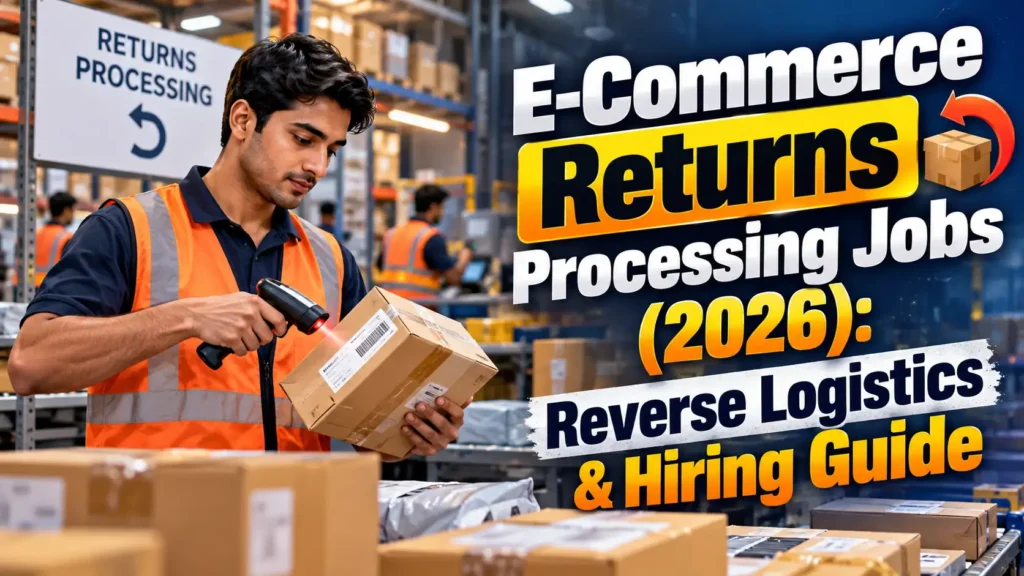
In modern e-commerce, the customer journey does not permanently terminate at doorstep delivery. With generous trial periods, multi-size ordering habits, and consumer-centric exchange policies, the reverse flow of merchandise has become a massive multi-billion-dollar operational sector. For job seekers, warehouse associates, and candidates exploring e-commerce returns processing jobs and reverse logistics careers, returns operations offer clean, highly organized indoor employment with rapid upward mobility into quality assurance and inventory management.
In India, consumer e-commerce experiences average return rates ranging from 15 to 30 percent, particularly across fashion apparel, footwear, and consumer lifestyle electronics. Managing this deluge requires specialized reverse logistics centers where returned items and Return-to-Origin (RTO) parcels are systematically received, de-bagged, inspected, graded, refurbished, repackaged, or liquidated. Without competent returns processing teams, retailers suffer catastrophic working capital lockups, unrecoverable inventory depreciation, and delayed customer refunds.
Consumer rights and digital marketplace return transparency standards established by the Department of Consumer Affairs under the Consumer Protection (E-Commerce) Rules mandate swift refund processing and clear product warranty guidelines. Understanding the core inspection criteria, digital RMA tracking systems, grading categories, and compensation benchmarks reveals why returns processing remains one of the fastest-growing job domains in logistics.
1. Defining Returns Processing: The Critical Engine of Reverse Logistics
E-commerce returns processing (commonly termed reverse logistics operations) is the operational discipline of receiving, inspecting, classifying, and re-circulating merchandise returned by customers or returned undelivered by courier carriers (Return to Origin or RTO). Its primary objective is maximizing asset value recovery while ensuring fast, transparent customer refund releases.
In the retail supply chain, returns processing serves as the critical gatekeeper protecting business profitability. When a customer initiates an online return, a courier collects the parcel and transports it to a specialized reverse logistics hub. Here, returns processing specialists verify the physical item against the digital Return Merchandise Authorization (RMA) record, ensuring that fraudulent returns—such as customers returning used, counterfeit, or empty boxes—are caught and documented.
Beyond fraud prevention, returns processing rapidly restores working capital. Every day an undamaged dress, pair of shoes, or smartphone sits uninspected in a returns intake bin represents locked company capital. Skilled returns specialists swiftly grade, re-tag, and restock pristine items back into active fulfillment channels, preventing seasonal stock obsolescence.
2. Comparative Overview of Return Grading Categories and Workflows
When returned parcels arrive at an intake dock, they undergo rigorous multi-point inspection to determine their secondary lifecycle disposition. Merchandise is systematically categorized into standardized quality grades ranging from pristine restock to vendor liquidation.
Understanding these grading standards is the core technical skill required of returns associates, directly impacting inventory accounting and financial recovery values.
The structured comparison table below outlines the five primary return grading categories deployed across Indian e-commerce fulfillment centers, detailing visual criteria, testing protocols, typical recovery actions, and target processing turnaround times.
| Quality Grade | Visual & Physical Criteria | Testing / Audit Protocol | Inventory Action | Target Processing Time | Typical Product Examples |
| Grade A (Pristine) | Unopened original box, intact brand tags, zero wear | Barcode scan, seal verification, exterior visual check | Immediate restock into forward WMS inventory | Under 60 seconds / item | Apparel in original polybag, sealed electronics |
| Grade B (Open Box / Like New) | Intact product, broken seal or slightly dented carton | Power-on test, accessory count, surface wipe | Repackage in generic box, sell as ‘Open Box’ | 2 to 4 minutes / item | Smartphones, blenders, headphones, footwear |
| Grade C (Lightly Used / Refurb) | Minor cosmetic blemishes, light scratches, intact function | Full diagnostics test, factory software reset | Transfer to certified refurbisher or B2B liquidator | 5 to 10 minutes / item | Laptops, smart TVs, kitchen appliances |
| Grade D (Damaged / Missing Parts) | Physical crack, liquid damage, missing crucial cables | Disassembly inspection, serial number fraud audit | Salvage usable components or return to vendor (RTV) | 5 to 8 minutes / item | Cracked screen tablets, torn premium jackets |
| Grade F (Scrap / Fraud) | Counterfeit swap, brick-in-box, total destruction | High-res photo evidence capture, legal fraud flag | Customer blacklist flag, certified eco-disposal | 3 to 6 minutes / report | Fake branded sneakers, substituted cheap electronics |
★ Verified E-Commerce & Logistics Vacancies: Looking for verified e-commerce operations, warehouse fulfillment, or logistics vacancies? Explore open e-commerce and logistics roles on AlphaReach to connect directly with leading online retailers, dark stores, and fulfillment hubs in your region.
3. The Technical Anatomy of a Returns Workstation and Inspection Bench
Modern e-commerce returns processing is conducted at ergonomically designed, technology-integrated inspection workstations equipped with high-resolution digital cameras and specialized testing apparatus.
Each workstation features an overhead CCTV camera positioned directly above the inspection surface, recording a continuous high-definition video log of every unboxing action. When an associate cuts open a returned customer parcel, the unboxing occurs under full video surveillance, providing indisputable visual proof in the event of customer fraud disputes or delivery carrier theft investigations.
Workstations incorporate multi-directional barcode scanners, anti-static grounding wristbands (for handling sensitive electronic circuit boards), digital weighing scales, and UV sanitization boxes. Integrated dual-monitor terminals display high-resolution master product images, allowing associates to cross-reference stitching patterns, logo embossing, and serial numbers against original manufacturer master data.
4. Step-by-Step Return Processing Journey: From Unbagging to Restock
The operational sequence inside a returns fulfillment center follows a disciplined four-stage pipeline designed to ensure absolute traceability and zero processing backlogs.
Stage 1: Intake & De-Bagging. Inbound courier consolidation bags are opened, and exterior airway bills (AWBs) are scanned into the reverse logistics software, updating tracking records to ‘Received at Returns Facility.’
Stage 2: RMA Reconciliation & Physical Unboxing. The associate scans the customer return tracking barcode, retrieving original order metadata. The parcel is carefully unboxed on the camera-monitored bench, verifying that the returned item matches the exact SKU and serial number dispatched.
Stage 3: Functional Grading & Sanitization. The specialist inspects the product for signs of wear, odor, wash tags, or physical damage. Electronics undergo automated diagnostic power-on testing. Approved items are steam-sanitized, wiped, and repacked with fresh silica gel packets.
Stage 4: Barcode Relabeling & Restock Release. The associate prints a fresh GS1 inventory barcode label, scans the item into a restock tote, and releases the digital refund trigger, instantaneously notifying the customer’s bank account or digital wallet.
5. Organizational Structure, Career Ladders, and Salary Benchmarks
Returns processing centers offer clean, highly organized, and intellectually engaging employment opportunities with rapid promotion potential into quality assurance and warehouse operations management.
Entry-level professionals typically join as Returns Processing Associates or Unboxing Inspectors, earning starting monthly salaries between ₹17,000 and ₹23,000, supplemented by statutory EPF retirement savings, ESIC medical benefits, and performance bonuses.
With one to two years of experience and demonstrated expertise in product grading and fraud detection, associates advance to Returns Team Leads, Refurbishment Technicians, or Quality Assurance (QA) Auditors, commanding monthly salaries between ₹25,000 and ₹38,000.
Experienced professionals who cultivate strong analytical capabilities, vendor recovery management skills, and familiarity with ERP reverse logistics modules advance into senior corporate roles, including Reverse Logistics Manager, Asset Recovery Lead, and Quality Control Head, where annual compensation packages frequently range from ₹7 Lakh to ₹14 Lakh+. Returns processing provides a stable, dignified, and future-proof career path in modern commerce.
★ Fast-Track Your E-Commerce Career Today: Ready to start earning with top e-commerce fulfillment centers, quick commerce dark stores, or express delivery networks? Register through AlphaReach to access fast-track hiring, verified e-commerce employers, and competitive compensation packages today!
Frequently Asked Questions (FAQs)
What qualifications are required to get a returns processing job?
Most returns processing associate roles require a 10th or 12th pass certificate with basic literacy to read English labels and operate barcode scanners. Technical grading roles for electronics typically prefer diploma holders or ITI graduates in electronics.
What is the primary role of a returns processing associate?
A returns processing associate unboxes customer return packages under CCTV surveillance, verifies product authenticity, inspects items for physical damage or missing accessories, assigns quality grades (A, B, C, D), and triggers customer refund approvals.
How many returned items does an associate inspect in a shift?
Productivity targets depend on merchandise complexity. For apparel and footwear, an associate typically inspects 35 to 50 items per hour. For electronics and mobile phones requiring diagnostic testing, the target is 15 to 25 items per hour.
What happens if a customer returns a fake or empty box?
When an empty box or counterfeit item is detected, the unboxing video recording is tagged as evidence. The associate flags the return as ‘Fraudulent’ in the system, which puts the customer refund on hold and forwards the case to the marketplace loss prevention and legal teams.
What is the starting salary in e-commerce returns processing?
Starting wages typically range from ₹17,000 to ₹23,000 per month for entry-level associates, with experienced quality checkers and reverse team leads earning ₹25,000 to ₹38,000 per month plus statutory PF, ESIC, and attendance bonuses.
Conclusion
E-commerce returns processing is the indispensable reverse engine that protects corporate profitability, prevents inventory waste, and upholds consumer trust in the digital retail economy. By mastering product verification, diagnostic testing, and quality grading, returns specialists transform customer returns into valuable commercial assets.
With structured indoor work environments, comprehensive on-the-job training, and clear pathways into quality control and supply chain management, returns operations offers an exceptional career choice for detail-oriented individuals. Step into this expanding sector today and build a thriving, resilient professional future.