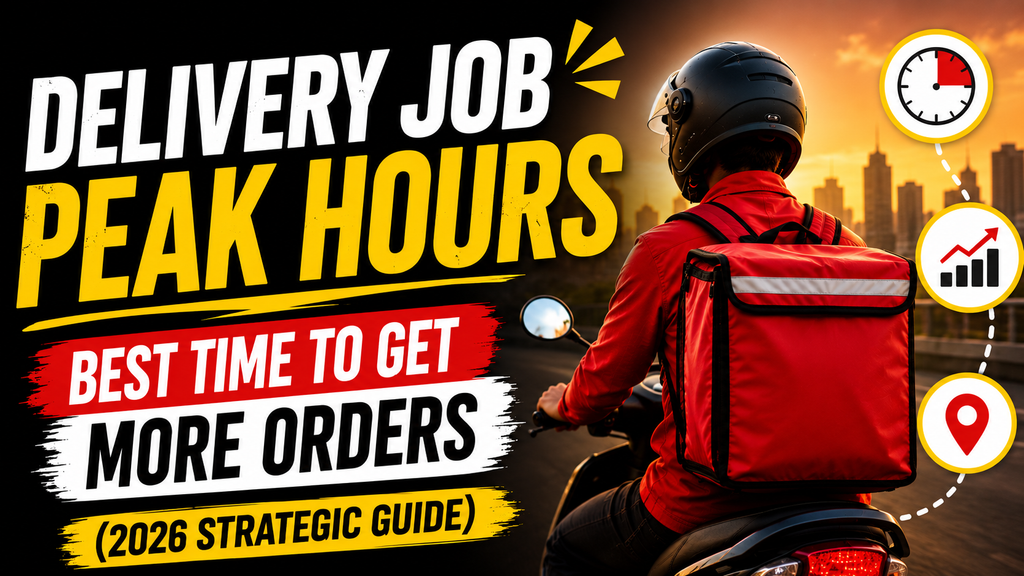
In the algorithmic gig economy of 2026, working harder does not automatically translate into making more money—working smarter during high-demand windows does. A delivery partner who stays logged in for 12 continuous hours during dull afternoon lulls often earns less than an efficient rider who strategically targets 6 to 7 hours of high-intensity demand surges. Understanding delivery job peak hours is the single most powerful lever to maximize your hourly earnings and minimize idle waiting time.
Customer ordering patterns follow predictable human routines: office lunches, evening tea snacks, family dinners, late-night cravings, weekend party supplies, and sudden weather-induced grocery spikes. When customer demand surges in a concentrated zone, delivery platforms activate high surge multipliers, increased distance rates, and mandatory milestone bonuses to incentivize fleet availability.
In this 2026 strategic masterclass, we analyze data-backed peak operating windows across food delivery, 10-minute grocery quick commerce, and e-commerce logistics. We will provide practical routing tips to double your order frequency while strictly prioritizing road safety and sustainable riding habits.
The 4 Major Daily Peak Windows in Food & Quick Commerce
To build a high-earning daily schedule, every delivery partner should structure their shifts around these 4 critical demand windows:
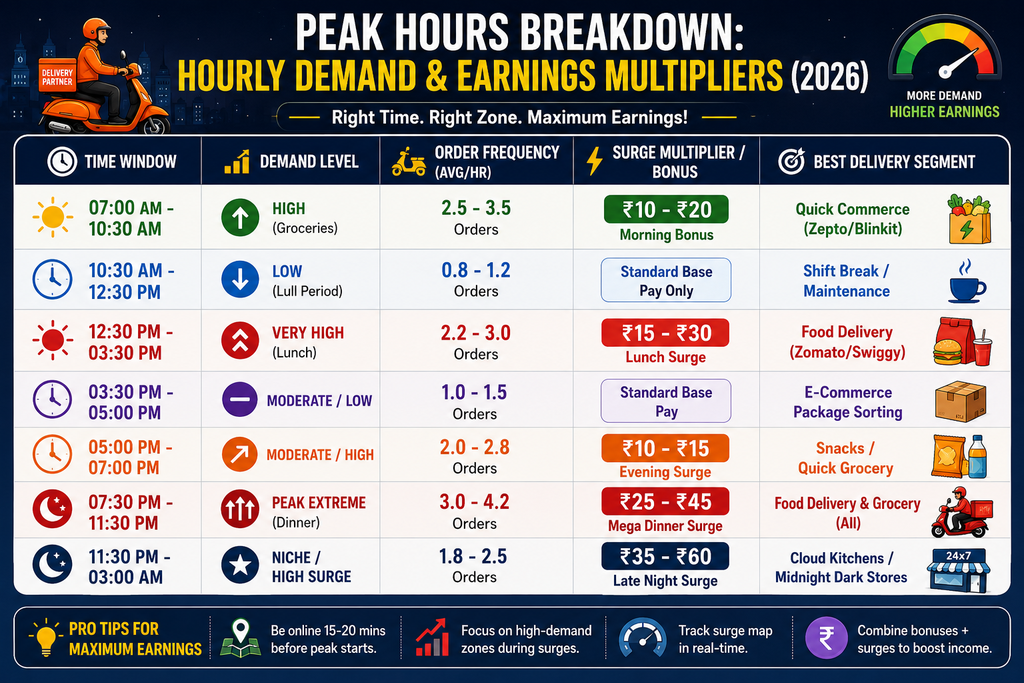
- The Morning Breakfast & Grocery Rush (7:00 AM – 10:30 AM): Driven by quick commerce platforms (Blinkit, Zepto, Swiggy Instamart) delivering fresh milk, vegetables, bread, and breakfast items to working professionals and families.
- The Corporate Lunch Surge (12:30 PM – 3:30 PM): Massive food delivery order volume across IT parks, commercial complexes, and college campuses. High restaurant batching opportunities.
- The Evening Snack & Tea Slot (5:00 PM – 7:00 PM): Chai, bakery items, fast food, and early grocery replenishment orders before dinner.
- The Mega Dinner Rush (7:30 PM – 11:30 PM): The highest-earning window of the day. Families order restaurant meals, and grocery dark stores experience peak weekend party supply orders. Highest surge pay per order.
Peak Hours Breakdown: Hourly Demand & Earnings Multipliers (2026)
> Explore flexible part-time and full-time delivery positions tailored around high-demand peak hours. Find top-rated gig openings in your preferred city zone today.
Weather-Based & Weekend Demand Spikes
Demand does not only fluctuate by hour—it spikes dramatically during environmental and calendar events:
- Rain and Monsoon Surges: When it rains, customer orders surge by up to 300% while available fleet density drops. Platforms activate extreme weather bonuses (₹25 to ₹60 per order). Keeping track of official monsoon alerts via the India Meteorological Department (IMD) helps you prepare rain gear in advance.
- Friday to Sunday Weekend Rush: Weekend dinner demand is 40% higher than weekday averages. Meeting your Friday-Saturday-Sunday milestone incentives unlocks the largest share of platform weekly bonuses.
- Major Sports Matches & IPL Nights: Live cricket broadcasts trigger massive evening pizza, biryani, and beverage deliveries within short 20-minute commercial intervals.
Pro Tips: How to Capture More Orders Without Rash Driving
Higher earnings should never compromise your physical safety. Follow these professional strategies:
- Position Yourself at High-Density Clusters (Hotspots): During lunch, park near food courts, commercial tech hubs, or cloud kitchen clusters. For morning shifts, relocate to high-volume quick commerce dark stores.
- Accept Multi-Orders (Batching): Delivering two orders picked from the same restaurant or dark store in a single trip saves time and doubles your hourly pay.
- Do Not Chase Ghost Hotspots: If the app shows a red surge zone 6 kilometers away, do not speed to get there—by the time you arrive, other riders will have diluted the surge. Stay anchored in reliable merchant hubs.
- Take Scheduled Rest Breaks During 3:30 PM – 5:00 PM: Avoid exhaustion by resting during the afternoon lull so you are energized and sharp for the high-intensity dinner rush.
Frequently Asked Questions (FAQs)
Which shift is better for delivery riders: Day Shift or Night Shift?
A split day shift (Lunch 12–3:30 PM + Dinner 7:30–11:30 PM) offers the highest order density and balanced safety. Late-night shifts offer higher per-order surge pay but require extra caution regarding road visibility and personal safety.
Why am I not getting orders even while standing in a busy market area?
Over-crowding of idle riders in a single spot splits incoming orders. Try moving 300–500 meters away toward adjacent sub-clusters or secondary restaurant lanes to catch unique dispatch broadcasts.
Do delivery platforms penalize riders who log out during non-peak hours?
No. Modern gig apps allow flexible login. Logging out during dull afternoon hours protects your acceptance rate from sparse, long-distance orders and saves your bike fuel.
How can I prepare for rain delivery surges safely?
Equip your bike with fresh brake pads, ensure deep tire tread, wear a high-visibility reflective raincoat, use a waterproof phone pouch with touchscreen support, and reduce riding speed on wet roads.
> Unlock high surge rates, dinner bonuses, and fast weekly payouts with leading delivery fleets. Fill out your simple onboarding form and start delivering today.
Conclusion
Mastering delivery job peak hours transforms your delivery routine from exhausting manual labor into a strategic, high-yield professional career. By aligning your work schedule with lunch, dinner, and grocery peak slots, you maximize every drop of fuel and take home top-tier weekly incentives safely.