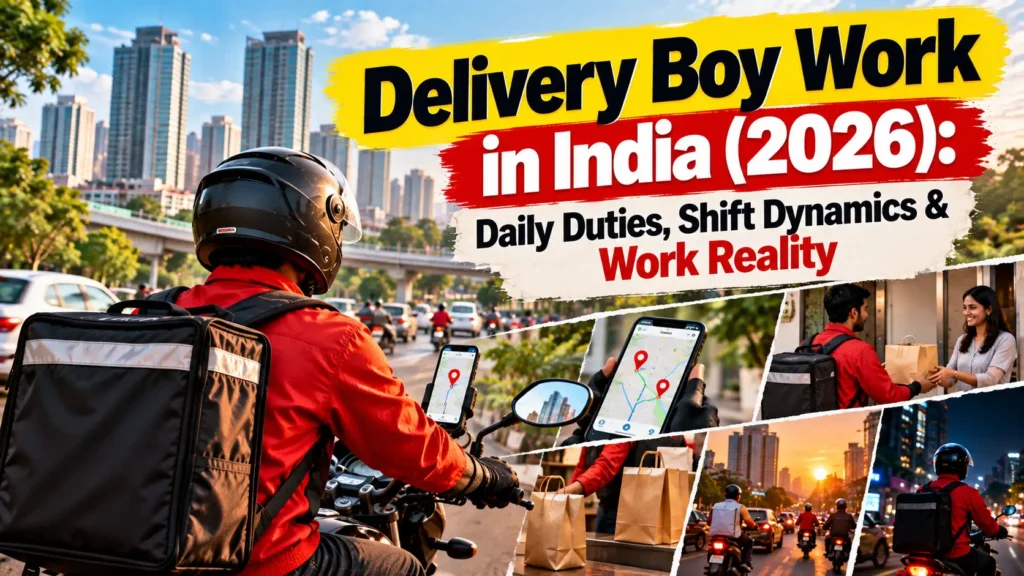
Delivery Boy Work in India – For millions of individuals across India considering a career in the rapidly growing on-demand logistics sector, understanding what delivery boy work actually entails on a day-to-day operational level is essential before stepping into the field. Far from being a simple matter of cruising through city streets, professional delivery work represents an active, tech-enabled vocational role requiring navigation discipline, physical endurance, punctuality, and courteous customer communication. In modern India’s 24/7 digital economy, delivery executives are the frontline ambassadors connecting local dark stores, restaurants, pharmacies, and e-commerce warehouses with millions of households. Whether delivering piping-hot meals, fresh morning milk, urgent life-saving medicines, or e-commerce parcels, delivery partners shoulder the crucial responsibility of last-mile fulfillment. If you are looking to enter this dynamic field and secure verified positions with leading logistics platforms offering top payouts, you can explore verified delivery partner jobs on AlphaReach to discover immediate-joining openings across your city today.
The reality of commercial delivery work is shaped by modern smartphone algorithms, dynamic traffic conditions, and tight fulfillment windows. While platform algorithms guide order dispatch and provide real-time turn-by-turn navigation, the human rider must manage real-world obstacles: intense summer heat, sudden monsoon showers, apartment security protocols, multi-story stair climbs, and dense traffic snarls. Successful delivery executives approach their work with a disciplined mindset, treating themselves as independent logistics operators who actively manage their fuel efficiency, customer ratings, and physical health.
Furthermore, commercial vehicle safety and road discipline for two-wheeler transport are strictly governed under statutory guidelines formulated by the Ministry of Road Transport and Highways (MoRTH). Motor vehicle rules emphasize strict adherence to traffic signals, certified helmet compliance, and defensive driving practices to safeguard commercial delivery partners navigating high-traffic urban corridors nationwide. In this comprehensive 2026 guide, we unpack the daily operational duties of a delivery boy, examine shift structures, review customer interaction etiquette, and provide actionable techniques to thrive in the profession.
The Core Duties: What Does a Delivery Boy Actually Do?
While the exact day-to-day workflow varies depending on whether a rider works in quick commerce, restaurant dining, or parcel courier logistics, all delivery boy work revolves around five essential core responsibilities.
- Order Acceptance & Route Planning: Monitoring the delivery partner mobile application, accepting incoming order dispatches promptly, and assessing GPS navigation routes to determine the quickest and safest transit path.
- Order Verification at Staging Bays: Arriving at the merchant store, cloud kitchen, or dark store staging bay, cross-referencing order numbers against the smartphone screen, verifying item counts, and inspecting package seals to ensure no tampering has occurred.
- Safe Cargo Transportation: Securing hot meals, cold dairy products, fresh bakery items, or delicate electronics inside specialized insulated delivery backpacks or motorcycle carriers to prevent spillage, thermal loss, or physical damage during transit.
- Doorstep Customer Fulfillment: Navigating residential apartment societies, adhering to gated community security guidelines, greeting customers courteously, verifying delivery OTPs (One-Time Passwords), and processing digital or cash payments.
- Exception Management & Communication: Managing incorrect customer addresses, unreachable phone numbers, or delivery delays by communicating promptly with platform dispatch support and customers through in-app channels.
Comparative Breakdown: Daily Work Environment Across Delivery Sectors
The daily physical demands and operating tempo of delivery work differ dramatically depending on the specific logistics industry.
The comparative table below illustrates the typical working conditions, physical exertion levels, daily order cadence, and core challenges across India’s primary delivery sectors:
| Delivery Sector | Daily Order Cadence | Primary Cargo Type | Physical Demands | Core Operational Challenge |
| Quick Commerce Grocery (Dark Stores) | 22 – 32 drops / day | Heavy grocery bags, dairy, bottled drinks | High (lifting 5-12 kg bags, apartment climbs) | Fast 10-15 min turnaround times, heavy cargo bags |
| Food Delivery Aggregators | 16 – 26 drops / day | Cooked meals, beverages, pizzas | Moderate (handling delicate food packs) | Restaurant kitchen wait times, managing liquid spillages |
| E-Commerce Parcel Couriers | 35 – 55 drops / day | Boxes, clothing packets, consumer goods | High (sorting 40+ parcels, extensive walking) | Cash-on-delivery management, customer non-availability |
| Pharmaceutical Logistics | 15 – 22 drops / day | Prescription medicines, lab test kits | Low to Moderate (lightweight boxes) | Strict temperature maintenance, prescription verification |
| B2B Intra-City Documents | 12 – 18 drops / day | Legal envelopes, product prototypes | Low (compact pouches, commercial buildings) | Punctual corporate deadlines, finding office departments |
Ready to experience the freedom, flexibility, and strong earning potential of professional delivery work? Partner with top-rated food, grocery, and courier platforms with guaranteed weekly payouts: explore verified delivery partner jobs on AlphaReach and start riding today.
A Day in the Life: From Morning Login to Evening Wallet Cash-Out
To truly understand delivery work, consider the chronological progression of a typical 8-to-10 hour full-time shift.
Morning Preparation & First Shift (8:00 AM – 11:30 AM): The day begins with vehicle pre-checks—verifying tire air pressure, engine oil level, fuel tank reserves, and smartphone battery levels. The rider logs in to the partner app at a local dark store hub, immediately catching the morning breakfast and grocery rush. Riders complete four to six rapid drops within their 2-kilometer micro-radius before the midday lull.
Midday Break & Lunch Shift (12:30 PM – 3:30 PM): The rider transitions to restaurant food delivery or remains at the dark store for lunch orders. During intense summer heat, experienced riders utilize mid-afternoon lulls (3:30 PM – 6:30 PM) to rest in shady delivery lounges, service vehicles, and hydrate.
Dinner Rush & Wallet Cash-Out (7:30 PM – 11:00 PM): The most lucrative window of the day. Order frequency peaks as dinner orders surge across residential sectors. Surge multipliers (1.3x to 1.8x) activate, enabling riders to earn 45% of their daily income during this four-hour sprint. The shift concludes with an in-app check of total orders completed, daily milestone bonus qualification, and weekly wallet balance verification.
Physical Demands, Weather Realities, and Resilience
Prospective delivery executives must approach the role with clear eyes regarding physical and climatic challenges.
Navigating Indian streets for eight hours exposes riders to vehicular exhaust, road vibrations, and severe weather fluctuations. During summer, temperatures frequently exceed 42 degrees Celsius, demanding consistent hydration, electrolyte replenishment, and UV-protective clothing.
During the monsoon season, waterlogged roads, slippery manhole covers, and reduced visibility test a rider’s defensive navigation skills. However, platforms compensate for these harsh conditions by rolling out generous rain surge bonuses and bad-weather allowances.
Furthermore, repeated stair climbs in apartment buildings without operational elevators build physical stamina but can strain joints if proper lifting techniques are neglected. Treating your body as your primary business tool through adequate sleep, stretching, and proper nutrition is paramount for sustained success.
Customer Etiquette and Conflict Resolution on the Frontline
A delivery partner’s long-term earnings are heavily tied to customer ratings and feedback. High ratings (4.8+ stars) unlock algorithm priority for high-value orders and prevent account suspension.
Professional etiquette begins with presentation: wearing clean platform-issued t-shirts, carrying bags cleanly, and greeting customers with polite phrasing. When handling difficult customers—such as those frustrated by restaurant preparation delays beyond your control—remain calm, explain that you picked up the order immediately upon its release, and direct them to in-app customer support.
Handling Cash-on-Delivery (COD) transactions requires exact change management and prompt UPI collection. By combining punctuality with respectful customer service, riders frequently receive generous cash tips that meaningfully boost daily take-home earnings.
Start earning Rs. 22,000 to Rs. 38,000+ monthly in high-demand delivery partner roles! Get verified digital onboarding, group accident insurance, and weekly direct bank settlements. apply directly through AlphaReach now.
Frequently Asked Questions (FAQs)
Is delivery boy work physically difficult?
Delivery work requires moderate physical endurance, as it involves several hours of motorcycle riding, carrying cargo bags (5-12 kg), and climbing apartment stairs. However, maintaining good posture, regular hydration, and structured shift breaks make it highly manageable.
What happens if a customer refuses to accept their delivery order?
If a customer cancels or refuses an order at the doorstep, you contact platform dispatch support through the app. Dispatch verifies the refusal, marks the order returned, and your trip payout is credited while you return the items to the hub.
How many orders does a delivery boy deliver in a single shift?
In quick commerce grocery delivery, riders typically complete 22 to 32 orders per 8-10 hour shift. In food delivery, riders deliver 16 to 26 orders, depending on kitchen wait times and travel distances.
Can delivery partners take days off whenever they want?
Yes. As independent gig delivery partners, riders have full autonomy to choose their working days and take time off simply by keeping their partner application switched offline.
What safety equipment is mandatory for delivery boy work?
A certified ISI-marked full-face helmet is strictly mandatory. Additionally, sturdy closed-toe shoes, a handlebar phone mount with vibration damping, and reflective high-visibility clothing are essential for on-road safety.
Conclusion
Delivery boy work in India is an active, dignified, and financially rewarding vocational pursuit that forms the vital backbone of the country’s booming on-demand economy. While the role demands physical discipline and defensive on-road vigilance, the unmatched flexibility, rapid weekly payouts, and meritocratic earnings provide genuine economic empowerment.
By mastering route navigation, prioritizing personal safety, and delivering with professional courtesy, you can turn daily delivery runs into a sustainable, highly lucrative career.