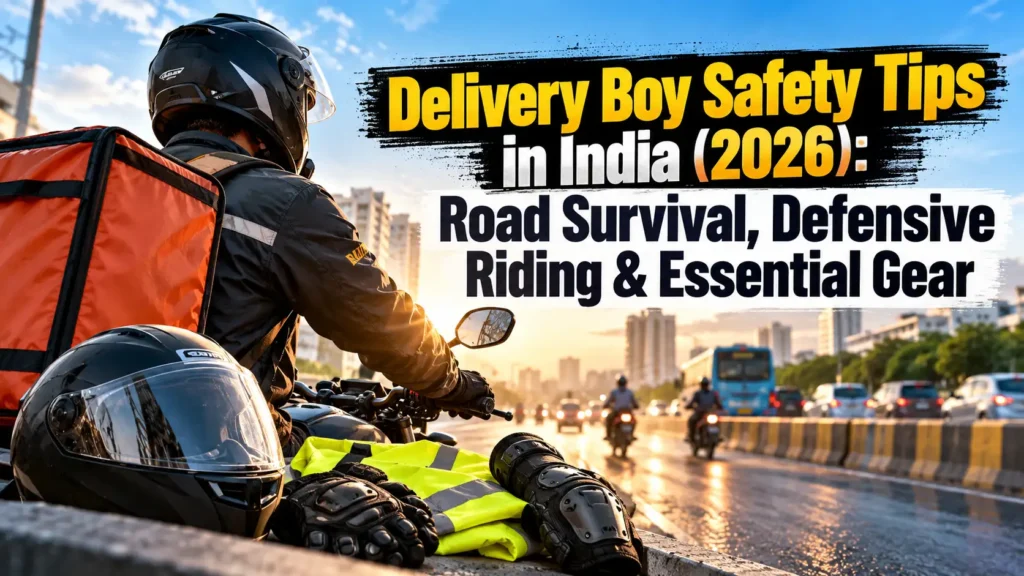
In India’s fast-paced on-demand logistics sector, mastering comprehensive delivery boy safety tips is the single most vital skill for sustaining a long-term, injury-free courier career. While delivering hot meals, urgent groceries, and e-commerce parcels provides financial independence and flexible earnings, navigating dense urban traffic across Indian cities exposes two-wheeler couriers to substantial hazards: erratic lane changes, stray animals, sudden potholes, and aggressive commercial traffic. In 2026, an estimated 65% of preventable gig delivery accidents can be eliminated through defensive riding habits, certified safety gear, and strict mobile device discipline. If you are seeking delivery partner roles with fleet aggregators that prioritize occupational safety and rider welfare, you can explore verified delivery partner jobs on AlphaReach to find immediate openings across your city.
A safe delivery partner recognizes that road speed is never worth personal physical injury. No food order or grocery discount is worth running a red light or overtaking recklessly on a blind turn. By adopting structured defensive riding protocols—such as maintaining a 3-second following distance, wearing high-visibility reflective clothing, and mounting smartphones securely—couriers can deliver hundreds of orders monthly while safeguarding their health and roadworthiness.
Statutory road safety regulations and national accident prevention guidelines enforced by the Ministry of Road Transport and Highways (MoRTH) highlight the urgent necessity of defensive riding education and personal protective equipment for commercial two-wheeler operators nationwide. In this definitive 2026 safety manual, we outline essential rider gear, examine the core rules of defensive riding, provide a vehicle pre-ride inspection checklist, and share actionable emergency response protocols.
The 5 Non-Negotiable Safety Gear Essentials for Two-Wheeler Couriers
Investing in certified, high-grade personal protective equipment is your first line of defense on the road:
- ISI & DOT Certified Full-Face Helmet: Never ride with open-face, half-cap, or unbranded roadside helmets. A certified full-face helmet protects your chin, jaw, and cranium from direct impact trauma in a collision.
- High-Visibility Reflective Vest / Jacket: Urban delivery couriers frequently ride during twilight and nocturnal dinner hours. Wearing high-visibility neon vests with retro-reflective bands ensures truck and bus drivers spot you from 200 meters away.
- Abrasion-Resistant Gloves: In any road skid, human reflex instinctively places hands forward. Padded, grip-textured motorcycle gloves prevent severe palm lacerations and reduce handlebar vibration fatigue.
- Shock-Absorbing Vibration-Dampened Phone Mount: Keep both hands firmly on the handlebars. Secure your phone with an aluminum handlebar claw mount rather than holding it in one hand while steering.
- Sturdy Closed-Toe Riding Footwear: Never ride in flip-flops, chappals, or sandals. Sturdy boots or reinforced sneakers protect your ankles and toes from exhaust burns, flying debris, and road impact.
Delivery Boy Safety Matrix: Common Road Hazards & Defensive Countermeasures
The table below outlines the five most dangerous urban riding hazards faced by delivery executives in India alongside proven defensive countermeasures:
| Road Hazard & Scenario | Primary Risk Factor | Defensive Action / Technique | Equipment / Behavioral Solution | Severity Level |
| Sudden Vehicle Door Opening | Parked cars swinging doors open without looking | Maintain a 1.5-meter buffer from all parked cars | Scan car cabin headrests for occupants | Critical (High Collision Risk) |
| Blind Intersection Overtaking | Vehicles cutting turns without signaling | Tap horn gently, slow to 20 km/h, flash headlight | Approach intersections covering brake levers | Severe (T-Bone Danger) |
| Potholes & Broken Pavement | Loss of steering control, rim bending, skidding | Scan road surface 15 meters ahead, stand lightly on pegs | Maintain 28-32 PSI tire pressure; brake before hole | High (Spill & Fall Risk) |
| Stray Animals Crossing | Unpredictable darting of dogs and cattle | Do not swerve sharply; brake in a straight line | Honk rhythmically; reduce speed in residential lanes | Moderate (Steering Destabilization) |
| Heavy Rain & Road Oil Slicks | Zero tire traction during initial rain showers | Reduce speed by 35%; avoid metallic manhole covers | Inspect tire tread depth weekly (min. 2 mm) | Critical (Immediate Skid Risk) |
Are you looking to maximize your daily income and partner with top-paying logistics fleets in India? explore verified delivery partner jobs on AlphaReach to discover flexible shifts, peak surge routes, and immediate onboarding vacancies across your city today.
Defensive Riding Fundamentals: The 3-Second Rule and Hazard Anticipation
Defensive riding means actively anticipating the mistakes of other motorists before they happen:
The 3-Second Following Distance: Never tailgate autorickshaws, buses, or private cars. Pick a landmark ahead; when the vehicle ahead passes it, count ‘one-thousand-one, one-thousand-two, one-thousand-three’. If you reach the landmark before three seconds, ease off the throttle.
Cover Both Brake Levers at All Times: In congested city streets, rest two fingers lightly over the front brake lever and keep your right foot hovered above the rear brake pedal. This shaves 0.75 seconds off your emergency braking reaction time, stopping you 10 to 15 meters earlier.
Avoid the Blind Spots of Heavy Vehicles: City buses, water tankers, and garbage trucks have massive blind spots directly behind them and beside their passenger doors. If you cannot see the truck driver’s face in their side mirror, they cannot see you.
Mobile Device Safety: Stopping App Distractions on the Move
Smartphones are the delivery rider’s essential work tool, but looking at screens while moving is the leading cause of delivery mishaps:
Use Voice Turn-by-Turn Navigation via One-Ear Bluetooth: Keep one ear free to hear surrounding traffic and horns while listening to navigation prompts through a single wireless earbud or helmet communication speaker.
Pull Over Before Tapping: If you need to view detailed order notes, call a customer, or accept a newly dispatched delivery, pull safely onto the roadside curb before interacting with your screen.
Automate In-App Actions: Pre-set voice commands or quick-reply SMS shortcuts (‘I have arrived at your building’) to eliminate text typing while on two wheels.
5 Daily Vehicle Checkpoints to Ensure Roadworthiness Before Starting
Complete this 60-second walkaround inspection before logging into your delivery app:
- Inspect Tire Treads and Pressures: Look for embedded nails, sidewall cracks, and maintain proper air pressure to prevent blowouts.
- Test Both Front and Rear Brakes: Squeeze the front lever and depress the rear pedal to verify firm resistance and immediate wheel locking.
- Check Headlight, Taillight, and Indicators: Ensure all signaling lights function crisply, especially before night shifts.
- Verify Drive Chain Tension: Ensure chain slack is between 20 mm and 25 mm and free of dry rust.
- Clean Rear-View Mirrors: Adjust both side mirrors so you have an unobstructed view of overtaking traffic without twisting your neck.
Ready to unlock top-tier weekly milestone incentives and secure your financial future on the road? apply as a verified delivery partner on AlphaReach to access premium high-density delivery zones, fuel savings support, and dependable weekly direct bank payouts today.
Frequently Asked Questions (FAQs)
What is the most important safety rule for delivery boys in India?
The single most critical safety rule is wearing an ISI-certified full-face helmet fastened securely at all times and practicing defensive riding by maintaining safe following distances rather than speeding to beat delivery timers.
Can delivery boys wear open-face or half helmets?
While open-face helmets are legal in some areas, they offer zero protection to your chin, jaw, and face in a frontal collision. Full-face helmets provide up to 70% greater impact protection and are strongly recommended for high-mileage delivery couriers.
How can delivery riders navigate GPS safely without getting distracted?
Mount your smartphone on a sturdy handlebar claw mount directly at eye level and rely on audio voice prompts via a single earbud, keeping the other ear completely open to hear vehicle horns and surrounding traffic.
What should a delivery partner do immediately after a road accident?
First, move to safety and assess injuries. Activate the platform’s in-app emergency SOS button, contact local emergency services (112 or 108 for ambulance), and inform the platform support team to initiate on-duty medical insurance coverage.
Are delivery boys penalized by platforms if they ride slowly in bad traffic?
No. Modern delivery algorithms dynamically adjust estimated delivery times based on real-time traffic congestion, weather, and road conditions. Riders are never financially penalized for riding safely and following traffic laws.
Conclusion
Mastering delivery boy safety tips is the foundation of a sustainable, dignified, and profitable logistics career. By investing in certified protective gear, maintaining a 3-second buffer, eliminating smartphone distractions on the move, and conducting daily pre-ride vehicle inspections, you protect your greatest asset: your health and life. Never sacrifice personal safety for delivery speed—arrive safely on every trip to protect your future.