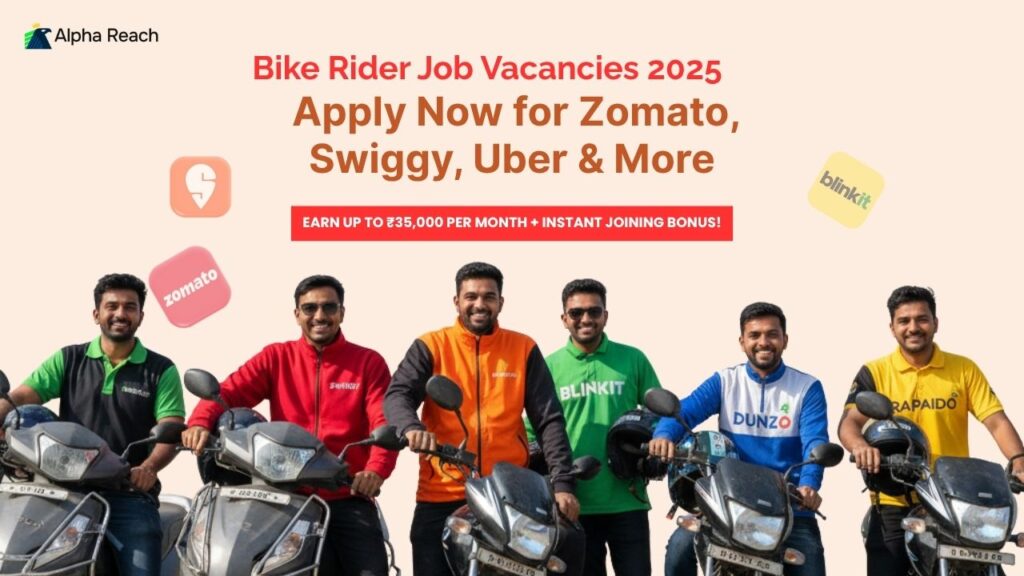
The gig economy in India is thriving like never before, and if you own a bike and need a flexible job, 2025 might just be your year. Bike rider job opportunities are flooding the market, with major companies actively hiring thousands of riders across cities. Whether you’re a student looking for part-time work, someone between jobs, or just wanting to earn extra income, delivery and ride-sharing platforms are offering opportunities that didn’t exist a decade ago.
I’ve spoken with dozens of bike riders over the past few months, and what strikes me most is how this job has transformed lives. Some are earning ₹25,000-40,000 monthly working flexible hours, while others use it as a stepping stone while building their own businesses. The beauty of a bike rider job? You’re your own boss, mostly.
Why Bike Rider Jobs Are in High Demand Right Now
Let’s talk about what’s driving this massive demand. India’s online food delivery and quick commerce market has exploded. People order everything from breakfast to midnight snacks, groceries to medicines, and all of it needs to reach doorsteps fast. That’s where you come in.
Companies like Zomato, Swiggy, Blinkit, Uber, and others are competing aggressively for market share, which means they need more riders on the road. The math is simple: more orders equal more riders needed. And honestly, the demand consistently exceeds supply in most tier-1 and tier-2 cities.
The pandemic changed consumer behavior permanently. Even those who were skeptical about ordering online are now regular customers. This isn’t a temporary trend—it’s the new normal. As long as people want convenience (and trust me, they do), bike rider job opportunities will continue growing throughout 2025 and beyond.
Top Companies Hiring Bike Riders in 2025
Let me break down the major players and what each offers. This information comes from current riders and official company data, so you’re getting the real picture.
Zomato jobs remains one of the biggest employers of delivery partners in India. They’ve expanded beyond food delivery into quick commerce with Blinkit (which they acquired). Their pay structure includes base fare per delivery, distance charges, and surge pricing during peak hours. Most Zomato riders appreciate their relatively straightforward app interface and decent customer support.
Swiggy is Zomato’s biggest competitor and matches them step for step. They’ve also diversified with Swiggy Instamart for grocery delivery. Swiggy offers similar earning potential with some riders claiming slightly better incentives during festivals and promotional periods. Their payment cycle is weekly, which many riders prefer over monthly payouts.
Uber operates differently as they focus on ride-sharing rather than just food delivery. If you’re interested in becoming an Uber driver partner and want detailed information about requirements and the application process, you can explore opportunities with Uber here. The earning potential with Uber can be higher per ride compared to food delivery, especially during surge pricing, but it also means different customer interactions and potentially longer trips.
Blinkit (formerly Grofers) specializes in quick commerce—delivering groceries and essentials in 10-20 minutes. This requires riders to be stationed near dark stores and make quick, shorter deliveries. The pace is fast, but many riders like the predictability of nearby deliveries rather than traveling across the city.
Rapido focuses on bike taxi services and parcel delivery. They’ve carved out a niche for themselves, especially in cities where bike taxis are legal and popular. Their model appeals to riders who prefer passenger transport over parcel delivery.
Porter and Dunzo also hire bike riders for courier and delivery services, though their volumes might be lower than the big food delivery apps. Still, they’re worth considering, especially if you want to diversify across platforms.
If you’re serious about exploring multiple opportunities and want a streamlined application process for top companies including Blinkit, Swiggy, Uber, and Zomato, check out these driver job opportunities where you can get started with your preferred platform quickly.
Where Can I Get a Bike Rider Job?
This is probably the most practical question, and I’m glad you’re asking it. There are multiple channels to find bike rider job openings, and using a combination of these will increase your chances significantly.
Direct Company Apps and Websites
The most straightforward method is going directly to the source. Companies like Zomato, Swiggy, Uber, Blinkit, and Rapido have dedicated sections on their websites and apps for rider/partner registration. Simply search for “Zomato delivery partner,” “Swiggy rider registration,” or similar terms, and you’ll find official signup pages. This method ensures you’re dealing with legitimate opportunities and not middlemen who might charge unnecessary fees.
Don’t underestimate LinkedIn for finding bike rider jobs. Many logistics and delivery companies post rider requirements on LinkedIn, especially for bulk hiring. Create a professional profile mentioning you have a two-wheeler, valid license, and are looking for delivery partner opportunities. Follow companies like Zomato, Swiggy, Dunzo, Shadowfax, and others. They regularly post hiring announcements. Use search terms like “delivery partner,” “bike rider,” “last mile delivery,” or “delivery executive” in your job search. You can also connect with HR managers and recruitment teams from these companies.
Indeed is one of India’s largest job portals and has hundreds of bike rider job listings daily. Simply go to Indeed.com or download their app, search for “bike rider job,” “delivery boy,” “delivery partner,” or “delivery executive” along with your city name. Set up job alerts so you get notifications whenever new positions are posted. Indeed shows you direct company postings as well as opportunities from staffing agencies who recruit on behalf of delivery companies.
Naukri is another major job portal where delivery companies frequently post bike rider job vacancies. Create a profile, upload your resume (even a simple one mentioning your bike, license, and availability works), and search for relevant positions. Use filters to narrow down to your city and “entry-level” positions. Many third-party logistics companies also post bulk requirements on Naukri.
Apna has become incredibly popular for gig and blue-collar jobs, including delivery roles. Download the Apna app, create your profile, and browse bike rider opportunities. What’s great about Apna is that it’s specifically designed for quick hiring in sectors like delivery, so the process is often faster. Many riders have found opportunities within days of registering.
These job portals also list bike rider positions, though the volume might be slightly less than Indeed or Naukri. Still worth checking, especially if you’re not getting responses elsewhere. Create profiles on multiple platforms to maximize visibility.
WhatsApp Groups and Telegram Channels
Many cities have local job WhatsApp groups and Telegram channels where delivery companies, fleet managers, and recruitment agencies post daily hiring requirements. Ask around in your network or search online for “delivery jobs [your city name] WhatsApp group.” These groups often have real-time updates about openings and immediate joining opportunities.
Local Rider Communities
Connect with existing bike riders in your area. They’re often the first to know about new openings, referral bonuses, and which companies are actively hiring. Many companies offer referral incentives to existing riders who bring in new partners, so experienced riders are actually motivated to help you get hired.
Walk-in to Company Hubs
Most delivery companies have physical partner hubs or onboarding centers in major cities. You can directly visit these locations with your documents. Google “[Company name] partner hub [your city]” to find addresses. While walk-ins might seem old-fashioned, they often result in faster onboarding because you can complete document verification on the spot.
Staffing and Recruitment Agencies
Companies like TeamLease, Quess Corp, and other staffing agencies recruit delivery partners in bulk for major platforms. They handle the entire onboarding process. Search for “delivery partner recruitment agency “your city” or look for their postings on job portals.
The key is to apply through multiple channels simultaneously. Don’t wait for responses from one before trying another. The more applications you submit, the faster you’ll land a bike rider job.
Basic Requirements to Become a Bike Rider
Don’t worry—the requirements aren’t complicated. Most companies have standardized their eligibility criteria, making it easier for riders to qualify.
You need to be at least 18 years old with a valid driver’s license for two-wheelers. This is non-negotiable. Your license should be current and not expired. Some companies also verify driving records, so if you have major traffic violations, it might affect your application.
Your bike matters too. Most platforms require your vehicle to be in good working condition and not older than 10-12 years (though this varies by company and city). You’ll need valid registration papers (RC book) and current insurance. Third-party insurance is mandatory, though comprehensive coverage is better for your protection.
A smartphone is essential—this is your office, really. It doesn’t need to be the latest iPhone, but it should run the delivery app smoothly, have decent battery life, and reliable GPS. Most companies specify minimum Android or iOS versions their apps support.
You’ll need basic documents: Aadhaar card, PAN card, bank account details, and a passport-size photograph. Some companies also ask for address proof separately. Having these documents ready speeds up your onboarding process significantly.
One thing many forget: you need to be comfortable using basic smartphone functions and navigating using GPS. If you’re not tech-savvy, spend a few days getting comfortable with Google Maps before starting.
How Much Can You Actually Earn?
Let’s get to what everyone wants to know—the money. I’ll be honest: earnings vary widely based on several factors, but I’ll give you realistic numbers based on actual rider experiences.
For food delivery (Zomato, Swiggy jobs), expect to earn ₹30-60 per delivery on average, depending on distance and time. During peak lunch (12-2 PM) and dinner (7-10 PM) hours, you can easily complete 15-20 deliveries if you’re in a busy area. That’s roughly ₹600-1000 per day working 8-10 hours.
Monthly earnings typically range from ₹20,000-35,000 for regular riders working 25-28 days. Top performers in metro cities who work long hours during peak times report earning ₹40,000-50,000, but that requires dedication and strategic working hours.
Uber rides generally pay more per trip—anywhere from ₹50-200+ depending on distance—but you might do fewer trips per day compared to food delivery. Weekly earnings of ₹5,000-8,000 are common for part-time riders.
Quick commerce platforms like Blinkit often provide guaranteed minimum earnings during specific shifts, which some riders prefer as it offers more predictability. These guarantees typically range from ₹400-700 for 4-6 hour shifts.
Don’t forget expenses. Petrol costs will be your biggest recurring expense—budget ₹150-250 daily depending on your bike’s mileage and how much you ride. Maintenance, occasional repairs, and phone data charges add up too. Smart riders track these expenses to understand their actual take-home earnings.
Tips to Maximize Your Earnings
Here’s where experience makes a huge difference. New riders often make common mistakes that cost them money and time.
Master your zone. Learn your delivery area inside out—which restaurants are fastest, which apartments have confusing layouts, where parking is easy. This knowledge saves precious minutes per delivery, and minutes add up to more deliveries and more money.
Work smart with peak hours. The lunch (12-2:30 PM) and dinner (7-10 PM) rushes are golden hours. If you can only work limited hours, prioritize these times. Weekends are busier than weekdays, and rainy days see surge pricing—don’t sit home when it rains, that’s when you earn the most.
Maintain your bike religiously. A breakdown during peak hours isn’t just frustrating; it costs you serious money. Regular servicing, checking tire pressure, and ensuring brakes work perfectly are investments in your earnings. Many experienced riders do a quick bike check every morning before starting.
Use multiple apps strategically. Many riders work with 2-3 platforms simultaneously. When one is slow, another might be busy. Just be careful not to accept overlapping orders—late deliveries hurt your ratings and future order priority.
Your ratings matter more than you think. Higher-rated riders get priority for orders during busy times. Be polite to customers, follow delivery instructions, and handle food with care. Those five stars translate to more orders and better earnings.
Invest in proper gear. A good quality helmet, rain protection, and a sturdy delivery bag aren’t just safety measures—they’re professional tools. Customers notice when food arrives in good condition, and you stay comfortable working longer hours.
Application Process: How to Get Started
The application process is refreshingly straightforward. Most companies have moved everything online, so you can start from home.
First, download the delivery partner app from Google Play Store or Apple App Store. Look for the “partner” or “driver” version, not the customer app. Each company has a separate app for their delivery partners.
Fill out the basic registration form with your personal details, vehicle information, and upload photographs of required documents. Make sure photos are clear and all information is readable—blurry documents cause delays.
Most companies conduct a quick background verification that takes 2-5 days. They’ll verify your documents, check your driving license validity, and sometimes conduct a brief police verification. Don’t let this worry you; it’s standard procedure.
Once approved, you’ll need to visit a partner hub or onboarding center in your city to complete the process. They’ll provide you with a delivery bag (you might need to pay a refundable deposit), explain how the app works, and give you a brief training session.
Some platforms offer online training modules you must complete before starting. Pay attention—they explain important details about handling orders, customer interaction, and how to resolve common issues.
After onboarding, there’s usually a 2-5 delivery trial period where you’re monitored more closely. Consider this your training phase. Focus on learning the system rather than just rushing through deliveries.
Challenges You Should Know About
I’d be dishonest if I painted only a rosy picture. Bike rider jobs come with real challenges, and knowing them upfront helps you prepare.
Weather is your biggest unpredictable factor. Scorching summer heat, monsoon rains, and winter fog all make riding difficult and sometimes dangerous. You need proper gear and the mental preparation to work in less-than-ideal conditions.
Traffic in Indian cities is chaotic. You’ll spend significant time navigating congestion, dealing with impatient drivers, and sometimes taking risks to meet delivery timelines. Road safety should always be your priority, regardless of delivery pressure.
The job is physically demanding. You’re on a bike for hours, carrying deliveries up stairs, and constantly moving. Your back, shoulders, and legs will hurt initially until your body adapts. Physical fitness genuinely helps.
Some customers can be difficult. You’ll encounter people who are rude, give wrong addresses, don’t answer calls, or even try to scam by claiming they didn’t receive orders. The platform usually supports riders in genuine cases, but these situations are stressful.
Income isn’t guaranteed or consistent. Some days are fantastic with back-to-back orders; others are surprisingly slow. Festivals and month-ends are usually busy, while mid-month weekdays can be unpredictable. You need financial planning to handle variable income.
Future of Bike Rider Jobs in India
Looking ahead, the bike rider job market in 2025 and beyond seems secure. The industry is maturing, and companies are investing in rider welfare—better insurance, accident protection, and some are even experimenting with fuel subsidies.
Electric vehicles are entering the delivery space. Some companies are offering EVs to riders at subsidized rates or partnering with EV companies. This could reduce operating costs significantly in the coming years.
The gig economy is also getting more regulatory attention. While nothing is finalized, there’s discussion about minimum wage guarantees, social security benefits, and other protections for gig workers. These changes, if implemented, could make these jobs even more attractive.
Technology is improving too. Better route optimization, more accurate delivery time predictions, and improved app interfaces make the job easier than it was even two years ago.
Making Your Decision
A bike rider job isn’t for everyone, but it offers something increasingly rare: flexibility and immediate earning potential without requiring degrees or specific qualifications. If you have a bike and need work, you can start earning within a week of applying.
Think of it as an opportunity rather than just a job. Many riders use this as a bridge—earning while studying, building savings to start a business, or supplementing other income. Some make it a long-term career, becoming mentors to new riders or moving into fleet management roles.
The key is approaching it with realistic expectations. You won’t get rich, but you can earn a decent, flexible income. Your success depends largely on your work ethic, how well you manage your zone, and your ability to maintain consistent ratings.
If you’re ready to explore these opportunities, remember that the application process is easier than ever, and companies are actively hiring. Whether you choose to work with one platform or multiple ones, the bike rider job market in 2025 offers a legitimate path to financial independence and flexible work.
Start today, ride smart, stay safe, and your bike might just become your most valuable asset.