When individuals decide to enter the food delivery sector, the first dilemma they face is choosing between the two dominant players in India: Swiggy and Zomato. Both platforms have millions of active users, massive restaurant networks, and dedicated delivery fleets. But when it comes down to the bottom line—take-home pay, incentive structures, and daily flexibility—which platform actually pays better? Let’s compare Swiggy and Zomato across all key financial parameters.
1. Base Pay and Distance Calculation
Both Swiggy and Zomato structure their primary earnings around a base fee and a distance matrix.
- Swiggy: Base pay generally starts between ₹18 and ₹28 for the initial 3 to 4 km. Swiggy provides transparent touchpoint mapping, calculating the exact route taken to the restaurant and then to the customer. Their waiting time compensation is fairly consistent when restaurants take longer than usual.
- Zomato: Base pay ranges between ₹20 and ₹30 in metropolitan zones. Zomato’s distance pay adds ₹5 to ₹8 per extra kilometer, and their payout algorithm often accounts for return distance if a delivery drops you outside your designated active zone.
2. Multi-Service Earning Potential: Swiggy Instamart vs Zomato Blinkit
This is where the major structural difference lies:
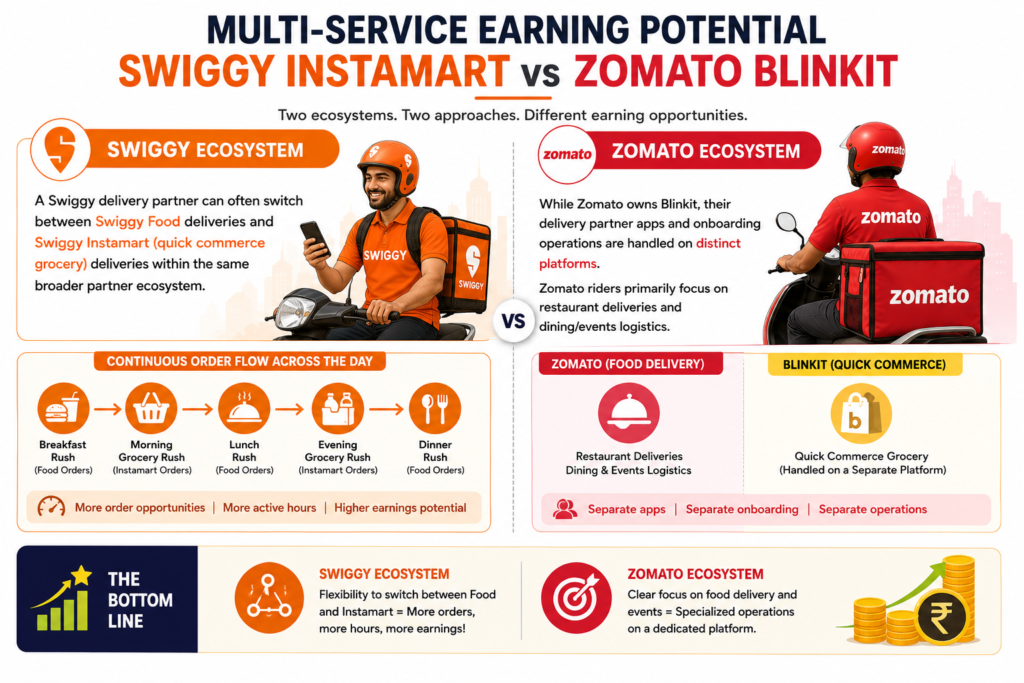
- Swiggy Ecosystem: A Swiggy delivery partner can often switch between Swiggy Food deliveries and Swiggy Instamart (quick commerce grocery) deliveries within the same broader partner ecosystem, allowing continuous order flow across both meal times and grocery rush hours.
- Zomato Ecosystem: While Zomato owns Blinkit, their delivery partner apps and onboarding operations are handled on distinct platforms. Zomato riders primarily focus on restaurant deliveries and dining/events logistics.
3. Incentive Matrices and Milestone Targets
- Swiggy Incentives: Swiggy offers clear daily target tiers (e.g., completing 12, 18, or 24 orders). Their weekly login hour incentives are particularly rewarding for full-time riders who commit to a structured 6-day work week.
- Zomato Incentives: Zomato uses a target point-based system (gig-based slots) where completing peak slot deliveries awards more points toward milestone cash bonuses. Their rain surges and holiday multipliers are often perceived as slightly higher in metro hubs.
Comparison Overview
| Parameter | Swiggy Delivery Partner | Zomato Delivery Partner |
| Base Pay Range | ₹18 – ₹28 per order | ₹20 – ₹30 per order |
| Distance Rate (Beyond Base) | ₹5 – ₹9 / km | ₹5 – ₹8 / km |
| Grocery Integration | High (Integrated Instamart) | Separate (Blinkit Fleet) |
| Payout Frequency | Weekly | Weekly |
| Full-Time Monthly Take-Home | ₹24,000 – ₹36,000 | ₹25,000 – ₹38,000 |
Final Words
When comparing Swiggy vs Zomato, there is no single universal winner; your earnings depend heavily on your city and specific locality. In zones with a high density of restaurant hubs, Zomato’s peak point-based incentive matrix often gives a slight edge in daily earnings. On the other hand, Swiggy’s ecosystem gives you consistent order frequency by blending restaurant orders with Instamart grocery batches during non-meal hours. For the highest income, many experienced riders maintain active accounts on both platforms, prioritizing whichever app offers better surge pricing in their zone.