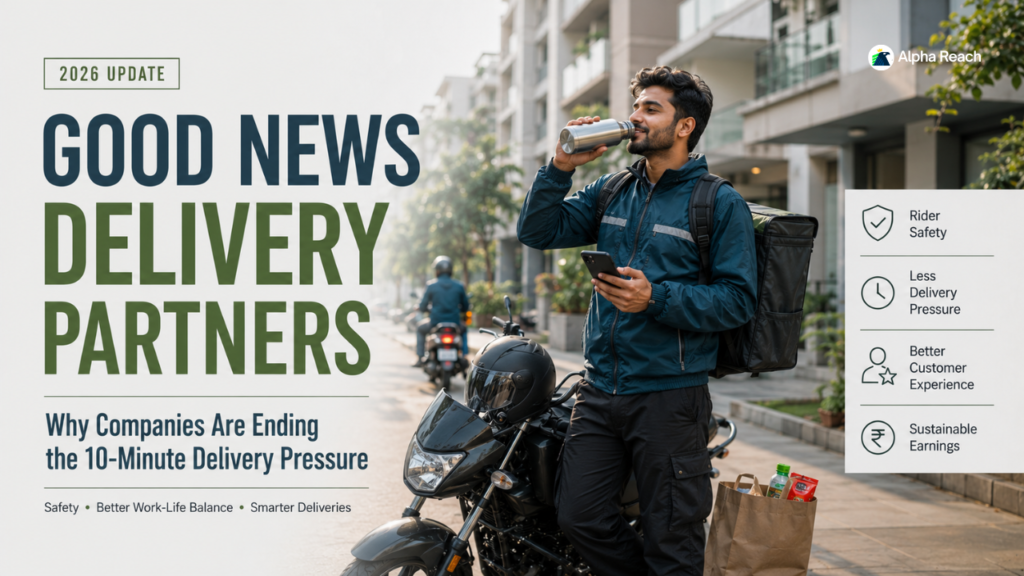
Over the past few years, the quick commerce industry in India completely transformed how people shop. From groceries to gadgets, customers got used to having everything at their doorstep in the blink of an eye. But behind the magic of the famous 10-minute delivery promise was a harsh reality: immense stress and physical strain placed directly on the shoulders of the delivery riders.
Navigating through unpredictable Indian traffic, dodging potholes, and beating the countdown clock took a significant toll. Fortunately, the landscape of gig workers India is witnessing a massive, positive shift in 2026. Major delivery platforms are finally realizing that speed cannot come at the cost of human lives.
In this piece of positive delivery partner news, we will explore why companies are relaxing unrealistic delivery deadlines, how this reduces delivery pressure, and what this shift means for your daily life on the road.
The Harsh Reality of the 10-Minute Clock
When the 10-minute delivery trend first peaked, the math was incredibly tight. A rider typically had 2 minutes for the dark store packing, leaving exactly 8 minutes to navigate traffic, find the customer’s exact location, and complete the drop-off.
This model created intense delivery pressure. Riders often felt forced to:
- Take wrong-way shortcuts to save seconds.
- Ignore traffic signals.
- Speed through congested residential areas or slippery roads during monsoons.
While companies claimed that riders were never penalized for being late, the psychological ticking clock on the app often pushed partners to prioritize speed over rider safety.
> If this positive update about delivery partner safety inspires you to start or switch roles, explore the latest delivery jobs that offer flexible work opportunities across multiple platforms.
The Industry Shift: Prioritizing Safe Delivery
In response to feedback from riders, public backlash regarding reckless driving, and updated government safety guidelines, the quick commerce sector is evolving. The era of marketing “10 minutes or free” is being replaced by a more mature, sustainable model.
Here is how companies are changing their approach to ensure delivery partner safety:
1. Dynamic, Realistic ETAs
Instead of a blanket 10-minute promise, delivery apps now use advanced AI to calculate realistic Estimated Times of Arrival (ETAs). If it is raining, or if it is peak traffic hour, the app automatically promises the customer a 15, 20, or even 25-minute delivery window. This gives you the breathing room you need to drive safely.
2. Removal of the Countdown Timer
Many apps have redesigned their customer-facing interfaces to remove the aggressive, ticking countdown clock. By replacing it with a simple “Arriving between 7:15 PM – 7:25 PM” window, the psychological pressure on the rider is drastically reduced.
3. Expanded Dark Store Networks
Instead of making riders drive faster, companies are building more “dark stores” closer to residential hubs. This means your delivery radius is naturally shorter, allowing you to reach the customer easily without having to break speed limits.
Why This is Great News for Delivery Partners
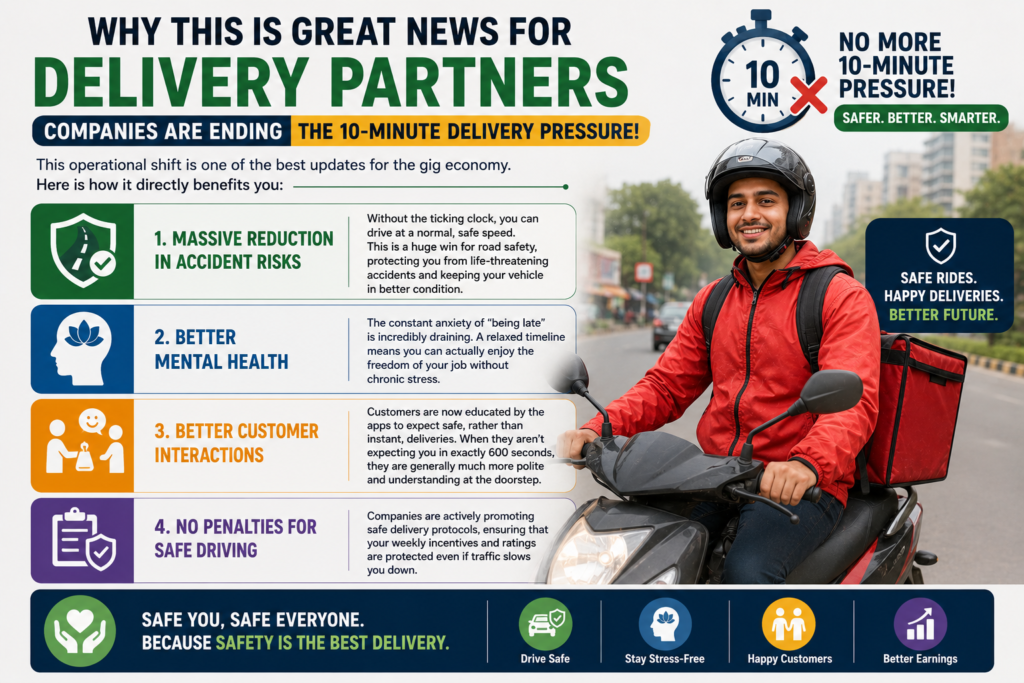
This operational shift is one of the best updates for the gig economy. Here is how it directly benefits you:
- Massive Reduction in Accident Risks: Without the ticking clock, you can drive at a normal, safe speed. This is a huge win for road safety, protecting you from life-threatening accidents and keeping your vehicle in better condition.
- Better Mental Health: The constant anxiety of “being late” is incredibly draining. A relaxed timeline means you can actually enjoy the freedom of your job without chronic stress.
- Better Customer Interactions: Customers are now educated by the apps to expect safe, rather than instant, deliveries. When they aren’t expecting you in exactly 600 seconds, they are generally much more polite and understanding at the doorstep.
- No Penalties for Safe Driving: Companies are actively promoting safe delivery protocols, ensuring that your weekly incentives and ratings are protected even if traffic slows you down.
A Win for Overall Road Safety
The shift away from extreme quick commerce isn’t just about rider safety; it benefits everyone on the road. When thousands of delivery partners are no longer forced to rush, city streets become calmer and safer for pedestrians, children, and other commuters.
This change also improves the public perception of delivery partners. Instead of being viewed as reckless speeders, riders are increasingly respected as hardworking professionals providing an essential service.
> Looking for a safer way to begin your journey as a delivery rider? Apply online today and discover delivery partner opportunities that prioritize delivery partner safety and flexible earning options.
Frequently Asked Questions (FAQs)
Q1: Will my earnings drop if deliveries take slightly longer?
Ans: No. Platforms are adjusting their base pay and incentive structures to focus on task completion rather than extreme speed. Furthermore, driving safely saves you money on fuel and vehicle maintenance, which ultimately increases your net take-home earnings.
Q2: What should I do if a customer is angry that the delivery took 15 minutes instead of 10?
Ans: Politely inform the customer that the app provides realistic ETAs based on traffic and weather, and that your priority is bringing their order safely and intact. Do not argue; simply ask them to check the app’s promised delivery window.
Q3: Are companies still tracking my speed?
Ans: Yes, but now it is to ensure your safety. Many apps use GPS to track if riders are constantly over-speeding or braking too hard, and they actively encourage and reward partners who maintain safe, steady riding habits.
Conclusion
The end of the extreme 10-minute delivery pressure marks a maturing gig economy where human lives are valued more than corporate marketing slogans. As a delivery partner, your life, your family, and your vehicle are your biggest assets.
Take a deep breath, follow the traffic rules, and ride with confidence. The industry has finally realized what experienced riders have known all along: safe delivery is the only sustainable way forward.